10 DIY Wall Art Ideas Using Natural Textures
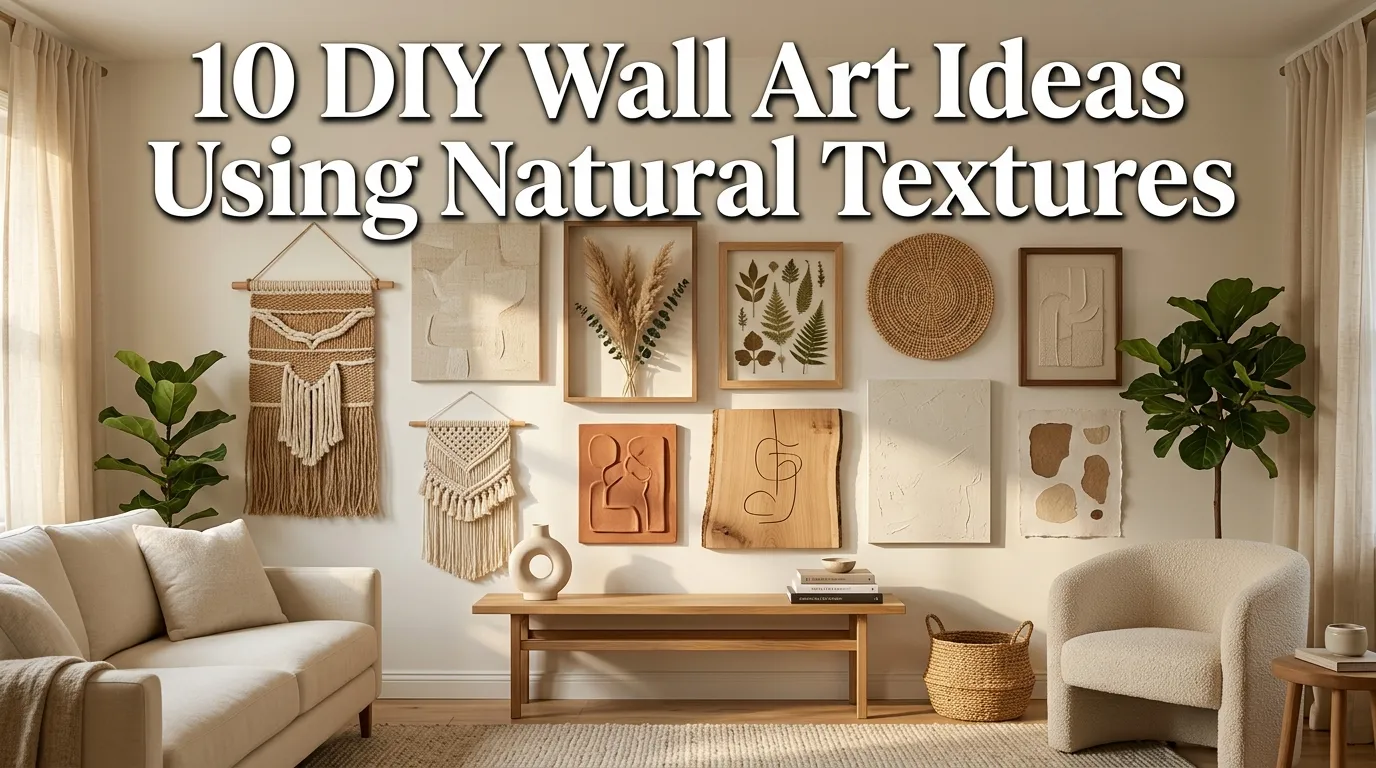
Blank walls can make a room feel unfinished, but decorating them does not always mean buying expensive artwork. Some of the most interesting wall decor can come from simple materials with natural texture, including woven fibers, dried grasses, wood, linen, clay, and handmade paper.
Natural-texture wall art is especially appealing when you want your home to feel warm, relaxed, and collected rather than overly decorated. The subtle imperfections in organic materials give handmade pieces character, while neutral colors make them easy to mix with modern, farmhouse, Scandinavian, boho, coastal, and organic-inspired interiors.
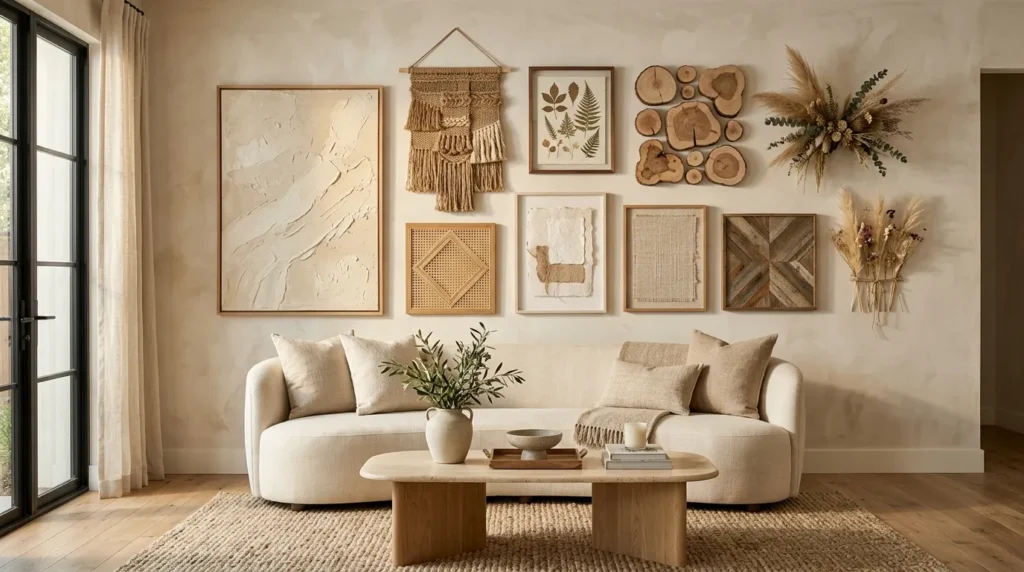
The best part is that many of these projects can be customized to suit the size and style of your room. A large woven piece can become the focal point above a sofa, while a small collection of textured panels can fill a narrow hallway or bedroom wall.
You also do not need advanced crafting skills for every project. Several ideas rely on simple techniques such as layering, gluing, wrapping, arranging, painting, and mounting.
In my experience, the most successful DIY wall art projects start with the room rather than the craft itself. Look at the colors already present in your furniture, flooring, textiles, and accessories. Then choose natural materials that complement those tones.
Think of the wall as another texture in the room.
A rough piece of wood can warm up a minimalist space. Linen can soften a bedroom. Woven fibers can add dimension to a neutral living room. Dried grasses can bring movement to an otherwise flat wall.
The following ideas are designed to be approachable, customizable, and visually appealing, whether you are decorating a rental, refreshing a bedroom, updating a living room, or simply looking for a weekend project.
Table of Contents
1. Woven Fiber Panels
Create layered wall panels using natural woven materials.
2. Dried Grass Art
Turn dried grasses into simple organic wall arrangements.
3. Textured Wood Boards
Use reclaimed or unfinished wood to create dimensional artwork.
4. Linen Canvas Panels
Add soft fabric texture with simple linen-covered canvases.
5. Clay Wall Shapes
Create sculptural artwork with handmade clay forms.
6. Macramé Layers
Combine knots and natural fibers for soft dimensional texture.
7. Pressed Botanical Art
Display preserved leaves and plants in simple natural frames.
8. Raffia Wall Decor
Use raffia fibers to create lightweight organic artwork.
9. Burlap Art Panels
Transform simple burlap into rustic textured wall pieces.
10. Organic Texture Collage
Combine several natural materials into one statement composition.
1. Woven Fiber Panels
Quick Benefits
- Adds natural texture
- Works with neutral interiors
- Easy to customize
- Creates visual dimension
- Suitable for large walls
Why It Works
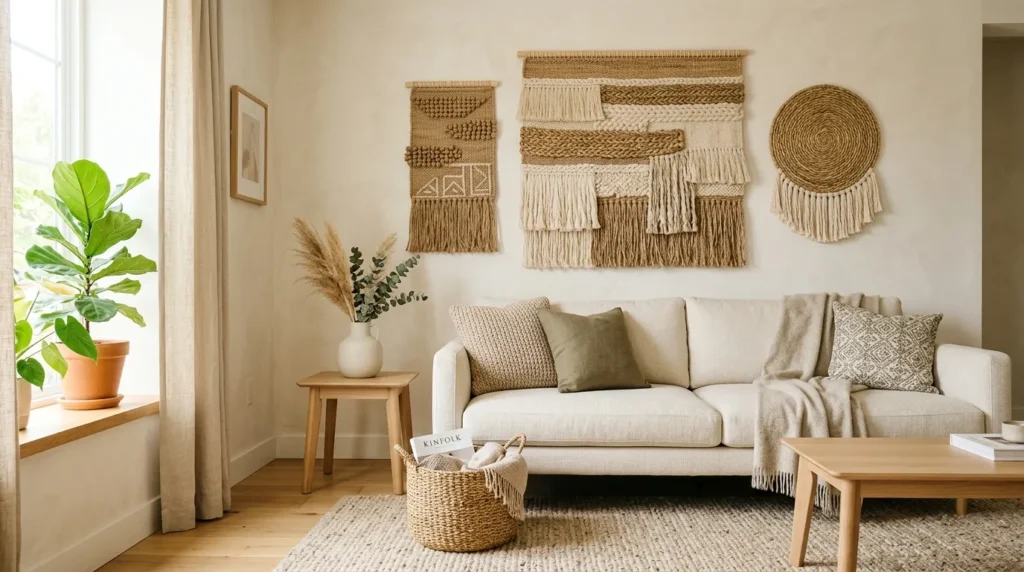
Woven materials immediately introduce texture to a flat wall.
Rattan, seagrass, jute, cane, and other natural fibers can create subtle variations in color and pattern without requiring bright artwork.
This makes woven wall panels particularly useful in rooms where the palette is already neutral.
The texture provides visual interest while maintaining a calm atmosphere.
Instead of hanging one small piece in the center of a large wall, several coordinated panels can create a more intentional installation.
The repeated shapes help the collection feel designed rather than random.
How To Style It
Start with lightweight canvas boards, embroidery hoops, wooden frames, or thin wood panels.
Attach woven material securely using an appropriate adhesive or mounting method.
You can use one material throughout the project or combine two or three complementary fibers.
For example, natural jute can be paired with pale seagrass and light cotton rope.
Keep the colors close together.
Hang three panels vertically in a hallway or above a small console.
For a larger living room, create a horizontal arrangement above the sofa.
Leave enough space between each panel so the individual textures remain visible.
2. Dried Grass Art
Quick Benefits
- Adds movement
- Uses natural materials
- Creates an organic look
- Works with neutral palettes
- Can be very inexpensive
Why It Works
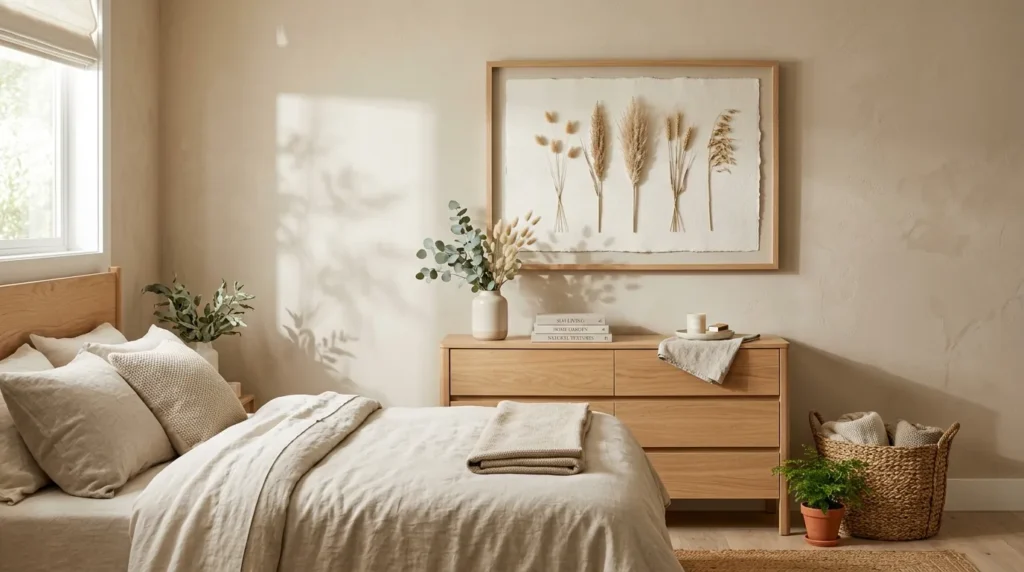
Dried grasses bring a completely different kind of texture to wall decor.
Unlike flat artwork, their stems and feathery shapes create shadows that change throughout the day.
That makes the wall feel more dynamic.
Pampas grass, bunny tails, wheat, reeds, and other dried botanical materials can all be arranged into simple compositions.
The organic shapes also work beautifully in bedrooms and living spaces where you want a relaxed, nature-inspired feeling.
How To Style It
Choose a simple frame or shallow shadow box.
Arrange dried stems at slightly different heights rather than making every piece perfectly symmetrical.
Neutral grasses can be left in their natural color.
If you prefer more contrast, add a few darker stems.
Secure the stems carefully so they remain in place when the frame is moved.
Use a warm natural wood frame to reinforce the organic theme.
Hang the finished piece where the changing light can highlight the texture.
Avoid placing fragile dried materials where they will constantly be touched or disturbed.
3. Textured Wood Boards
Quick Benefits
- Adds warmth
- Provides strong texture
- Works with rustic and modern styles
- Uses inexpensive materials
- Creates substantial wall presence
Why It Works
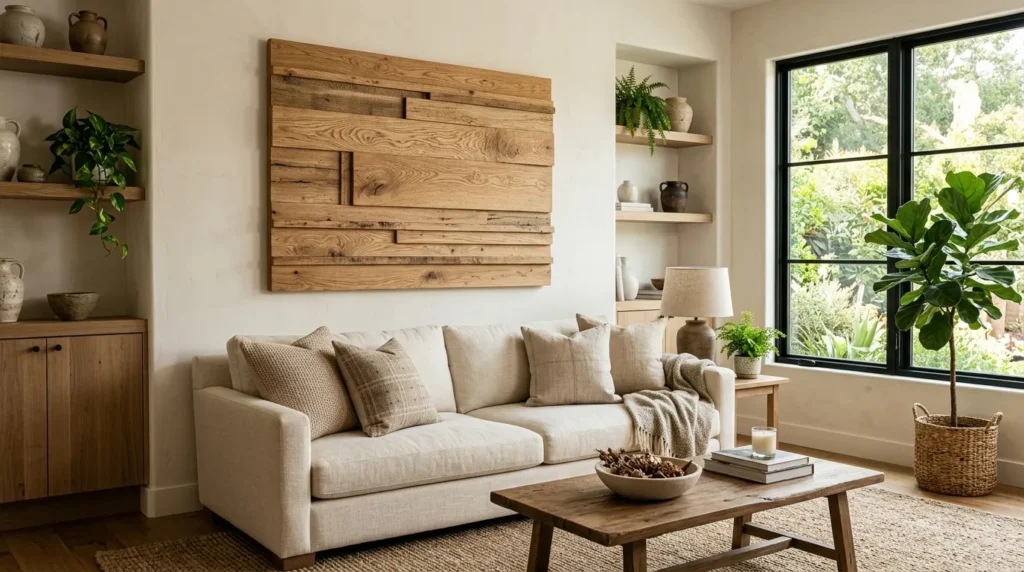
Wood is one of the easiest ways to introduce natural texture into a room.
Different boards can vary in grain, tone, knots, and surface texture, making even a simple arrangement feel unique.
You can use reclaimed wood for a rustic appearance or smooth unfinished boards for a cleaner modern design.
Wood also works particularly well in rooms that already contain hardwood flooring or wooden furniture because it creates visual repetition.
How To Style It
Choose boards with similar dimensions if you want a structured arrangement.
Sand rough edges carefully and remove loose splinters before displaying them.
You can leave the wood natural or apply a light finish that preserves its grain.
For a modern look, arrange narrow boards vertically.
For a farmhouse-inspired room, use wider reclaimed planks.
You can also combine three shades of natural wood to create subtle variation.
Keep surrounding decor simple.
A wooden wall piece becomes more noticeable when the wall around it has breathing room.
4. Linen Canvas Panels
Quick Benefits
- Softens hard surfaces
- Adds subtle texture
- Easy to customize
- Works in bedrooms
- Complements neutral decor
Why It Works
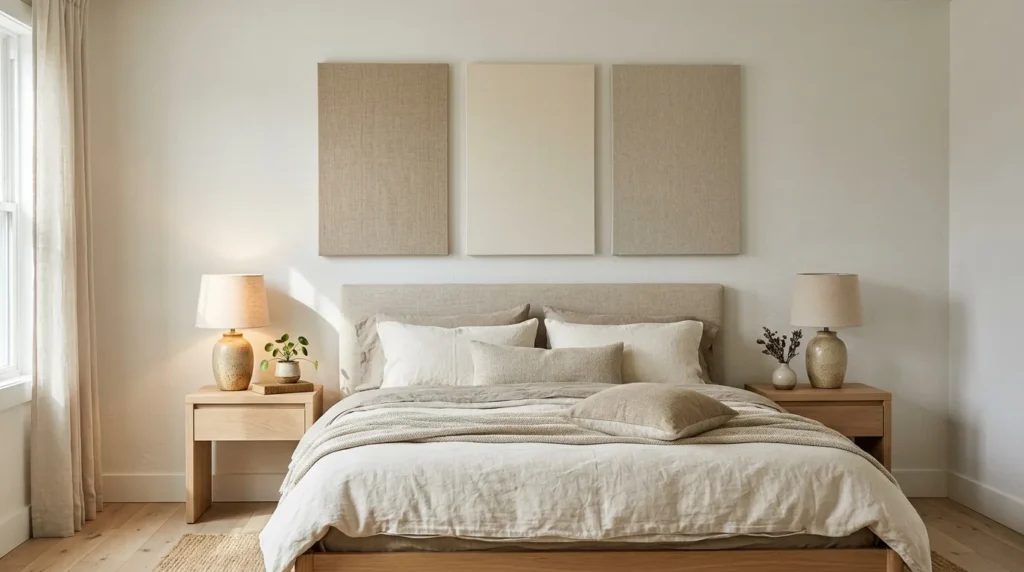
Linen has a naturally irregular weave that creates texture without overwhelming a room.
This makes linen-covered wall art especially useful when you want something more interesting than a plain canvas but less dramatic than sculptural artwork.
The soft fabric also works beautifully in bedrooms, reading corners, and calm living rooms.
It can introduce warmth without adding another strong color.
How To Style It
Use blank canvas panels or lightweight wood frames.
Stretch linen over the surface and secure it neatly on the back.
Choose natural flax, ivory, oatmeal, or soft beige depending on your existing palette.
For additional texture, layer a smaller piece of linen over the larger panel.
You could also add simple hand stitching or a narrow woven border.
Hang several panels together for a larger installation.
Keep the spacing consistent.
The simplicity is part of the appeal.
5. Clay Wall Shapes
Quick Benefits
- Creates sculptural dimension
- Looks handmade
- Adds subtle color
- Works with modern interiors
- Can become statement art
Why It Works
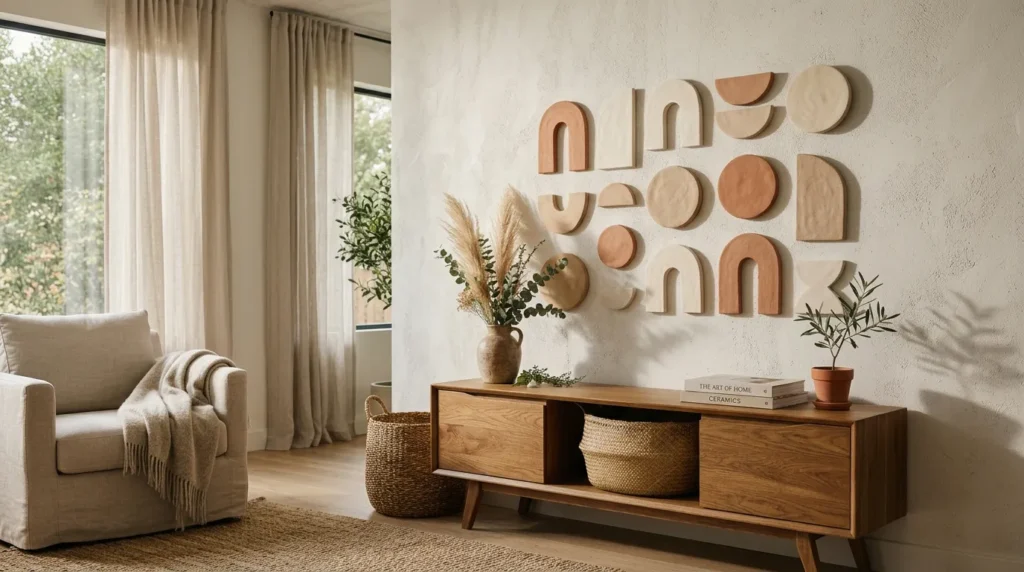
Clay can transform wall art from a flat image into a three-dimensional object.
Simple arches, circles, leaves, abstract forms, and irregular shapes can create beautiful shadows.
You do not need to create a complicated sculpture.
Even several small handmade forms arranged together can create an interesting composition.
Natural clay tones also pair beautifully with wood, linen, cream, beige, and muted green.
How To Style It
Choose an air-dry clay suitable for the project.
Roll and shape the clay into simple forms.
Allow pieces to dry completely according to the manufacturer’s instructions.
You can leave the clay in its natural tone or apply a muted mineral-inspired finish.
Mount finished pieces securely using a method appropriate for their weight and your wall surface.
Arrange pieces with varied spacing rather than creating a perfectly rigid grid.
The slight imperfections of handmade forms are part of their charm.
6. Macramé Layers
Quick Benefits
- Adds softness
- Creates strong texture
- Works in bedrooms
- Easy to customize
- Provides a handmade appearance
Why It Works
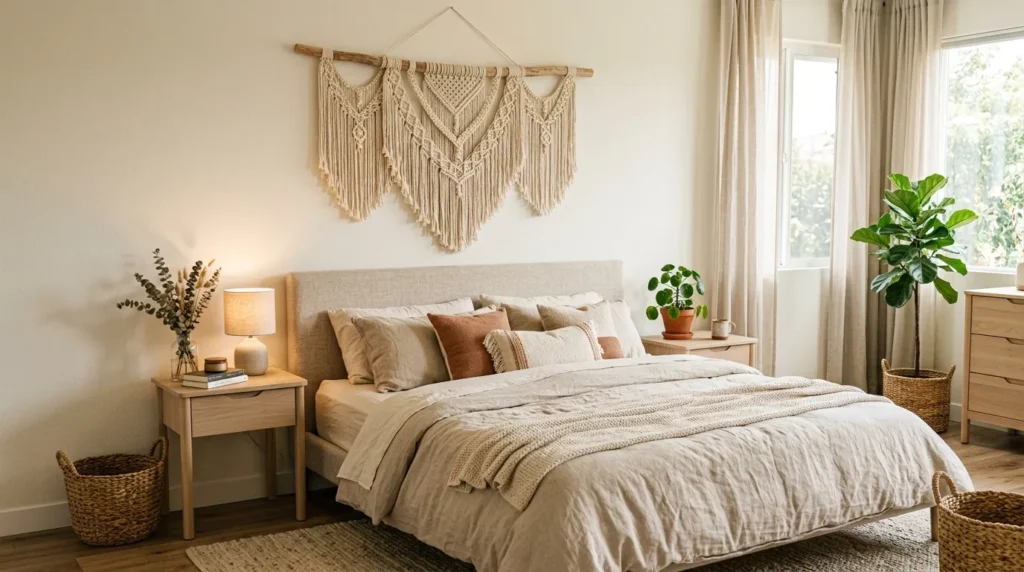
Macramé has long been popular for natural-inspired interiors because knotted cotton cord creates substantial texture without requiring heavy materials.
The pattern can range from very simple to highly intricate.
For a contemporary room, a minimal design with a clean wooden dowel can feel sophisticated.
For a boho-inspired room, layered knots and fringe can create a more relaxed appearance.
The key is matching the scale to the room.
How To Style It
Use natural cotton cord and a smooth wooden dowel.
Start with a simple repeated knot pattern if you are new to macramé.
Keep the finished piece relatively narrow for a small bedroom.
For a larger living room, create a wider piece or hang two complementary designs.
Natural cream cord is the easiest option to integrate into existing decor.
Pair it with woven baskets, linen textiles, warm wood, and simple greenery.
Keep other wall decor limited so the macramé remains the focal texture.
7. Pressed Botanical Art
Quick Benefits
- Brings nature indoors
- Creates delicate texture
- Works with many styles
- Easy to personalize
- Looks elegant in groups
Why It Works
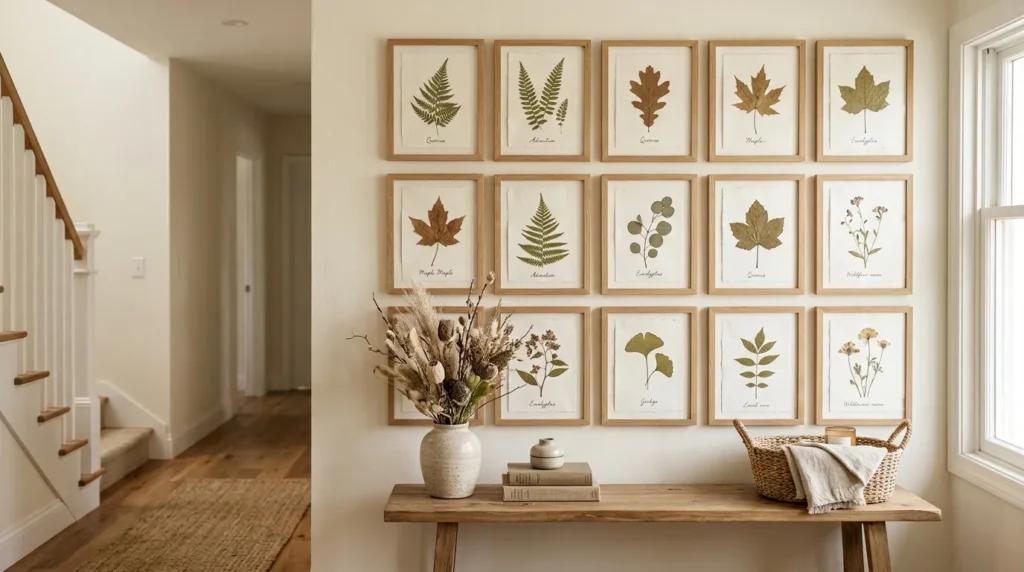
Pressed leaves and flowers create artwork with a quiet, natural character.
Their shapes and subtle color variations make each composition unique.
Unlike large bold prints, botanical pieces can blend into a room while still giving the wall something interesting to look at.
They work particularly well in bedrooms, hallways, bathrooms, home offices, and dining spaces.
How To Style It
Press suitable leaves or flowers until completely dry.
Arrange them on handmade paper, cream cardstock, or another neutral background.
Use simple wood or natural-toned frames.
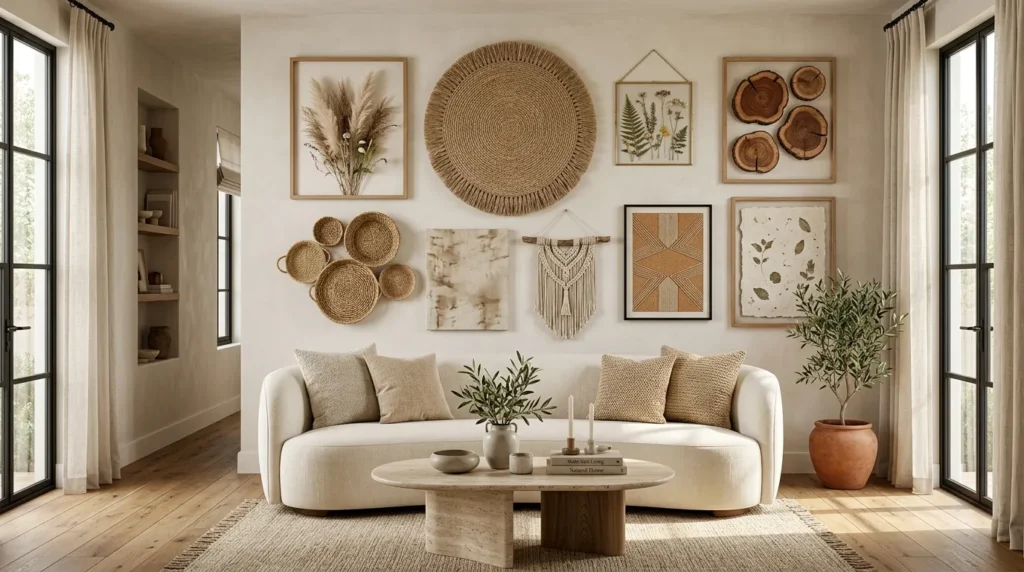
For a gallery wall, keep the frames similar while varying the botanical specimens.
You can also create a triptych using three related plants.
Avoid overcrowding the composition.
A single leaf centered on a large sheet can look surprisingly sophisticated.
Place the artwork away from excessive moisture and direct sunlight when appropriate to help preserve delicate materials.
8. Raffia Wall Decor
Quick Benefits
- Lightweight
- Adds organic texture
- Creates playful movement
- Works with warm neutrals
- Easy to customize
Why It Works
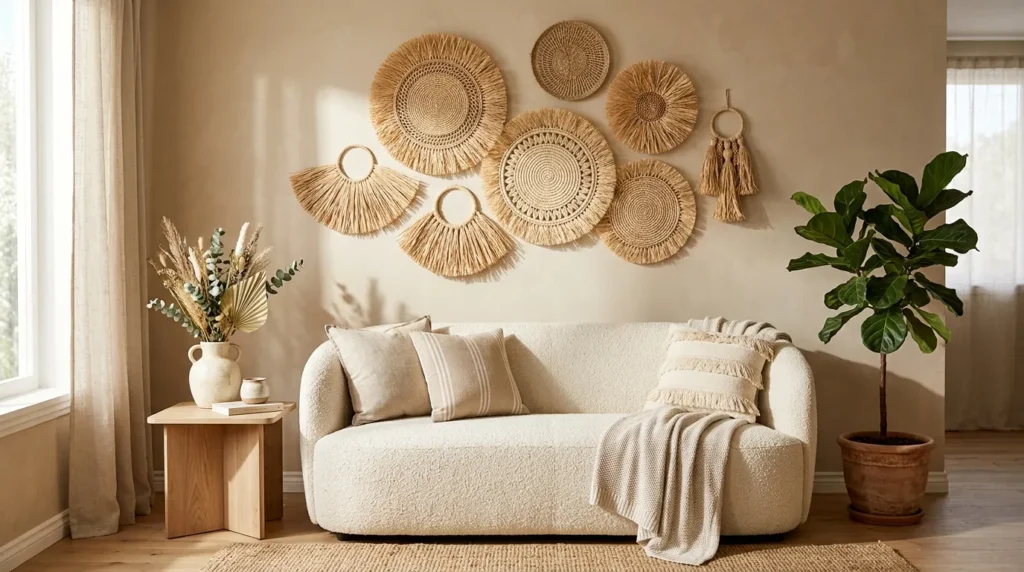
Raffia provides a loose, natural texture that can make a wall feel softer and more handcrafted.
Its fibers create movement, especially when arranged into sunburst shapes, layered fans, tassels, or abstract compositions.
Because raffia is lightweight, it can be easier to work with than heavier materials.
It also pairs beautifully with rattan, cane, jute, and natural wood.
How To Style It
Create a simple circular design using a lightweight base.
Attach raffia fibers around the perimeter, gradually building the shape.
Trim the ends evenly for a cleaner modern appearance or leave them varied for a relaxed organic look.
Use natural raffia for the most versatile result.
You can create several sizes and arrange them together.
A cluster of three or five pieces can fill a wall above a console or bed.
Keep the surrounding colors soft so the fiber texture remains visible.
9. Burlap Art Panels
Quick Benefits
- Very accessible material
- Strong woven texture
- Works with rustic decor
- Easy to frame
- Adds warmth
Why It Works
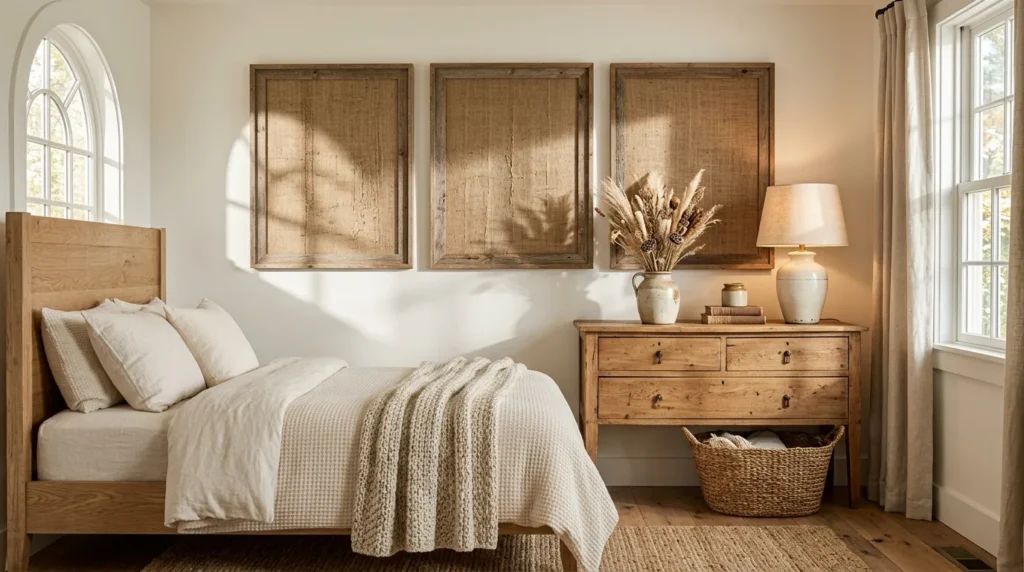
Burlap has a distinctive open weave that can bring rustic character to a plain wall.
It is especially useful for farmhouse, cottage, rustic, and casual interiors.
However, burlap does not have to look old-fashioned.
When placed inside a clean modern frame and paired with restrained decor, the texture can become surprisingly sophisticated.
How To Style It
Stretch burlap over a simple canvas or wooden backing.
Secure it tightly so the surface remains smooth.
For additional dimension, layer a smaller piece of linen or cotton over the burlap.
You can also add a simple botanical silhouette or understated geometric detail.
Use a natural wood frame to reinforce the material palette.
Keep the color scheme neutral.
Warm beige burlap, ivory fabric, pale oak, and soft white walls can create a calm layered effect.
10. Organic Texture Collage
Quick Benefits
- Combines multiple materials
- Creates a statement piece
- Highly customizable
- Adds substantial dimension
- Works as focal-point decor
Why It Works
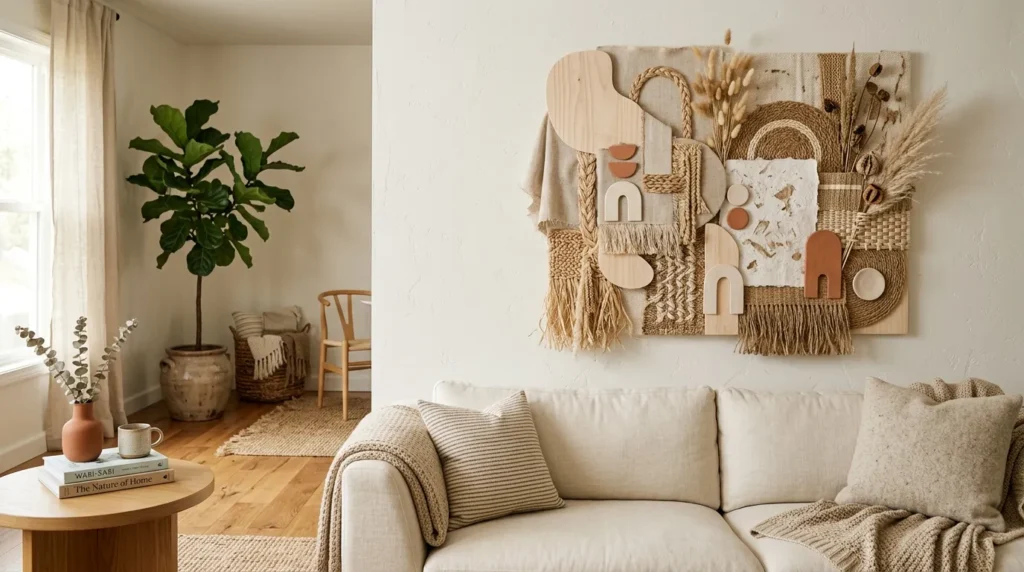
If choosing one natural material feels too limiting, combine several.
A textured collage allows you to layer wood, linen, woven fibers, dried botanicals, clay, rope, paper, or raffia into one composition.
This creates visual depth because each material reacts differently to light.
The trick is creating a common thread.
If every material is a completely different color, shape, and texture, the piece can become chaotic.
A restrained palette allows the textures to do the work.
How To Style It
Begin with a large canvas, shallow wooden frame, or sturdy backing board.
Choose three to five natural materials.
Keep them within a related palette of cream, beige, tan, soft brown, muted green, or natural wood.
Place the largest texture first.
Then layer smaller pieces around it.
Create areas of open space rather than covering the entire surface.
Secure every material carefully.
For a living room, make the collage large enough to hold its own above a sofa.
For a bedroom, a smaller composition above the dresser can create a softer focal point.
Choosing Natural Materials For DIY Wall Art
Natural materials can look beautiful together, but not every material works equally well in every room.
Consider the texture you want to introduce.
Soft Textures
Choose:
- Linen
- Cotton
- Macramé
- Raffia
- Dried grasses
These are useful when you want a relaxed and cozy appearance.
Hard Textures
Choose:
- Wood
- Clay
- Cane
- Rattan
- Natural stone
These can create stronger visual structure.
Delicate Textures
Choose:
- Pressed leaves
- Dried flowers
- Thin grasses
- Handmade paper
These work beautifully for subtle wall arrangements.
The best compositions often combine one substantial texture with one or two smaller details.
How To Choose The Right Scale
Scale can make or break DIY wall art.
A tiny artwork can disappear above a large sofa.
A huge piece can overwhelm a narrow hallway.
Before crafting, measure the wall.
For a large living-room wall, consider one substantial statement piece or a carefully spaced grouping.
Above a bed, a horizontal composition can echo the width of the furniture.
In a hallway, vertical panels can emphasize the height of the space.
On a small wall, one carefully finished piece may be more effective than a crowded collection.
Use painter’s tape to outline the approximate size on the wall before beginning.
This simple step can prevent a lot of guesswork.
How To Make Natural Wall Art Look Expensive
You do not necessarily need expensive materials to make DIY artwork look polished.
The finishing details matter.
Use consistent colors.
Trim fibers neatly when appropriate.
Sand wooden edges.
Choose frames that complement the room.
Leave enough negative space.
Avoid excessive embellishment.
Natural materials already have visual character.
One common mistake is adding too many decorative elements because the project feels unfinished.
Step back from the wall.
Sometimes the simplest composition is the strongest.
A restrained palette of warm ivory, beige, natural oak, soft brown, and muted green can make inexpensive materials feel intentional and sophisticated.
Safety And Practical Considerations
Before mounting handmade wall art, consider its weight and the condition of the wall.
Heavy wood pieces should be mounted using hardware appropriate for their size and the wall construction.
Keep delicate dried materials away from sources of heat and open flames.
If using clay or other brittle materials, make sure they are securely mounted.
For children’s rooms, use age-appropriate materials and secure artwork carefully.
Natural materials can also respond to humidity and sunlight.
Wood may change slightly over time, and delicate botanical materials can fade.
Choosing an appropriate location can help preserve the finished piece.
FAQ
What natural materials can be used for DIY wall art?
Popular choices include wood, linen, jute, rattan, seagrass, raffia, macramé cord, dried grasses, pressed leaves, clay, burlap, and handmade paper. The best material depends on the style and amount of texture you want. Combining two or three complementary materials can create a more dimensional finished piece.
How do I make natural wall art look modern?
Use a restrained color palette, clean framing, simple shapes, and plenty of negative space. Natural materials can look very modern when they are presented in a minimal composition. Pale wood, ivory linen, simple woven textures, and sculptural clay forms work especially well in contemporary interiors.
What DIY wall art is easiest for beginners?
Linen-covered canvas, simple woven panels, pressed botanical artwork, and framed dried grasses are approachable starting points. These projects require relatively simple assembly rather than advanced crafting techniques. Begin with a small piece so you can test materials and techniques before creating a larger statement installation.
How do I choose wall art for a neutral room?
Focus on texture rather than strong color. Natural wood, woven fibers, linen, dried grasses, clay, and botanical materials can make a neutral room feel layered without disrupting the palette. Use different textures while keeping the colors related, such as cream, beige, tan, soft brown, and natural green.
Can DIY natural wall art work in a modern home?
Absolutely. The key is presentation. Choose clean frames, simple compositions, restrained colors, and fewer decorative elements. A sculptural clay arrangement, minimalist wood panels, or large linen artwork can feel contemporary while still providing the warmth associated with natural materials.
How should I arrange multiple pieces of natural wall art?
Start by choosing a common element such as color, material, frame style, or shape. Lay the pieces on the floor before hanging them. Keep spacing consistent and consider the overall shape of the arrangement. A grid creates a structured appearance, while an organic arrangement feels more relaxed.
How do I make a large blank wall feel less empty?
Use one appropriately scaled statement piece or create a coordinated collection. A large woven panel, wood installation, dried-grass arrangement, or mixed-material collage can fill the wall without requiring many small decorations. Always consider the furniture beneath the artwork so the scale feels balanced.
Conclusion
Natural textures can turn an ordinary blank wall into one of the most interesting parts of a room.
The beauty of these DIY projects is that they do not rely on complicated patterns or expensive materials. Instead, they use the natural qualities of wood, linen, woven fibers, dried botanicals, clay, raffia, and other organic materials to create depth.
Start by looking at the room you already have.
If the furniture is sleek and modern, consider adding rough wood or woven fibers for contrast.
If the room already feels rustic, soft linen or delicate botanical artwork can provide balance.
If your palette is neutral, allow texture to become the feature instead of introducing lots of additional color.
Remember that scale matters just as much as material.
A large wall may need one substantial piece, while a narrow wall might look better with a small vertical arrangement.
You can also create a collection over time instead of completing everything in one weekend.
Start with one project.
Try a linen panel, a woven piece, or a simple dried-grass arrangement.
Once you see how the natural texture changes the room, you may find yourself looking at everyday materials differently.
The best DIY wall art does more than fill an empty wall.
It adds personality, warmth, and a sense that the home has been thoughtfully put together.
Related Articles
- 10 DIY Wall Art Ideas for a Cozy Bedroom
- 11 Neutral Wall Decor Ideas for a Calm Home
- 10 DIY Textured Canvas Ideas for Modern Rooms
- 10 Natural Home Decor Ideas for Warm Interiors
- 11 Living Room Wall Decor Ideas for a Stylish Home