

10 DIY Coffee Tables That Look Designer Made
A coffee table can completely change the way a living room feels. It sits at the center of the seating area, so even a relatively simple piece can become one of the first things people notice when they walk into the room.
The good news is that you do not need a designer furniture budget to get that polished look.
With the right proportions, materials, finish, and styling, a DIY coffee table can look surprisingly sophisticated. Natural wood, sculptural shapes, chunky legs, stone-inspired surfaces, and simple modern silhouettes can all create the appearance of a custom furniture piece without requiring a professional workshop.
The secret is less about making something complicated and more about making intentional choices.
A beautifully designed table usually has balanced proportions, a limited material palette, clean lines, and details that look purposeful. Even an inexpensive tabletop can feel elevated when it is paired with substantial legs and finished carefully.
I’ve noticed that one of the biggest differences between an ordinary DIY furniture project and one that looks professionally designed is the finishing process. Smooth edges, consistent stain, properly aligned hardware, and a thoughtful silhouette can make an enormous difference.
This is also where DIY gives you an advantage.
You can customize the dimensions to your sofa, choose a wood tone that works with your flooring, and create a shape that fits the room rather than trying to squeeze a standard store-bought table into an awkward layout.
Whether your style leans modern, organic, minimalist, farmhouse, or transitional, the ideas below show how to create a coffee table that looks intentional and expensive while remaining practical for everyday living.
Before starting any project, consider the table’s height, the amount of walking space around it, the weight of the materials, and how your household actually uses the living room. A beautiful table still needs to work for movie nights, morning coffee, family gatherings, and everyday clutter.
Table of Contents
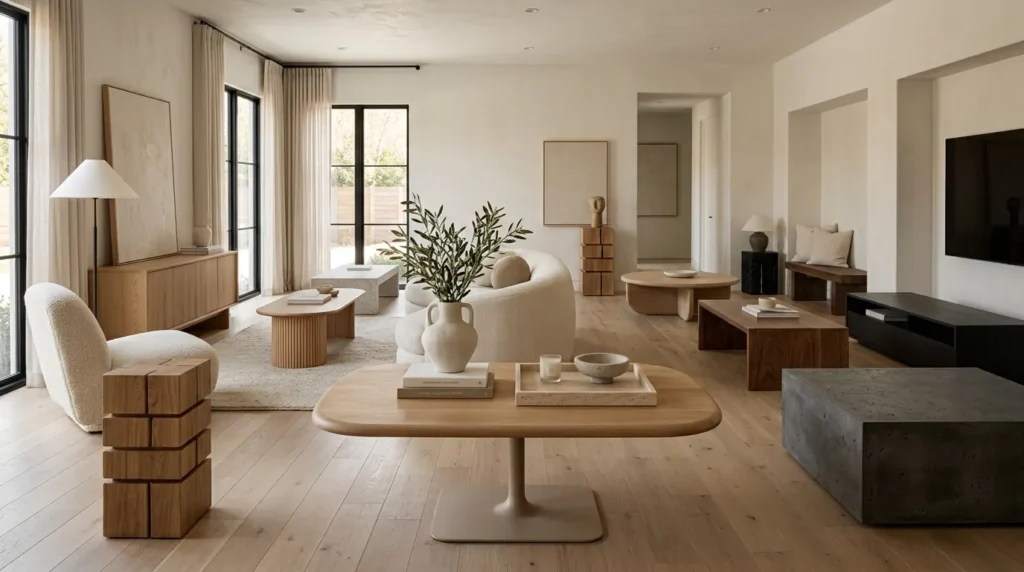
1. Chunky Oak Slab
Create a substantial natural wood table with a simple architectural base.
2. Sculptural Round Table
Use a rounded silhouette to create a designer-inspired focal point.
3. Hairpin Wood Table
Combine a warm wood top with sleek metal legs for modern contrast.
4. Fluted Pedestal Table
Add vertical texture and a sculptural base for a custom appearance.
5. Concrete Look Table
Create an industrial-inspired surface with a surprisingly refined finish.
6. Nested Coffee Tables
Build two coordinating tables for flexible living room layouts.
7. Reclaimed Wood Table
Turn salvaged boards into a character-rich centerpiece.
8. Waterfall Edge Table
Use continuous edges for a clean, contemporary furniture silhouette.
9. Storage Coffee Table
Combine attractive design with hidden everyday functionality.
10. Organic Edge Table
Highlight natural wood character with a softer, more relaxed shape.
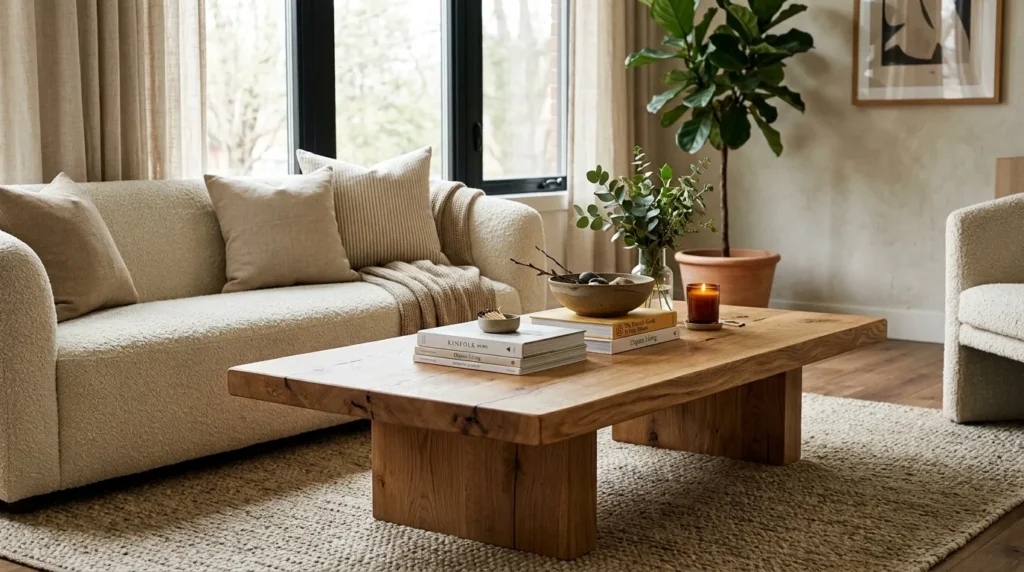
1. Chunky Oak Slab
Quick Benefits
- Creates a substantial designer appearance
- Adds natural warmth
- Works with modern and transitional rooms
- Provides a durable tabletop
- Easy to customize to your space
Why It Works
A thick wood tabletop has an immediate visual presence that makes a coffee table feel more substantial and intentional.
Instead of using a very thin board that can look lightweight, a chunky oak-style top creates the appearance of custom furniture. The natural grain adds another layer of interest, particularly when the rest of the living room contains neutral upholstery, soft textiles, and simple accessories.
The beauty of this approach is its versatility.
A natural finish can create an organic-modern look, while a darker stain can make the same basic silhouette feel more traditional or dramatic.
The proportions are what really make this design work. A wide top combined with sturdy, appropriately scaled legs feels balanced rather than improvised.
How To Style It
Start with a thick hardwood or quality furniture-grade wood top.
For a more affordable project, several boards can be joined together to create the slab effect.
Sand the surface thoroughly, paying particular attention to the edges and corners.
Use a clear finish if you want to preserve the natural wood color, or choose a stain that complements your existing flooring and furniture.
Pair the top with simple block legs, tapered wooden legs, or a substantial rectangular base.
Avoid making the base too delicate.
A chunky tabletop needs enough visual weight underneath it.
For styling, use a low ceramic bowl, a stack of two or three coffee-table books, and a small vase.
Leave plenty of open surface.
That empty space helps the table feel more like designer furniture and less like a display shelf.
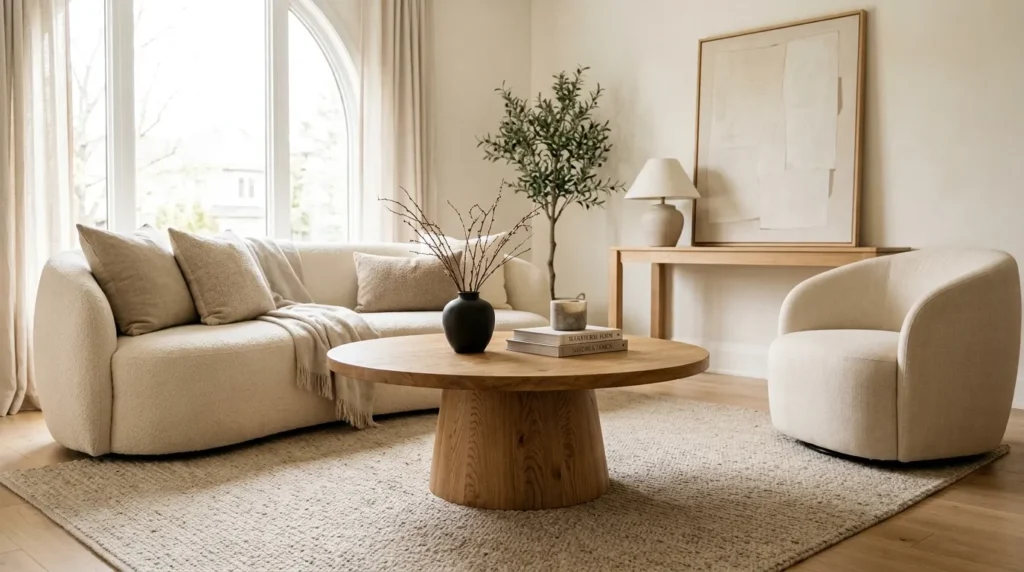
2. Sculptural Round Table
Quick Benefits
- Softens angular furniture
- Improves visual flow
- Creates a focal point
- Works well in smaller rooms
- Feels contemporary and artistic
Why It Works
Round coffee tables can make a living room feel more fluid because there are no sharp corners interrupting the visual movement around the seating area.
This can be particularly useful when the room already contains a rectangular sofa, square rug, television console, and other straight-edged furniture.
A round tabletop introduces contrast.
To make the table feel designer-made, focus on the base.
A cylindrical pedestal, curved wood support, or sculptural central leg can give the piece a custom architectural appearance.
The goal is to make the base feel like part of the table’s design rather than simply something holding up the top.
How To Style It
Choose a round tabletop with enough diameter to work comfortably with your sofa.
For a small living room, avoid choosing an oversized table simply because the shape looks attractive.
Leave enough room for people to walk around it.
A wooden circular top paired with a painted pedestal creates a sophisticated contrast.
You could also create a monochromatic version using the same finish throughout.
Keep the accessories low.
A shallow tray, small stack of books, and rounded ceramic vase work well.
Because the table itself has a strong silhouette, excessive decoration can hide the shape.
A large textured rug beneath the table can further emphasize the rounded form.
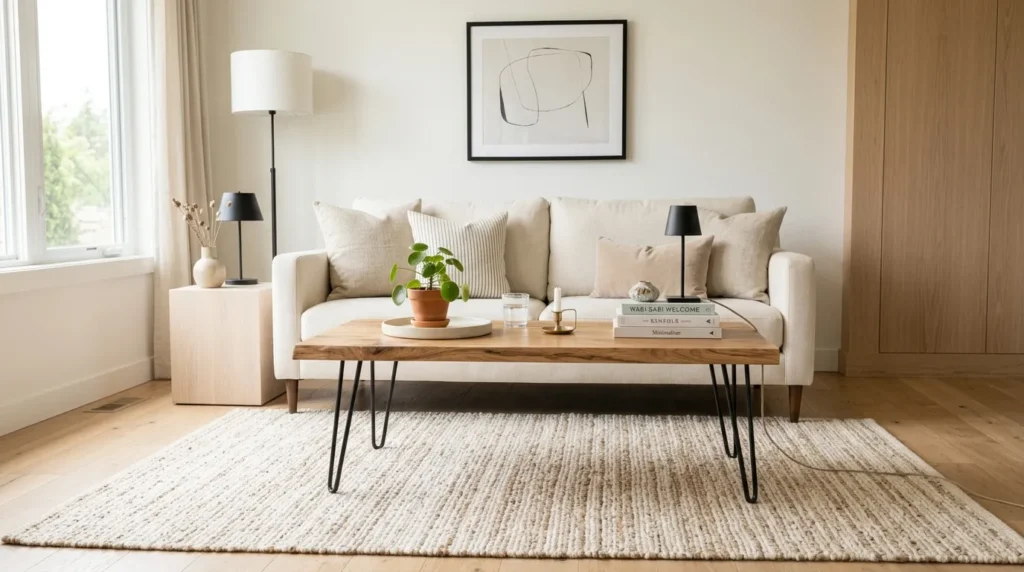
3. Hairpin Wood Table
Quick Benefits
- Simple construction
- Affordable materials
- Lightweight appearance
- Great for modern interiors
- Strong wood-and-metal contrast
Why It Works
Hairpin legs are a classic DIY furniture shortcut because they provide a finished-looking base without requiring complicated woodworking.
The thin metal lines create an airy appearance while the wooden top provides warmth.
That combination can make a room feel modern without becoming cold.
The contrast is particularly effective when paired with a neutral sofa, textured rug, and natural accessories.
It also gives you plenty of flexibility.
A pale wood top can create a Scandinavian-inspired appearance, while walnut or dark-stained wood can make the table feel more sophisticated.
How To Style It
Use a solid wood panel or carefully joined boards for the tabletop.
Sand the surface until smooth.
You can leave the wood natural, apply a clear protective finish, or choose a stain that works with your existing furniture.
Attach quality hairpin legs evenly underneath the tabletop.
Check that the legs are properly aligned before tightening the hardware.
For a more elevated appearance, choose thicker hairpin legs rather than extremely thin ones.
Style the finished table with a low tray, coffee-table books, and one organic element such as a small plant.
The combination of clean metal lines and natural wood looks best when the rest of the decor remains relatively uncluttered.
4. Fluted Pedestal Table
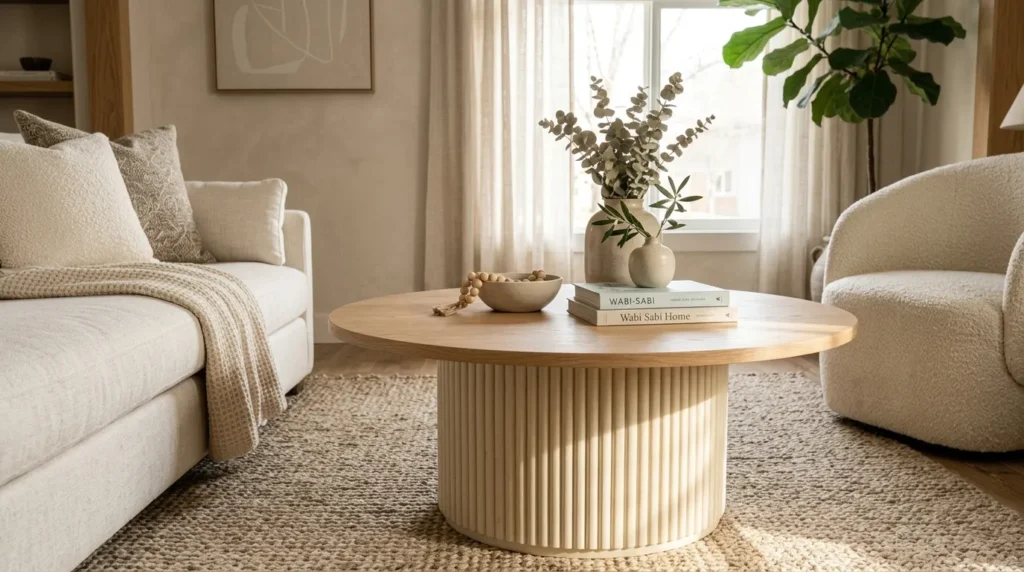
Quick Benefits
- Looks highly customized
- Adds architectural texture
- Creates a strong focal point
- Works with modern interiors
- Offers substantial visual weight
Why It Works
Fluted details have become popular in furniture because vertical grooves create shadows and dimension without requiring bold colors or elaborate decoration.
A fluted pedestal coffee table can look considerably more expensive than the materials used to create it.
The repeated vertical texture gives the base a sculptural quality.
This idea works especially well in rooms with soft neutral palettes because the texture becomes the feature.
It can also complement other fluted details, such as wall panels, cabinetry, or decorative columns, without needing to match them exactly.
How To Style It
Create a cylindrical or rectangular pedestal base and add evenly spaced vertical trim or molding.
The spacing needs to remain consistent.
Uneven grooves can quickly make the project look homemade rather than custom.
Paint the base in a warm white, creamy beige, soft taupe, or another neutral shade.
Pair it with a round wood or stone-look tabletop.
For a monochromatic version, keep the top and base within the same color family.
For contrast, use a natural wood top against a painted fluted base.
Keep the accessories understated.
A single sculptural bowl or vase can be enough.
The table should remain visually prominent.
5. Concrete Look Table
Quick Benefits
- Creates an industrial feel
- Looks contemporary
- Adds substantial visual weight
- Works with modern interiors
- Can be customized in color
Why It Works
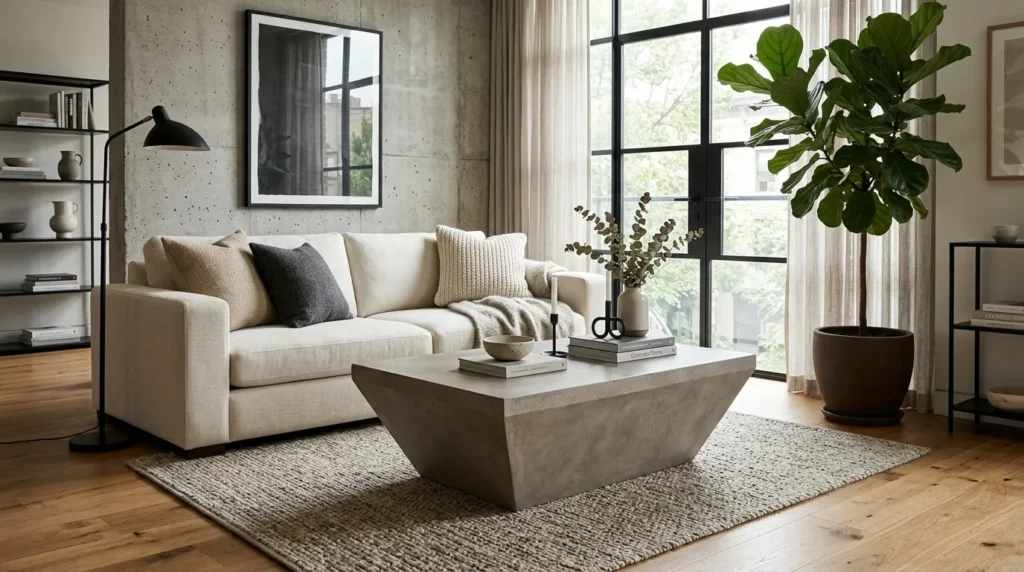
Concrete-inspired furniture has a naturally architectural quality.
Its smooth, mineral-like surface can make even a simple coffee table feel sophisticated.
You do not necessarily need to work with a massive slab of actual concrete.
Depending on the design and materials available, you can create a concrete-look surface using appropriate furniture coatings or cement-based finishes designed for the intended application.
The appeal comes from the subtle variation.
A perfectly flat gray surface can look sterile, while gentle tonal variation can make the table feel more like handmade stone.
How To Style It
Use a sturdy base capable of supporting the finished tabletop.
Choose a concrete-inspired finish in warm gray, greige, or soft stone.
Avoid overly cool gray if the room already has a lot of blue or cool-toned finishes.
Pair the table with warm wood, cream upholstery, woven textures, and natural greenery.
This creates a balanced relationship between hard and soft materials.
Use a large textured rug beneath the table to soften the visual weight.
Keep decorative pieces simple.
Wooden bowls, ceramic vessels, and neutral coffee-table books can add warmth without fighting the industrial character.
Always follow the manufacturer’s instructions for any surface coating and make sure the finished table is suitable for its intended use.
6. Nested Coffee Tables
Quick Benefits
- Provides flexible surface space
- Works in small living rooms
- Creates layered styling
- Easy to rearrange
- Adds visual interest
Why It Works
Nested tables are one of those furniture ideas that combine appearance and practicality.
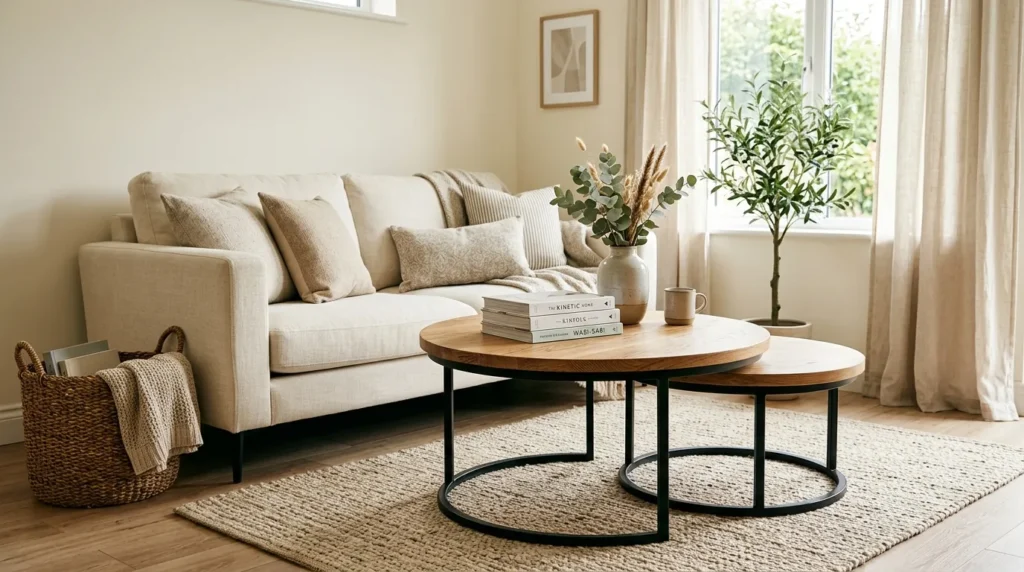
Instead of having one large coffee table occupying the center of the room, two or three smaller tables can slide together or separate when needed.
This makes them particularly useful for homes where furniture needs to adapt.
You can spread the tables apart when entertaining or move them closer together during everyday use.
From a design perspective, the different heights create layers.
That variation can make the living room feel more dynamic.
How To Style It
Build two tables using related materials but slightly different dimensions.
For example, use matching wood tops with different heights.
Another option is to combine a wood table with a smaller painted or stone-look version.
Make sure the smaller table can slide partially beneath the larger one without creating awkward proportions.
Use one table for books and decorative objects while leaving the other mostly clear.
This keeps the arrangement functional.
For Pinterest-worthy styling, place the tables on a large textured area rug with a neutral sofa behind them.
Add a low vase, coffee-table books, and a small tray.
The varying heights will naturally create an attractive composition.
7. Reclaimed Wood Table
Quick Benefits
- Adds character
- Uses salvaged materials
- Creates a unique surface
- Works with rustic interiors
- Can become a conversation piece
Why It Works
Reclaimed wood brings something manufactured furniture cannot easily replicate: history.
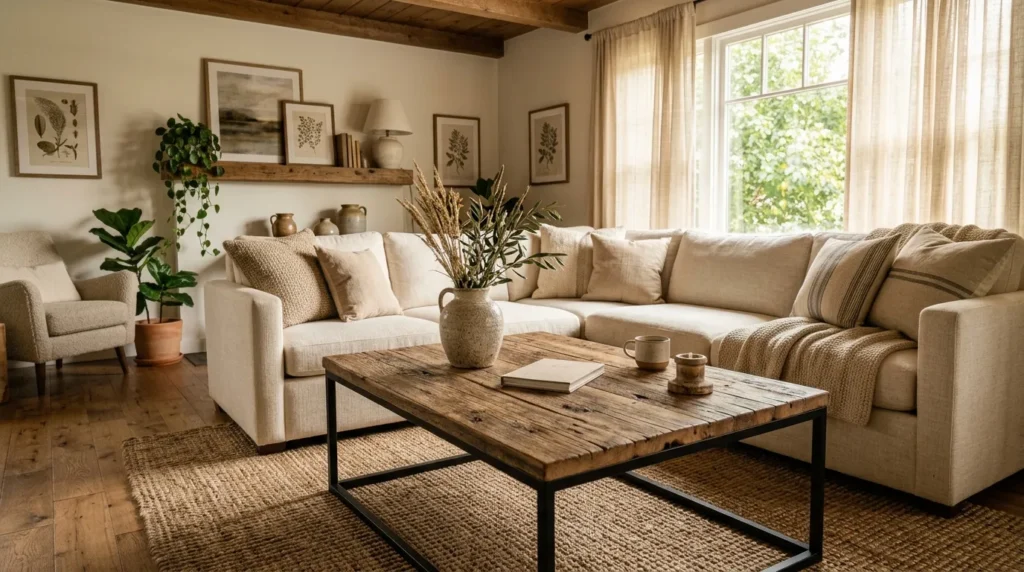
Knots, nail holes, subtle cracks, grain variation, and color changes can give the tabletop a one-of-a-kind appearance.
The trick is keeping the overall construction polished.
A rustic tabletop paired with a messy or poorly finished base can look unfinished.
A carefully sanded reclaimed top combined with a clean modern base, however, can look remarkably sophisticated.
How To Style It
Choose boards that have character without serious structural damage.
Inspect reclaimed wood carefully and prepare it appropriately before using it indoors.
Remove loose debris, sand rough areas, and make sure the material is suitable for furniture construction.
You can preserve the weathered appearance with a clear finish or soften it with a lighter stain.
Pair reclaimed wood with black metal legs for an industrial-modern look.
For something warmer, use a natural wood base.
Style the table with neutral ceramics, woven baskets, linen textiles, and greenery.
Avoid filling every knot and mark with decoration.
Those imperfections are the point.
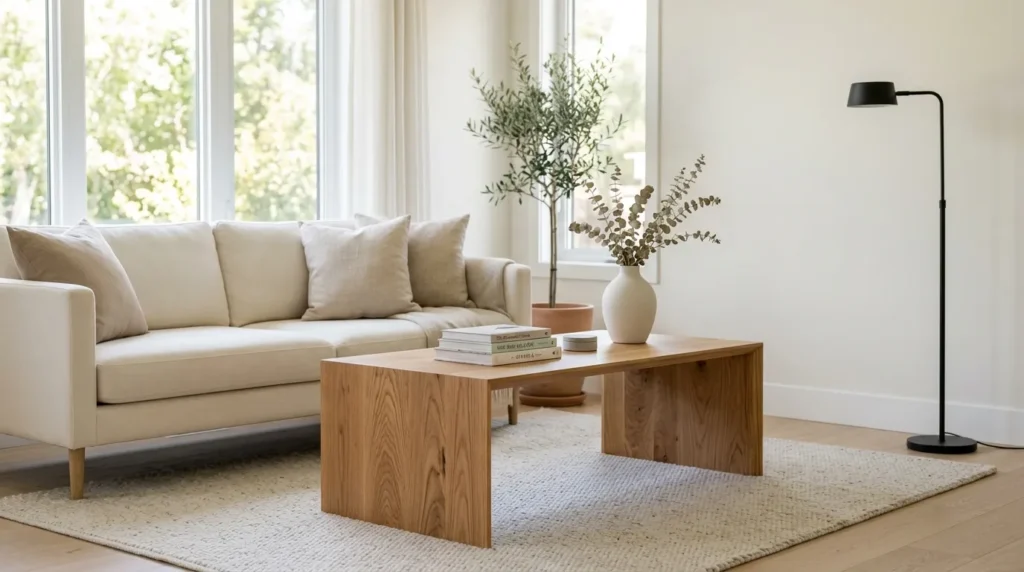
8. Waterfall Edge Table
Quick Benefits
- Creates a clean silhouette
- Looks custom-built
- Works in modern rooms
- Uses simple geometry
- Provides strong visual continuity
Why It Works
A waterfall edge table has a tabletop that visually flows downward into the sides or legs.
The continuous line creates an architectural appearance that can make a relatively simple construction look custom.
This style works especially well in minimalist and contemporary rooms because there are fewer visual interruptions.
The eye follows the material from the top down the side.
That continuity makes the table feel intentional.
How To Style It
Use a sturdy sheet material or solid wood suitable for the design.
The exact construction method depends on the materials and tools available, but the key visual element is the continuous edge.
Choose a warm natural wood for an organic-modern appearance.
For a contemporary room, a dark finish can create a dramatic silhouette.
You can also paint the entire piece in a warm neutral.
Keep the surrounding furniture simple.
A streamlined sofa, large textured rug, and minimal accessories allow the table’s shape to remain visible.
A single tray or sculptural object is often enough for the tabletop.
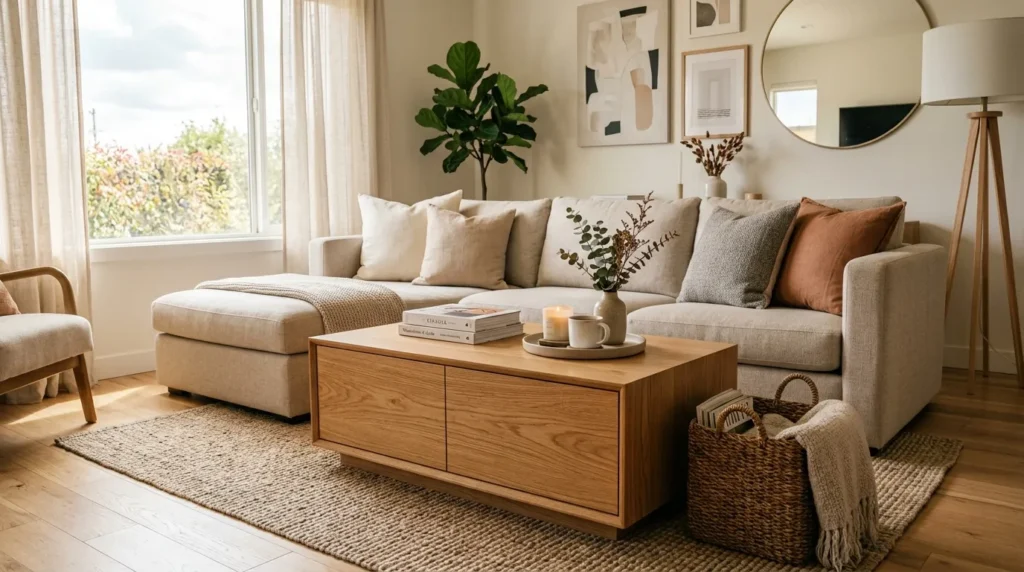
9. Storage Coffee Table
Quick Benefits
- Hides everyday clutter
- Adds practical storage
- Maximizes small spaces
- Keeps surfaces organized
- Combines beauty and function
Why It Works
A designer-looking coffee table does not have to be purely decorative.
In fact, hidden storage can make a living room feel more polished because everyday objects can be tucked away instead of remaining visible.
This is particularly useful in smaller homes, apartments, family rooms, and multipurpose spaces.
The best storage tables conceal their functionality.
Closed compartments, lift-up tops, drawers, or baskets integrated beneath the tabletop can provide storage without making the table look bulky.
How To Style It
Choose a design with clean lines and concealed storage.
A lift-top table can provide an occasional work or dining surface, while drawers can hold remotes, magazines, games, and other small items.
For a more furniture-like appearance, choose wood or a painted finish instead of a visibly utilitarian material.
Keep the top relatively uncluttered.
A tray can organize smaller objects while still allowing easy access.
If using baskets underneath the table, choose woven baskets in a neutral tone.
They can add texture while keeping blankets and everyday items organized.
The best storage is the kind you can use without thinking about it.
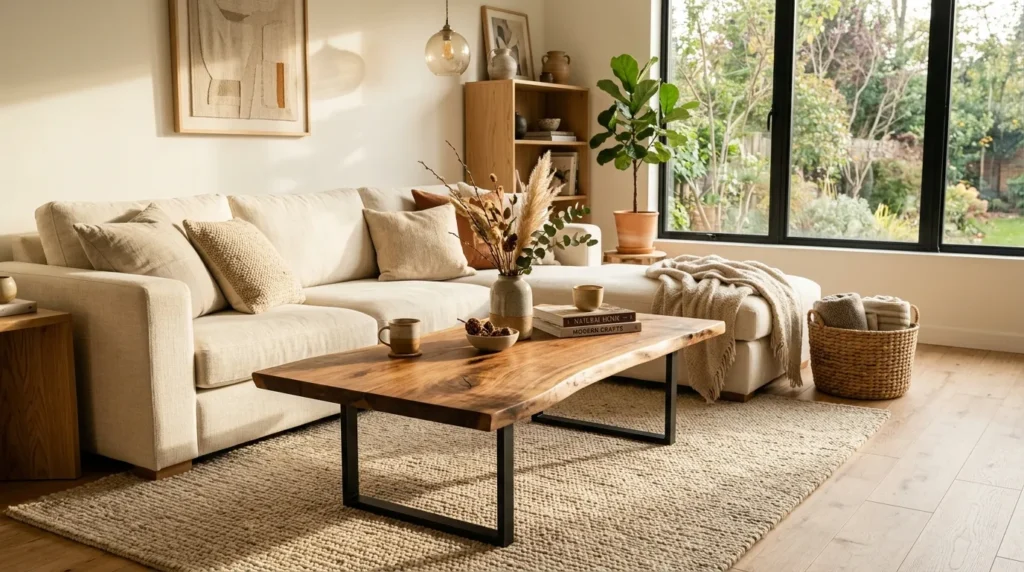
10. Organic Edge Table
Quick Benefits
- Highlights natural wood
- Creates a relaxed appearance
- Works with organic interiors
- Makes every table unique
- Adds natural character
Why It Works
An organic-edge tabletop celebrates the natural shape and character of wood rather than hiding it behind perfectly straight lines.
The irregular edge creates softness.
It can also make a living room feel more relaxed because the shape contrasts with rectangular sofas, cabinets, rugs, and architectural features.
This style works particularly well with organic-modern, Scandinavian, rustic, and nature-inspired interiors.
The most important part is restraint.
The natural edge should feel intentional rather than unfinished.
How To Style It
Choose a well-prepared wood slab or suitable furniture-grade top with an attractive natural edge.
Sand the surface carefully while preserving the character of the edge.
Seal the wood with an appropriate finish.
Pair the tabletop with simple black metal legs, a sculptural pedestal, or a minimalist wood base.
Avoid overly ornate hardware.
Let the grain remain visible.
Style the table with handmade ceramics, a small stack of books, a linen-covered tray, or a low arrangement of dried branches.
A textured rug underneath can reinforce the organic feeling.
The finished piece should feel collected rather than overly decorated.
How To Make A DIY Coffee Table Look Expensive
The materials matter, but the details matter just as much.
A simple table can look high-end when its proportions and finish are carefully considered.
Pay Attention To Scale
The table should relate to the size of the sofa.
A tiny coffee table floating in front of a large sectional can feel awkward.
Likewise, an oversized table can make a small living room difficult to navigate.
Finish The Edges
Rough, unfinished edges are one of the quickest ways to make furniture look homemade.
Sand edges thoroughly.
Use a slight bevel or rounded edge where appropriate.
Choose A Cohesive Palette
If the living room already contains several wood tones, choose a finish that connects at least two of them.
You do not necessarily need an exact match.
Related undertones often look more natural.
Use Quality Hardware
If the design requires screws, brackets, hinges, or handles, choose hardware that feels appropriate for the furniture.
Small details can affect the finished appearance significantly.
Keep Styling Minimal
A designer-looking coffee table usually does not need dozens of decorative objects.
Try:
- One tray
- Two or three books
- One ceramic object
- One small plant or vase
Then stop.
Negative space makes the furniture look more intentional.
Choosing The Right Coffee Table Size
Before starting your DIY project, measure the room.
The coffee table should generally sit comfortably within the seating arrangement without blocking movement.
A common starting point is to leave enough clearance between the table and surrounding seating for people to walk and sit comfortably.
The exact distance depends on the furniture and room layout.
For a sectional, a larger rectangular or oval table may work well.
For a compact sofa, a round or smaller rectangular table may be more appropriate.
If children or older adults use the room frequently, rounded corners can also be a practical choice.
Think about how you actually use the room rather than designing purely for appearance.
A coffee table should support the way your household lives.
Best Materials For DIY Coffee Tables
Different materials create very different design personalities.
Solid Wood
Best for warmth, durability, and natural character.
Plywood
Useful for modern designs when edges are intentionally incorporated into the look.
Reclaimed Wood
Ideal for rustic, farmhouse, and industrial styles.
Metal
Great for sleek modern bases and minimalist designs.
Stone-Look Finishes
Useful for creating architectural or contemporary surfaces without necessarily using a heavy stone slab.
Concrete-Inspired Materials
Good for industrial and modern interiors when properly prepared for furniture use.
Cane And Woven Materials
Useful for adding texture to drawers, shelving, or table bases.
Choose materials according to the room’s existing palette.
Coffee Table Styling Ideas
Once the table is finished, styling can make a major difference.
Start with a tray.
A tray creates a visual boundary and keeps smaller objects organized.
Add books next.
Choose books with covers that complement your room rather than simply stacking as many as possible.
Then add one organic element.
A small plant, dried branch, or fresh flowers can soften the arrangement.
Finally, include one sculptural object.
This might be a ceramic bowl, candleholder, stone object, or small decorative piece.
Vary the heights.
If everything sits at exactly the same level, the arrangement can look flat.
At the same time, avoid creating a tall centerpiece that blocks conversation across the room.
The goal is simple, useful, and visually balanced.
FAQ
What is the easiest DIY coffee table to make?
A simple wood tabletop with pre-made legs is one of the easiest options for beginners. Hairpin legs, basic wooden legs, and simple metal bases can create a finished appearance without complicated joinery. The most important steps are preparing the tabletop properly, sanding the edges, attaching the legs evenly, and applying an appropriate protective finish.
How can I make a cheap coffee table look expensive?
Focus on proportions, finishing, and simplicity. Use a substantial tabletop, smooth the edges carefully, choose a cohesive finish, and use appropriately scaled legs. Avoid excessive decoration after the table is finished. A restrained arrangement of books, a tray, and one sculptural accessory can make an inexpensive DIY table look much more sophisticated.
What wood is best for a DIY coffee table?
Hardwoods such as oak, maple, and walnut can be excellent choices because they provide attractive grain and durability. Pine can also work for budget-friendly projects, particularly when finished carefully. The best choice depends on your budget, tools, desired appearance, and how much daily wear the table will receive.
How high should a coffee table be?
A coffee table generally works best when its height relates closely to the seating around it. Many living rooms use a table that sits around the height of the sofa seat or slightly lower. Measure your sofa before building rather than relying on a generic measurement. Comfort and proportion should guide the final dimensions.
Is a round coffee table better for a small living room?
A round table can be particularly useful in a small room because it eliminates sharp corners and can make movement around the seating area feel easier. However, the ideal shape depends on your furniture arrangement. Measure the available space and leave enough room for comfortable circulation before deciding on the tabletop size.
How do I protect a DIY wooden coffee table?
Use a finish appropriate for the type of wood and the level of everyday use. Depending on the desired appearance, options may include hardwax oils, polyurethane, or other furniture finishes. Follow the product instructions carefully and allow the finish to cure properly before regular use.
Can a DIY coffee table really look custom-made?
Yes. Custom appearance comes largely from proportions, material selection, finishing quality, and thoughtful design. A relatively simple table can look professionally designed when the edges are finished well, the base is correctly scaled, the materials complement one another, and the final styling remains intentional.
Conclusion
A beautiful coffee table does not have to come from an expensive furniture showroom.
With a thoughtful design and careful finishing, a DIY project can become one of the most distinctive pieces in your living room.
The key is to think like a furniture designer rather than simply building a surface with four legs.
Consider the proportions first.
Then think about materials, texture, silhouette, and how the piece relates to the rest of the room.
A chunky oak table can bring warmth to a modern living room.
A round pedestal design can soften an angular space.
Hairpin legs can add a lightweight contemporary feel.
A fluted base can create architectural interest.
A storage table can make a small home more functional without sacrificing style.
And an organic-edge wood table can bring a natural, one-of-a-kind quality to the room.
Do not feel pressured to make the most complicated project.
Some of the best-looking furniture designs are surprisingly simple.
Spend extra time sanding.
Check every measurement.
Choose your finish carefully.
Make sure the legs are level and the hardware is secure.
Then style the finished table with restraint.
A few well-chosen objects can highlight the craftsmanship rather than hide it.
If you’re starting your first furniture project, choose a straightforward design such as a wood top with pre-made legs.
Once you become comfortable with basic construction and finishing, you can experiment with more sculptural designs.
The goal is not simply to build a coffee table.
It is to create a piece that fits your home, supports the way you live, and looks like it was intentionally designed for your space.
Related Articles
- 10 DIY Side Table Ideas That Look Expensive
- 11 Modern Living Room Furniture Ideas for a Stylish Home
- 10 DIY Wood Furniture Projects for Beginners
- 10 Small Living Room Ideas with Smart Furniture
- 11 Cozy Living Room Ideas with Natural Wood Accents