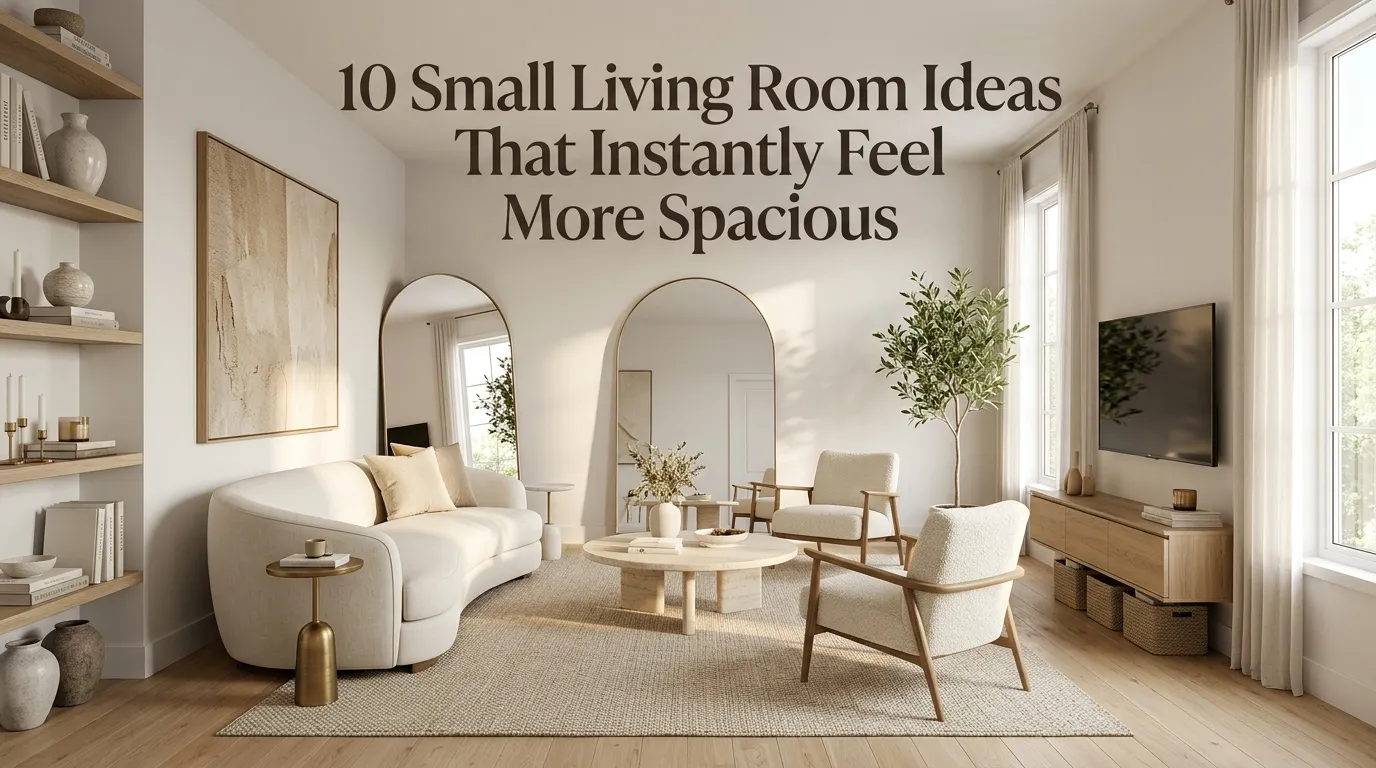
10 Small Living Room Ideas That Instantly Feel More Spacious
A small living room can still feel open, comfortable, and beautifully designed with the right decorating choices. Limited square footage doesn’t mean you have to sacrifice style or functionality. In fact, some of the most inviting living spaces rely on thoughtful layouts, carefully selected furniture, and smart design techniques that create the illusion of more room.
The secret to making a small living room feel spacious is focusing on visual balance. Light colors, streamlined furniture, strategic lighting, and clutter-free surfaces help the space breathe while maintaining warmth and personality. Every piece should have a purpose while contributing to the overall look of the room.
Using vertical space, choosing furniture with the right proportions, and incorporating reflective surfaces can dramatically change how a room feels. Even simple updates like rearranging furniture or replacing heavy curtains with lighter fabrics can make a noticeable difference.
In my experience, the most successful small living rooms aren’t the ones with the least amount of furniture—they’re the ones where every element feels intentional. A well-designed compact room can feel cozy, stylish, and surprisingly spacious.
These small living room ideas will help you maximize your space while creating a comfortable and elegant home environment.
Table of Contents
- Use a Light Color Palette
- Choose Furniture with Slim Profiles
- Create an Open Furniture Layout
- Add a Large Area Rug
- Use Mirrors to Reflect Light
- Maximize Vertical Storage
- Choose Multifunctional Furniture
- Layer Smart Lighting
- Keep Décor Minimal and Intentional
- Create Visual Continuity
1. Use a Light Color Palette
Quick Benefits
- Makes rooms feel larger
- Reflects natural light
- Creates a calm atmosphere
- Provides timeless style
- Easy to decorate
Why It Works
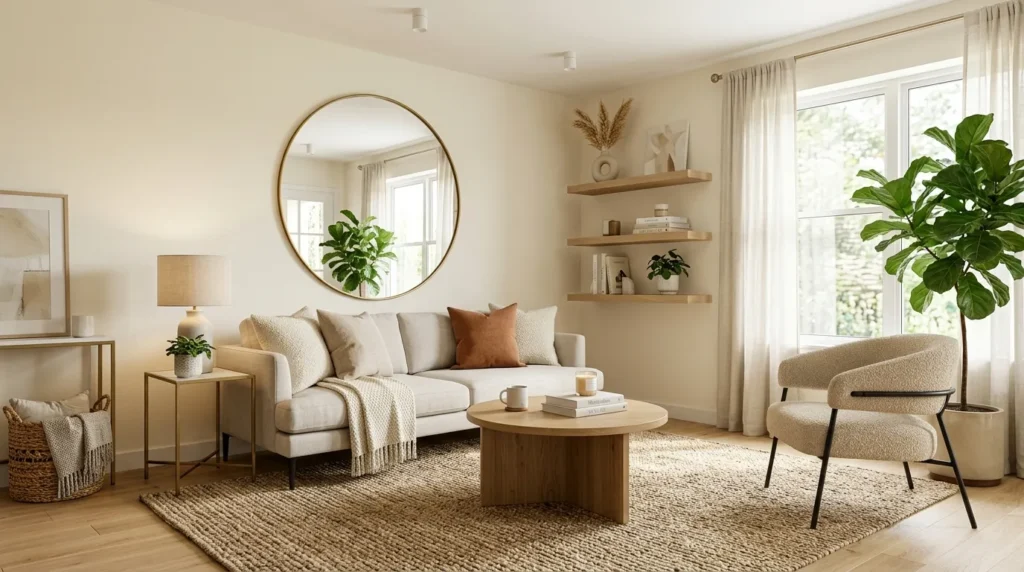
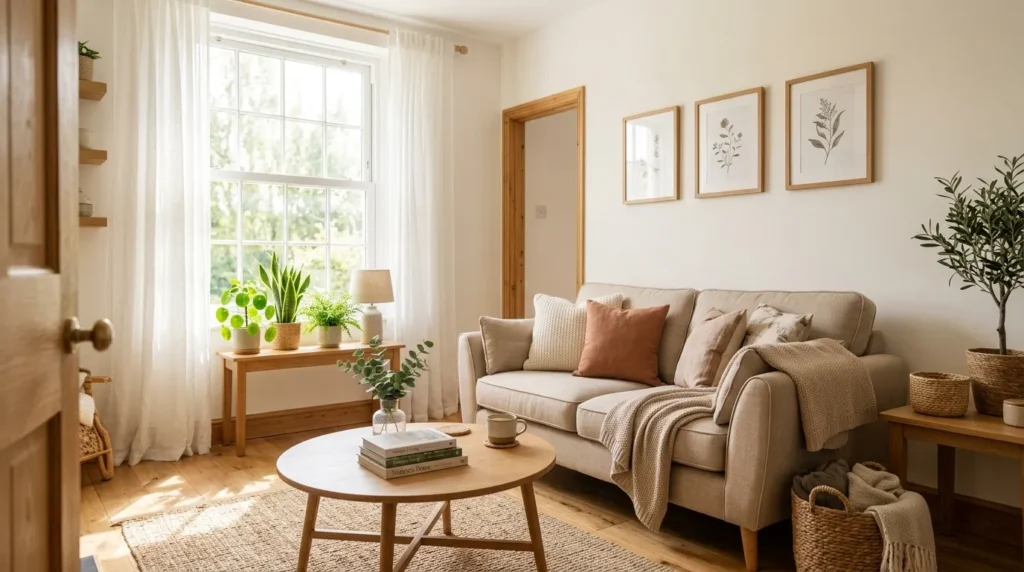
Light colors naturally make small spaces appear brighter and more open by reflecting available light throughout the room. Soft whites, warm beige, greige, and pale gray create an airy foundation that allows furniture and décor to stand out.
I’ve found that warm neutral tones work especially well because they prevent small rooms from feeling cold or empty.
How To Style It
Paint walls in soft neutral shades and coordinate them with light upholstery, natural wood accents, and subtle decorative pieces. Add small touches of contrast through pillows, artwork, and accessories.
2. Choose Furniture with Slim Profiles
Quick Benefits
- Saves visual space
- Improves movement
- Creates openness
- Looks modern
- Prevents overcrowding
Why It Works
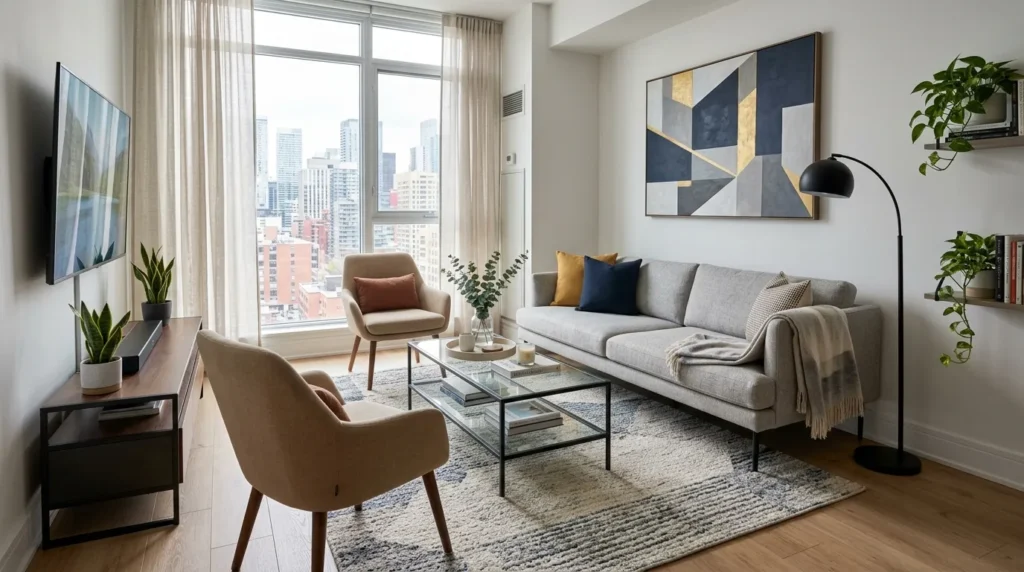
Large, bulky furniture can quickly overwhelm a small living room. Pieces with slim arms, raised legs, and clean silhouettes create more breathing room while maintaining comfort.
I’ve found sofas and chairs with exposed legs make rooms appear lighter because they allow more of the floor to remain visible.
How To Style It
Choose compact sofas, accent chairs with narrow frames, glass coffee tables, and furniture with elevated legs to maintain an open appearance.
3. Create an Open Furniture Layout
Quick Benefits
- Improves flow
- Makes rooms functional
- Creates spaciousness
- Encourages conversation
- Reduces clutter
Why It Works
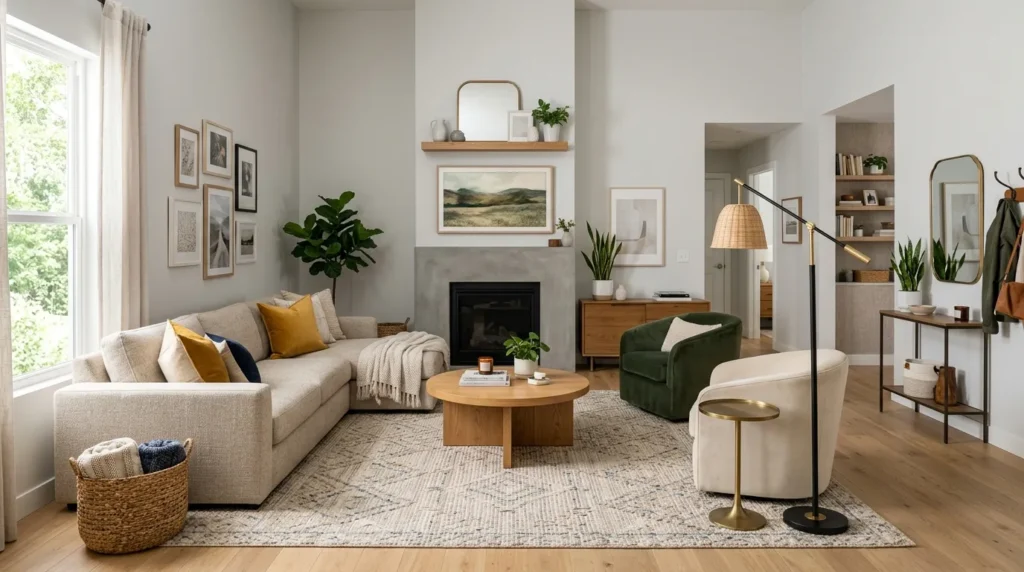
Furniture placement has a major impact on how large a room feels. Keeping pathways open allows the eye to move naturally through the space.
I’ve found pushing every piece against the wall isn’t always the best solution—sometimes floating furniture creates better balance.
How To Style It
Arrange seating around a central focal point while leaving clear walking areas. Avoid blocking windows or doorways with oversized furniture.
4. Add a Large Area Rug
Quick Benefits
- Defines the space
- Creates cohesion
- Adds comfort
- Makes rooms feel intentional
- Enhances style
Why It Works
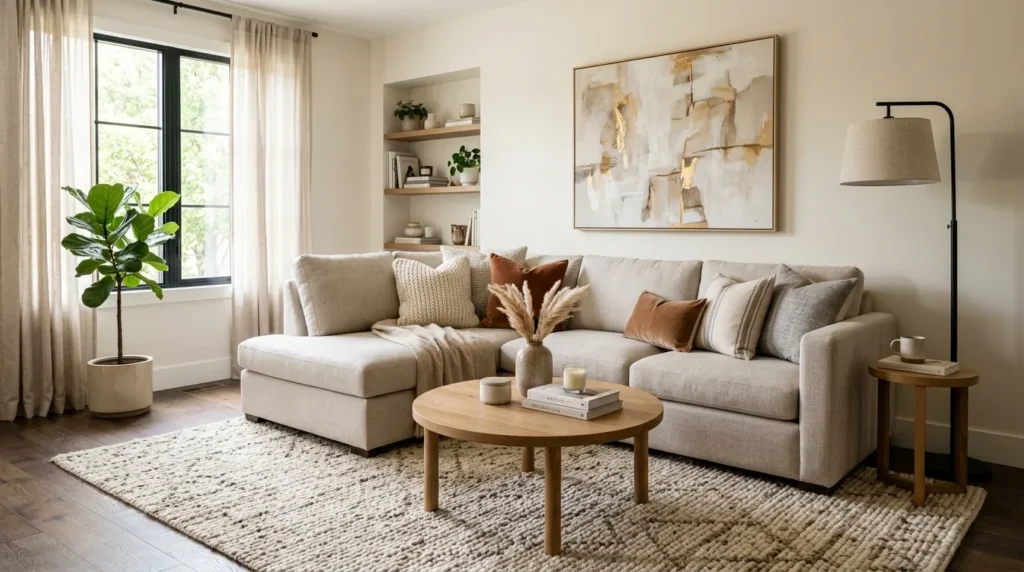
A properly sized rug anchors furniture and creates a unified design. Surprisingly, a larger rug often makes a small room appear bigger because it reduces visual fragmentation.
I’ve found tiny rugs can make compact rooms feel disconnected and smaller.
How To Style It
Choose a rug large enough for the front legs of your sofa and chairs to sit on it. Neutral patterns and soft textures work especially well.
5. Use Mirrors to Reflect Light
Quick Benefits
- Creates depth
- Reflects sunlight
- Adds elegance
- Makes spaces brighter
- Decorative feature
Why It Works
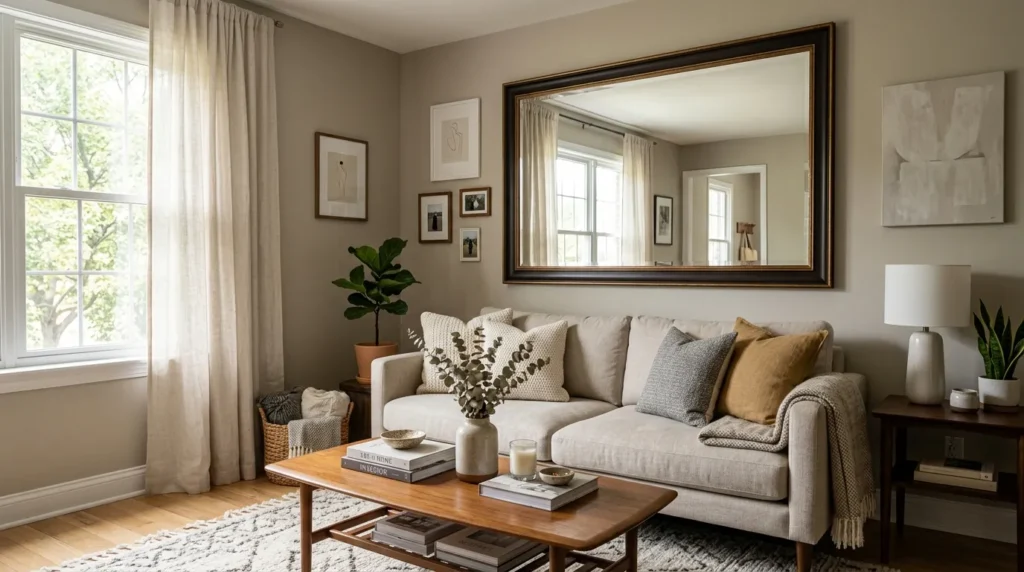
Mirrors create the illusion of additional space by reflecting light and extending visual lines. They are one of the easiest ways to make a compact living room feel more open.
I’ve found oversized mirrors create a more dramatic effect than several small decorative mirrors.
How To Style It
Place a large mirror opposite a window or behind a sofa to reflect natural light and make the room appear larger.
6. Maximize Vertical Storage
Quick Benefits
- Saves floor space
- Adds organization
- Uses unused areas
- Creates height
- Reduces clutter
Why It Works
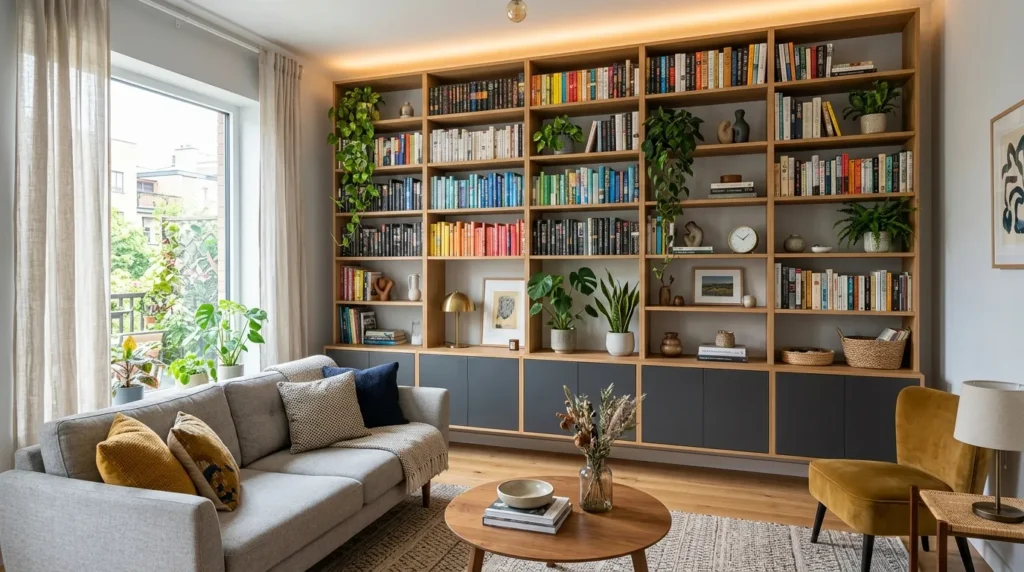
Small living rooms often have limited floor space, so using vertical areas helps you store belongings without making the room feel crowded. Tall shelves, built-ins, and wall-mounted storage draw the eye upward and make ceilings appear higher.
I’ve found that vertical storage is one of the most effective ways to create a spacious feeling without removing functionality.
How To Style It
Install floating shelves, tall bookcases, wall-mounted cabinets, or built-in storage units. Style them with books, plants, artwork, and baskets while keeping the arrangement balanced.
7. Choose Multifunctional Furniture
Quick Benefits
- Saves space
- Adds flexibility
- Improves functionality
- Reduces clutter
- Perfect for small homes
Why It Works
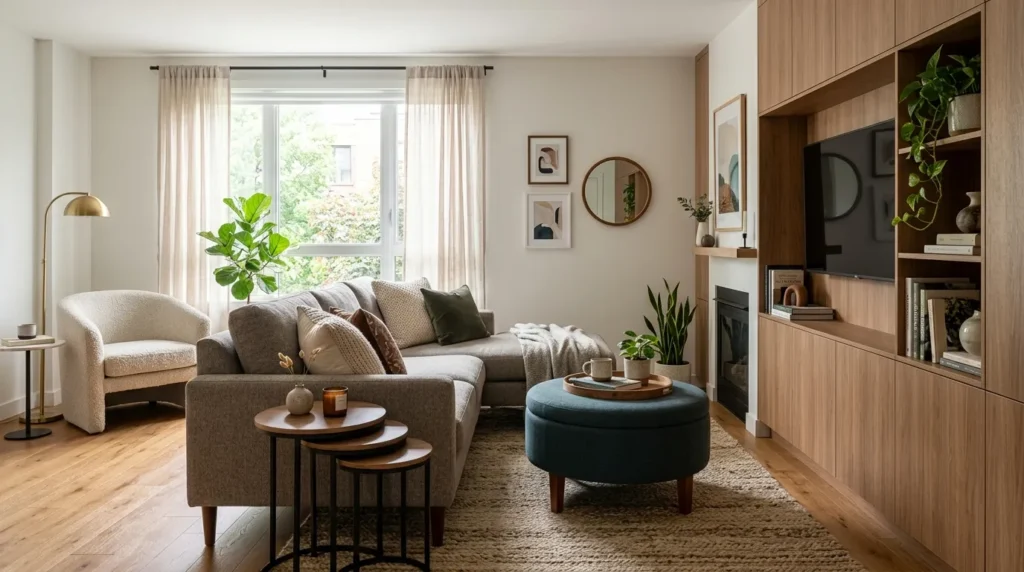
Furniture that serves multiple purposes allows small living rooms to work harder without adding extra pieces. Smart designs help maintain comfort while maximizing available space.
I’ve found multifunctional furniture makes compact rooms feel more organized and intentional.
How To Style It
Choose storage ottomans, nesting tables, lift-top coffee tables, sofa beds, or benches with hidden compartments to combine style and practicality.
8. Layer Smart Lighting
Quick Benefits
- Creates depth
- Brightens corners
- Enhances ambiance
- Makes rooms inviting
- Highlights décor
Why It Works
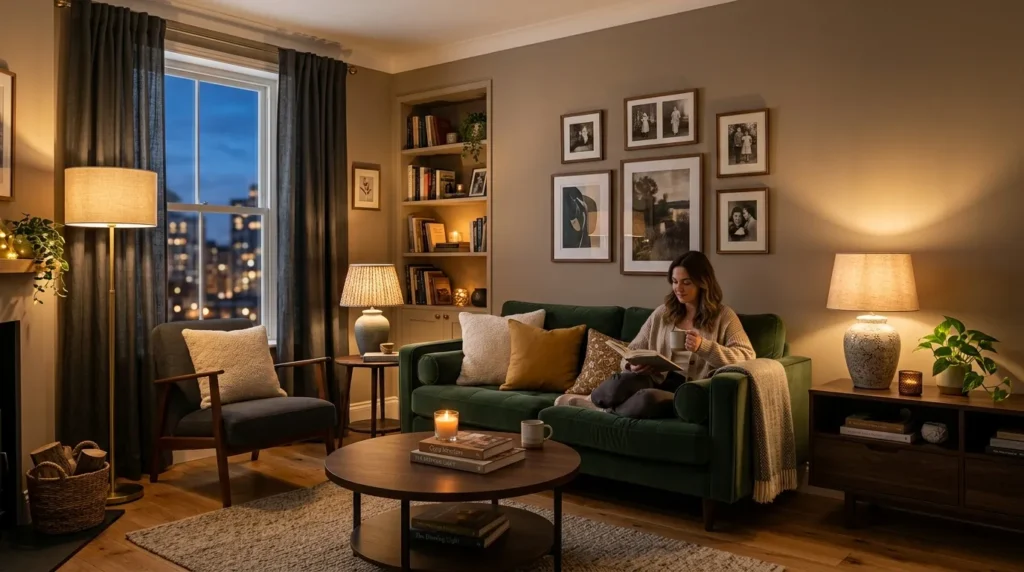
Good lighting can completely change how spacious a room feels. Multiple light sources prevent dark corners and create a more open, welcoming atmosphere.
I’ve found layered lighting always makes small rooms feel more polished and professionally designed.
How To Style It
Combine ceiling lights, floor lamps, table lamps, wall sconces, and natural light sources. Use warm bulbs to create a comfortable glow.
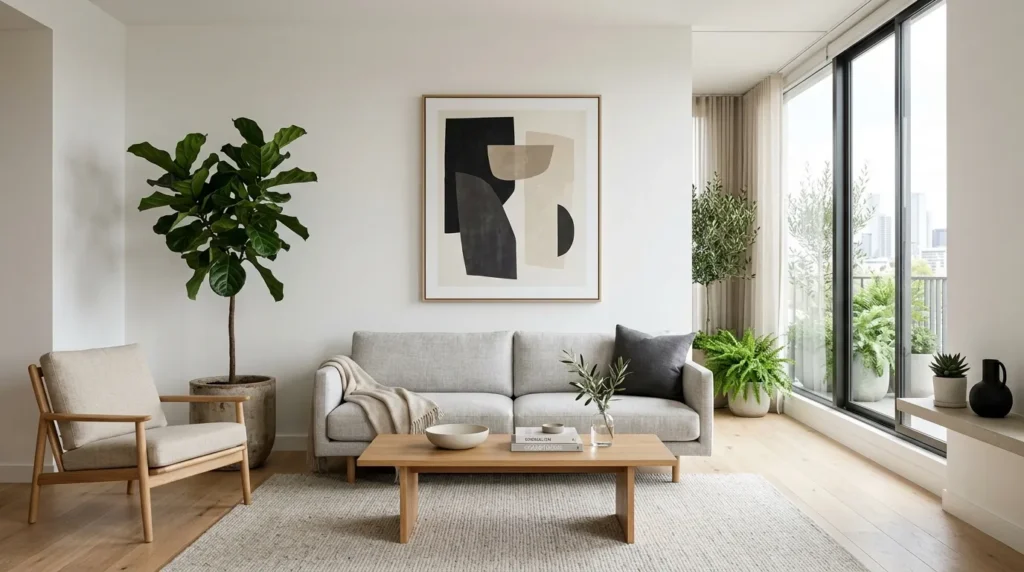
9. Keep Décor Minimal and Intentional
Quick Benefits
- Reduces visual clutter
- Creates calm
- Highlights favorite pieces
- Easier maintenance
- More spacious appearance
Why It Works
Too many decorative items can make a small living room feel crowded. A carefully edited selection of accessories creates a more sophisticated and open look.
I’ve found a few meaningful pieces often make a stronger impact than many small decorations.
How To Style It
Choose a statement artwork, a few decorative objects, greenery, and textured textiles while keeping surfaces mostly clear.
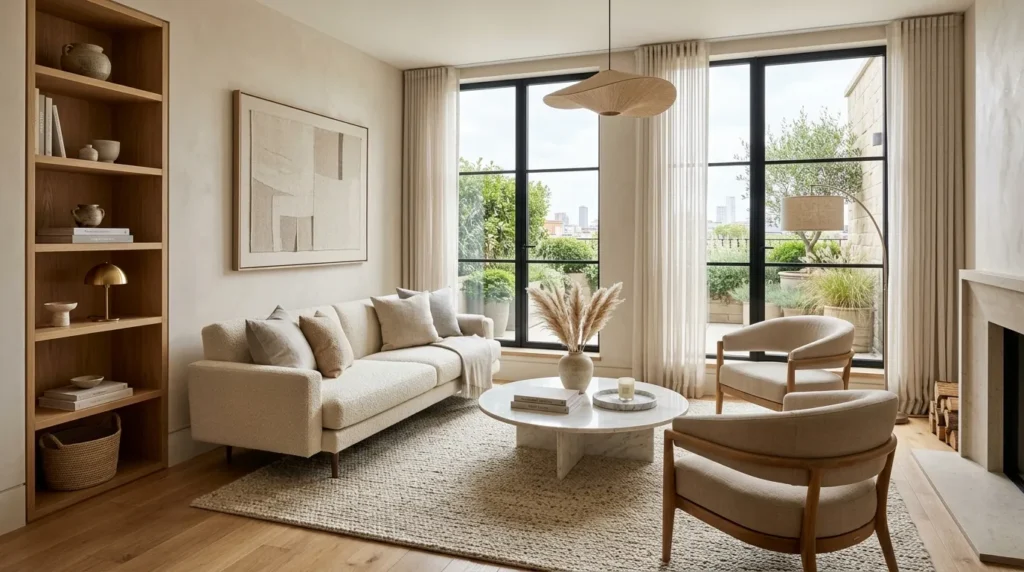
10. Create Visual Continuity
Quick Benefits
- Makes rooms flow
- Creates harmony
- Improves spaciousness
- Looks professionally designed
- Reduces distractions
Why It Works
Using consistent colors, materials, and design elements helps the room feel connected and larger. Visual breaks can make small spaces feel chopped up.
I’ve found repeating similar tones throughout furniture, textiles, and décor creates a seamless appearance.
How To Style It
Coordinate curtains, rugs, pillows, and furniture using a cohesive color palette. Continue similar finishes and textures throughout the room.
Frequently Asked Questions
How can I make a small living room look bigger?
Use light colors, mirrors, multifunctional furniture, smart lighting, and an open layout to create the illusion of more space.
What furniture works best for a small living room?
Choose compact sofas, slim chairs, nesting tables, storage ottomans, and furniture with exposed legs to maintain an open feel.
Should I use a large rug in a small living room?
Yes. A properly sized large rug can make the room feel more connected and spacious compared to a small rug that separates the furniture.
What colors make a small living room feel larger?
Soft white, beige, greige, light gray, cream, and other warm neutral tones help reflect light and create an airy atmosphere.
How do I avoid making a small living room feel cluttered?
Keep décor intentional, use hidden storage, avoid oversized furniture, and maintain clear surfaces and walkways.
Conclusion
Creating a spacious-looking small living room is all about smart design decisions rather than having more square footage. Light colors, thoughtful furniture choices, layered lighting, and organized storage can completely transform how your space feels.
The most successful small living rooms balance comfort, function, and style. By choosing pieces that serve a purpose and maintaining a cohesive design approach, you can create a room that feels open, inviting, and beautifully designed.
A small living room can become one of the most charming areas in your home when every detail is carefully considered.
Related Articles
- 10 Modern Living Room Ideas with Luxury Neutrals
- How to Decorate a Living Room That Feels Luxurious
- 10 Small Balcony Ideas for Relaxing Evenings
- 10 Cozy Neutral Aesthetic Bedroom Ideas
- How to Declutter Your Home Without Feeling Guilty