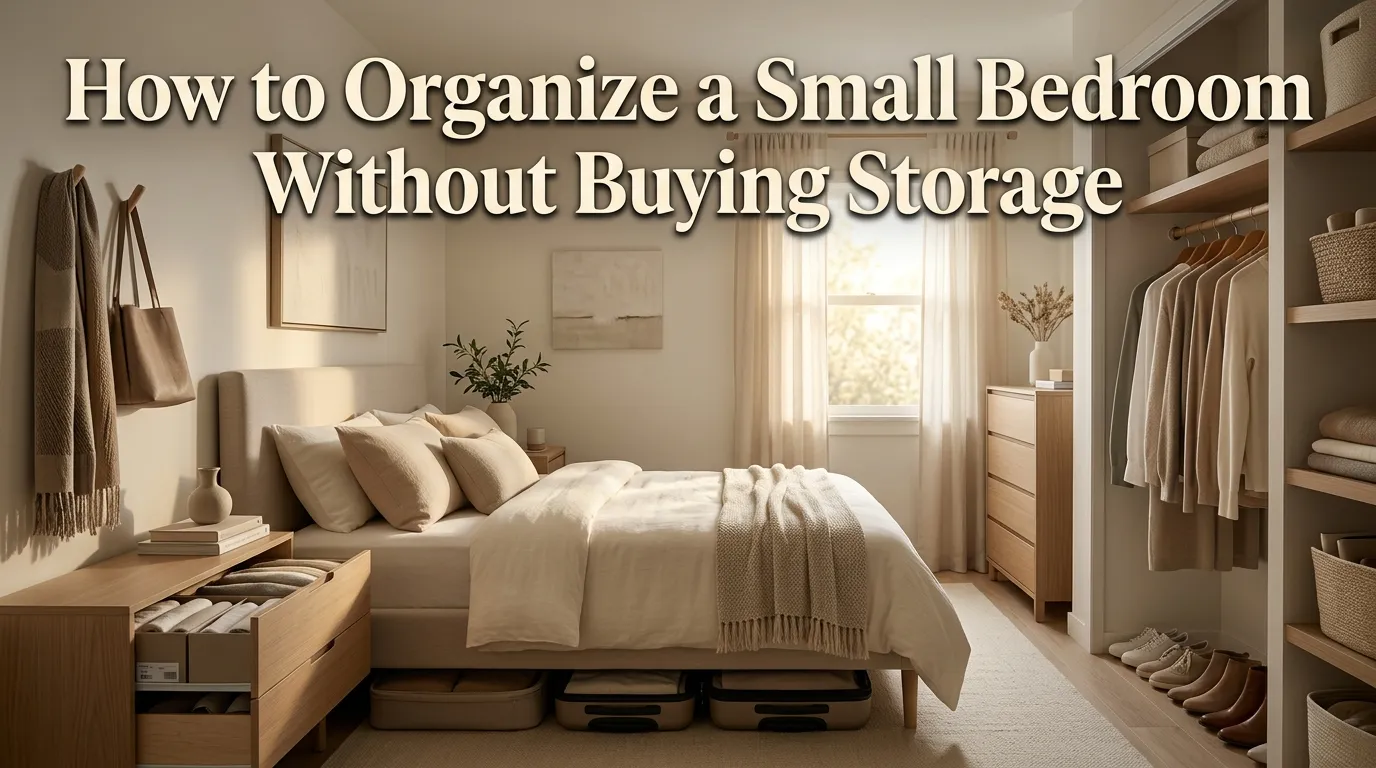
10 Ideas: How to Organize a Small Bedroom Without Buying Storage
A small bedroom does not automatically need more storage products.
In fact, one of the easiest ways to make a compact bedroom feel more organized is to use the space you already have more intelligently. Before buying another basket, shelf, drawer unit, or organizer, look carefully at the furniture, walls, doors, corners, and unused areas already available.
Small bedrooms often become cluttered because storage is approached as a shopping problem instead of a space-planning problem.
A chair becomes a clothing pile. The nightstand collects everything from chargers to beauty products. The floor becomes temporary storage for shoes and bags. Under the bed turns into a forgotten collection of boxes.
The good news is that many of these problems can be solved simply by changing where things live.
In my experience, the most effective small-bedroom organization projects begin by removing unnecessary belongings and then assigning the remaining items to spaces that are already available.
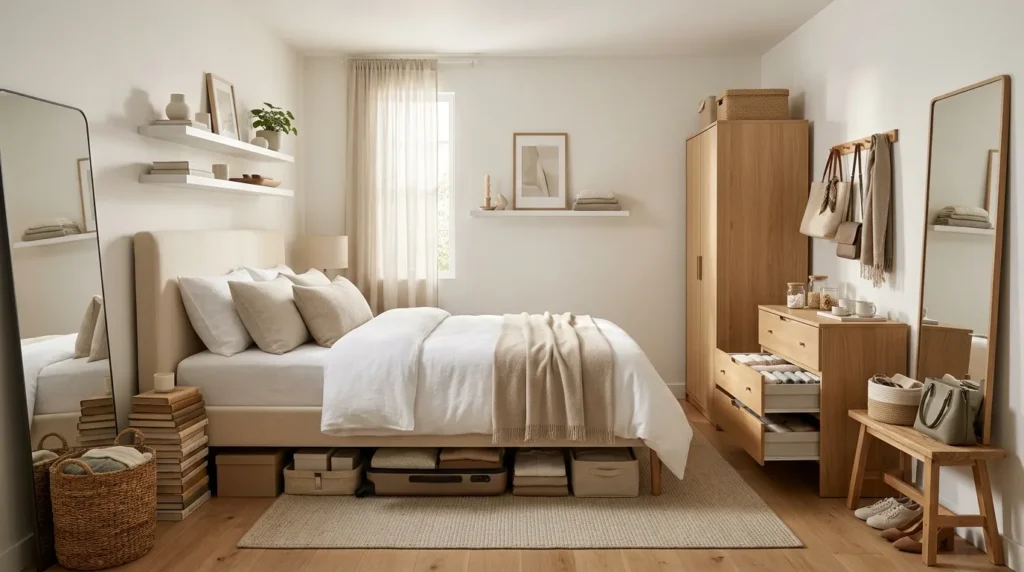
You can use the back of a door, the space under your bed, the top of a wardrobe, unused wall areas, existing drawers, and even empty corners more efficiently.
This approach is especially useful for renters, apartment dwellers, college students, and anyone working with a bedroom where every square foot matters.
The goal is not to make your bedroom look like a perfectly organized showroom.
It is to create a room where clothes are easier to put away, surfaces stay clearer, mornings feel less chaotic, and the floor remains open.
These ten ideas show how to create a more functional bedroom without spending money on new storage furniture.
Table of Contents
1. Use Under-Bed Space
Turn overlooked floor-level space into practical hidden storage.
2. Declutter First
Reduce the number of belongings competing for limited space.
3. Rework Existing Drawers
Make current furniture work harder through better categorization.
4. Use Door Space
Take advantage of vertical areas that are often completely ignored.
5. Rotate Seasonal Items
Keep only current-season belongings within easy reach.
6. Maximize Closet Space
Rearrange existing clothing storage to improve accessibility.
7. Use Wall Height
Take advantage of unused vertical space without adding furniture.
8. Create A Floor Zone
Give shoes, bags, and everyday items a specific home.
9. Style The Nightstand
Reduce bedside clutter by keeping only what you actually use.
10. Reset Every Evening
Create a simple routine that keeps the room organized.
1. Use Under-Bed Space
Quick Benefits
- Uses forgotten space
- Keeps belongings hidden
- Frees closet space
- Works in rental bedrooms
- Costs nothing when using existing containers
Why It Works
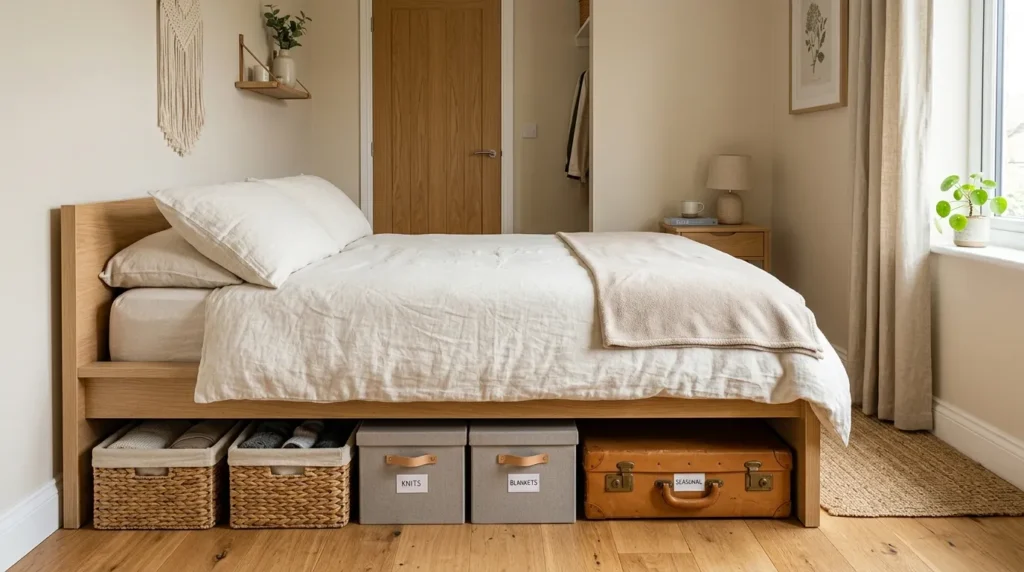
The area underneath a bed is one of the most useful storage zones in a small bedroom, yet it is often overlooked.
Because it is out of sight, it can hold items you do not need every day without taking up valuable closet or floor space.
The important part is keeping the area intentional.
Without a system, under-bed storage can quickly become a collection of random boxes, old clothing, and things you have forgotten about.
Use this space for belongings that genuinely need to stay but do not require daily access.
How To Style It
Start by pulling everything out from underneath the bed.
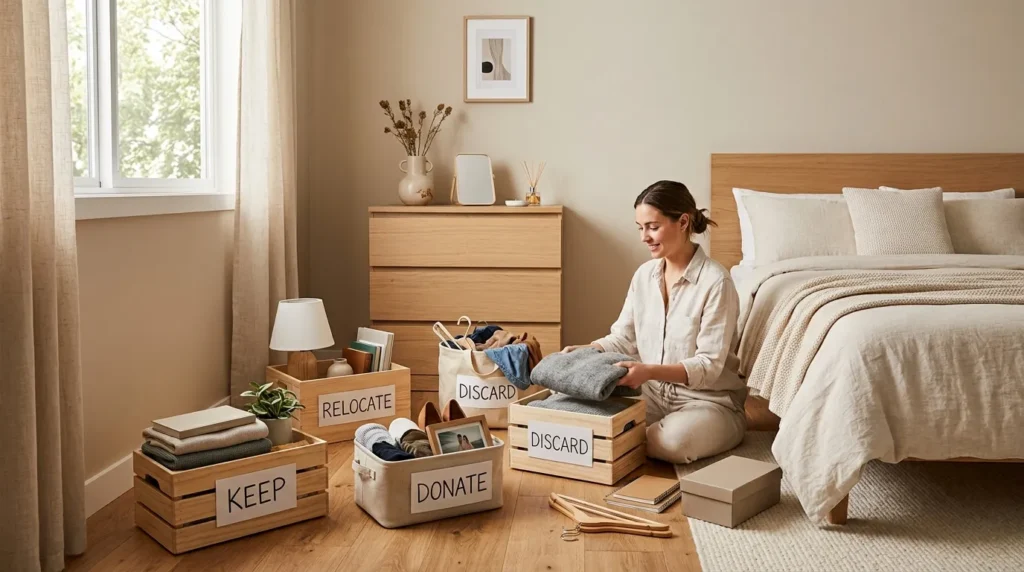
Sort the contents into keep, relocate, donate, and discard.
Then group similar belongings.
Seasonal clothing, extra bedding, luggage, and special-occasion items can work well here.
If you already own shallow containers, suitcases, sturdy boxes, or fabric bags, use those instead of buying new organizers.
Label containers if necessary.
Keep frequently used items toward the front and rarely used items farther back.
If your bed has little clearance, do not force bulky items underneath it.
The goal is to make existing space useful without creating another difficult-to-maintain area.
2. Declutter First
Quick Benefits
- Creates immediate space
- Reduces visual clutter
- Makes existing storage more effective
- Simplifies cleaning
- Costs nothing
Why It Works
The simplest way to create more storage space is often to need less storage.
A small bedroom becomes difficult to organize when every drawer, shelf, and closet section is already full.
Before changing the arrangement, remove items you no longer use.
Look especially for clothing that no longer fits, duplicates, worn-out accessories, old paperwork, unused beauty products, and decor that no longer suits the room.
Decluttering gives your existing furniture breathing room.
It also makes organization much easier because you are working with a smaller number of belongings.
How To Style It
Start with visible surfaces.
Clear the nightstand, dresser, chair, floor, and any open shelves.
Then move into drawers and the closet.
Use simple categories: keep, donate, relocate, and discard.
Try each item on if clothing is difficult to evaluate.
Ask whether you actually reach for it.
For duplicates, keep the one you use most.
Avoid creating a huge “maybe” pile.
If something is sentimental or difficult to decide about, set it aside for later.
Once the unnecessary belongings are gone, look at your room again.
You may discover that the storage you already have is enough.
3. Rework Existing Drawers
Quick Benefits
- Improves accessibility
- Prevents messy piles
- Uses existing furniture
- Makes mornings easier
- Creates visual order
Why It Works
A drawer can technically hold a lot while still being frustrating to use.
If clothing is randomly mixed together, you may have plenty of storage but still feel like you have nowhere to put anything.
The solution is not always another organizer.
Sometimes simply changing the categories and folding method makes the existing drawer dramatically more functional.
The goal is to make every drawer easy to understand at a glance.
How To Style It
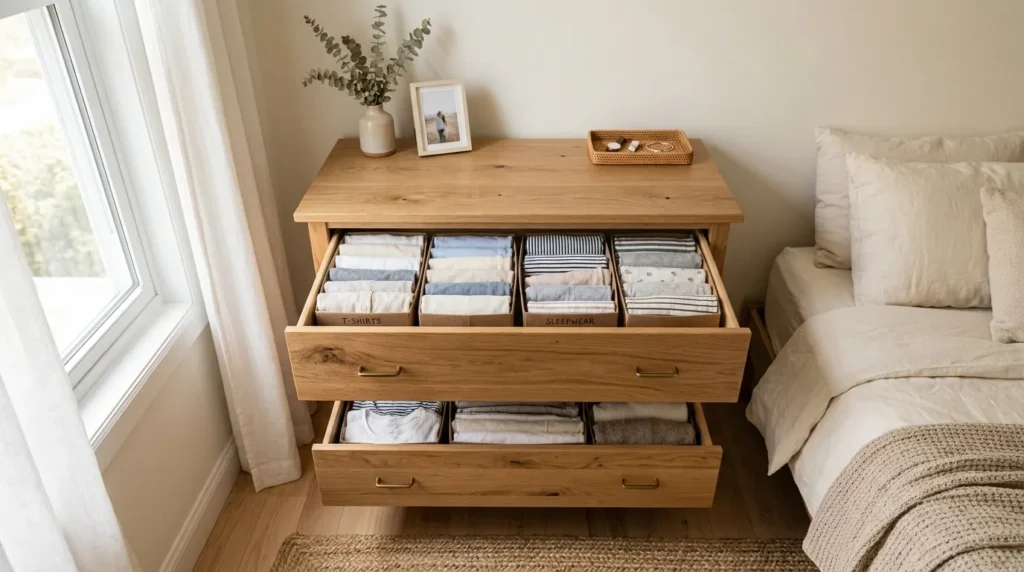
Empty one drawer at a time.
Group similar items together.
For example, dedicate one drawer to everyday tops, another to sleepwear, and another to smaller accessories if the furniture allows.
Fold clothing vertically where practical so you can see individual pieces rather than digging through stacks.
Use existing small boxes, sturdy gift boxes, or shallow containers to separate accessories.
Do not fill drawers to maximum capacity.
Leave enough room to remove items without disturbing everything else.
If one drawer repeatedly becomes messy, consider whether its category is too broad.
Sometimes the issue is not the drawer.
It is the system.
4. Use Door Space
Quick Benefits
- Uses unused vertical space
- Keeps items accessible
- Saves floor area
- Works especially well in small rooms
- Requires no new furniture
Why It Works
Doors are frequently overlooked when planning bedroom organization.
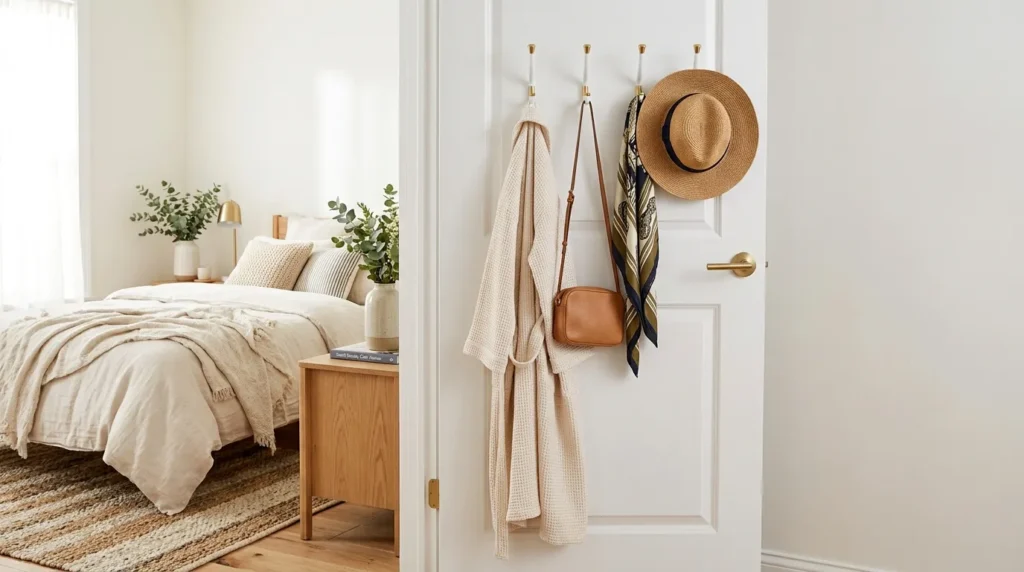
The back of a bedroom door can provide useful space for lightweight everyday items such as scarves, bags, robes, hats, or frequently used accessories.
Even without purchasing a door organizer, you may already have hooks, removable hooks, hangers, or other suitable items at home.
The key is to keep the area visually controlled.
How To Style It
Look at the back of your bedroom and closet doors.
Identify which items are currently sitting on the floor or chair.
Move only a few high-use belongings to the door.
A robe can hang behind the door.
A frequently used bag can have a designated hook.
Scarves can be grouped together.
If you use removable hooks, follow the manufacturer’s weight and installation instructions.
Avoid overloading the door.
Too many objects can make the space look cluttered and may interfere with the door closing properly.
Think of the door as a small vertical zone, not a replacement closet.
5. Rotate Seasonal Items
Quick Benefits
- Frees closet space
- Makes clothing easier to find
- Reduces visual clutter
- Improves wardrobe access
- Uses existing storage more efficiently
Why It Works
Most people do not need every item of clothing accessible at the same time.
Heavy winter sweaters are rarely needed during the hottest part of summer, while lightweight shorts and linen pieces may be irrelevant during winter.
Rotating seasonal belongings allows your existing closet and drawers to function more efficiently.
It also makes getting dressed easier because you are working with a more relevant selection.
How To Style It
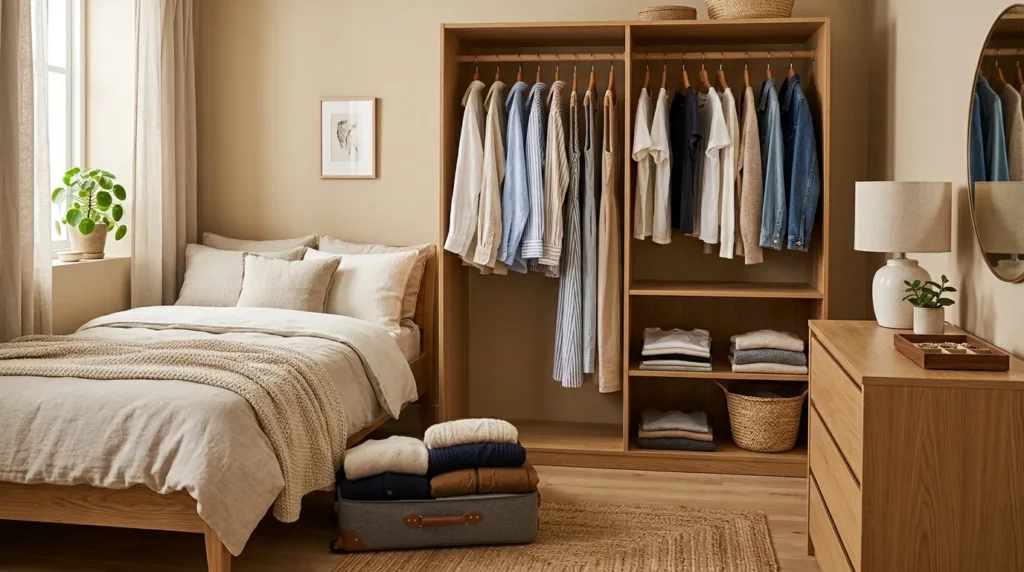
At the beginning of each season, remove clothing you are unlikely to wear for the next several months.
Fold those pieces and store them under the bed, on a high closet shelf, inside existing luggage, or in another dry storage area you already have.
Bring the upcoming season’s clothing into the easiest-to-reach locations.
Use suitcases for seasonal storage when practical.
This is especially useful in small apartments because luggage otherwise occupies valuable space while sitting empty.
Before storing anything, make sure clothing is clean and completely dry.
Avoid packing damp textiles.
At the end of the season, repeat the process.
6. Maximize Closet Space
Quick Benefits
- Makes clothing easier to access
- Eliminates wasted areas
- Improves visibility
- Reduces clothing piles
- Uses existing furniture
Why It Works
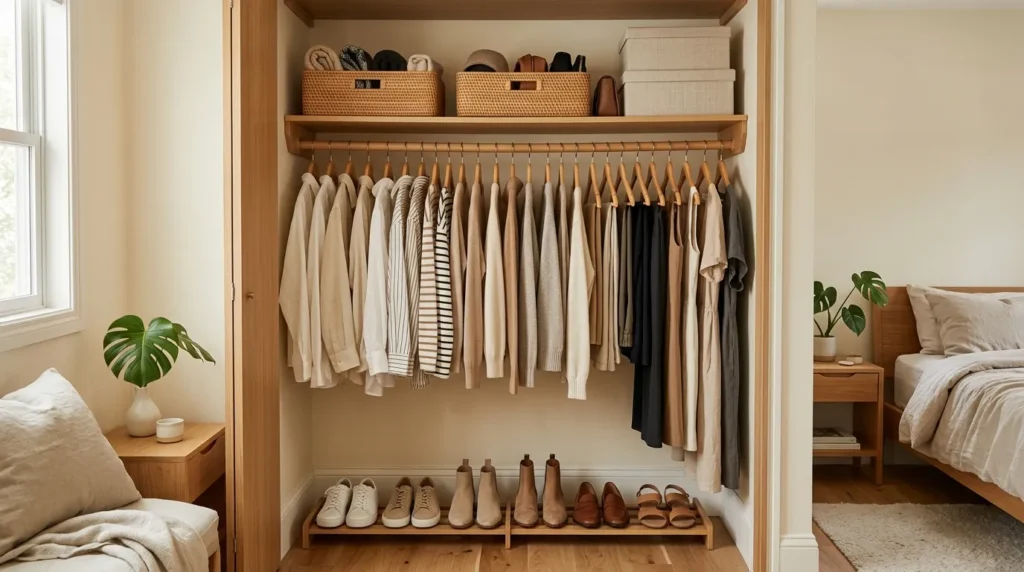
A closet can feel too small even when it contains enough space because the arrangement is inefficient.
Clothes may be packed too tightly, shelves may be underused, and frequently worn pieces may be hidden behind less useful items.
Rearranging your current closet can create more functional capacity without adding furniture.
How To Style It
Start by removing everything you no longer wear.
Then organize clothing by category.
You might group tops, pants, dresses, jackets, and occasion pieces.
Within each category, organize by frequency of use.
Keep everyday clothing at comfortable eye level.
Move rarely worn pieces higher or farther back.
If you already own slim hangers, use them consistently.
If you have sturdy baskets or boxes at home, use them for accessories.
Use empty floor space for shoes you regularly wear.
Avoid stuffing every corner.
A closet should be easy to use.
If putting something away requires moving five other things, the system needs adjusting.
7. Use Wall Height
Quick Benefits
- Uses vertical space
- Keeps floors open
- Creates visual height
- Helps small rooms feel organized
- Makes existing walls more useful
Why It Works
Small bedrooms often have limited floor space but plenty of vertical space.
Looking upward can reveal unused areas above dressers, beside wardrobes, or near corners.
You do not necessarily need to install new shelves.
Existing hooks, picture ledges, pegboards, or suitable wall-mounted items already in your home may be enough.
Even simply relocating decor can free valuable surface space.
How To Style It
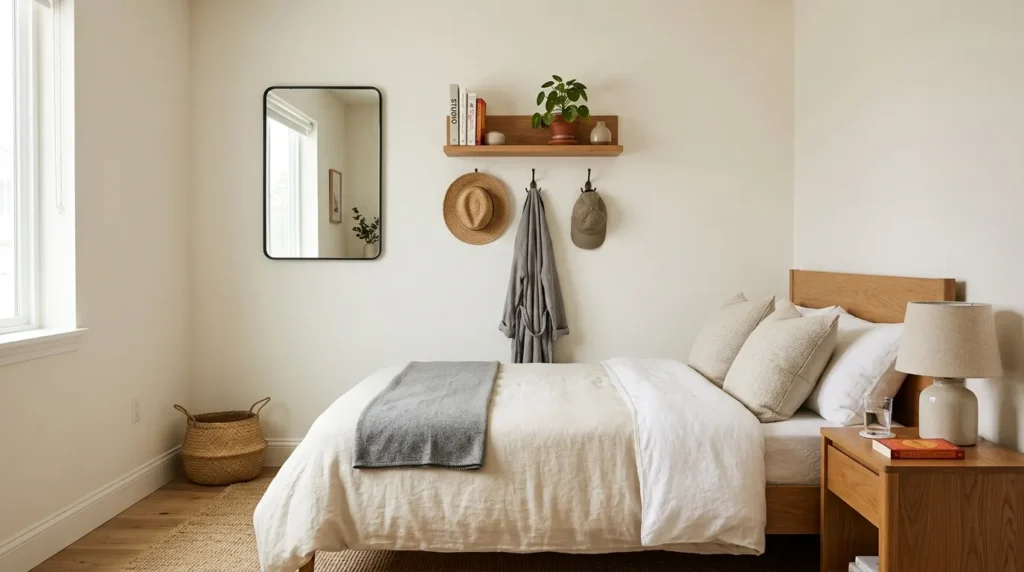
Look at the wall above your dresser.
If it is completely unused, consider whether lightweight everyday items could be moved upward using existing wall solutions.
A few hooks can hold hats, a robe, or frequently used accessories.
A wall-mounted mirror can eliminate the need for a freestanding one.
If you already own a narrow shelf, relocate it to an area where it provides more function.
Keep vertical storage visually simple.
The goal is to move belongings upward without making the walls feel crowded.
Leave some blank wall space.
It helps the room feel calmer and more spacious.
8. Create A Floor Zone
Quick Benefits
- Keeps walking paths clear
- Prevents shoe piles
- Gives bags a home
- Makes cleaning easier
- Improves daily routines
Why It Works
The floor is one of the first places clutter becomes visible.
Shoes, bags, laundry, blankets, and random belongings can quickly turn an otherwise organized bedroom into a messy space.
Rather than trying to keep the entire floor completely empty without a system, create specific zones.
Give everyday objects a predictable destination.
This makes putting things away much easier.
How To Style It
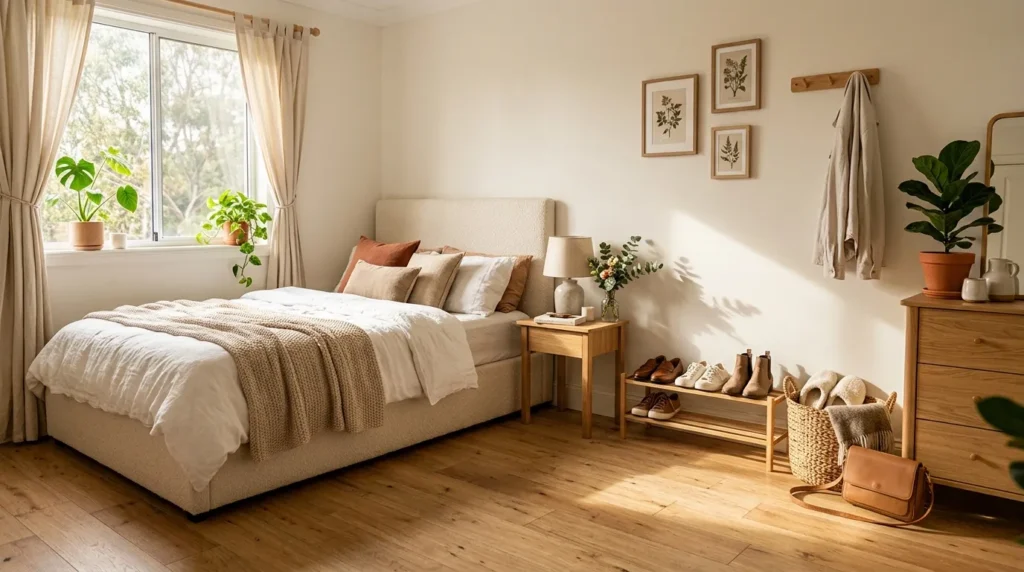
Choose one corner for everyday shoes.
Keep only the pairs you regularly wear there.
Place your everyday bag in a designated location rather than dropping it wherever you happen to stand.
A sturdy existing basket can hold slippers, workout accessories, or small items.
Use the back of a chair only for something you genuinely plan to wear again soon.
Keep laundry in an existing hamper rather than allowing clothes to accumulate on the floor.
The goal is to create clear pathways around the bed and furniture.
A clean floor makes a small bedroom feel noticeably more spacious.
9. Style The Nightstand
Quick Benefits
- Reduces bedside clutter
- Makes cleaning easier
- Creates a calmer atmosphere
- Keeps essentials accessible
- Improves the bedroom’s appearance
Why It Works
Nightstands are small surfaces, so they become cluttered quickly.
Chargers, books, skincare, water glasses, receipts, hair accessories, and miscellaneous objects can accumulate within days.
Because the nightstand sits directly beside the bed, clutter here is particularly noticeable.
Keeping it intentionally simple can make the entire bedroom feel calmer.
How To Style It
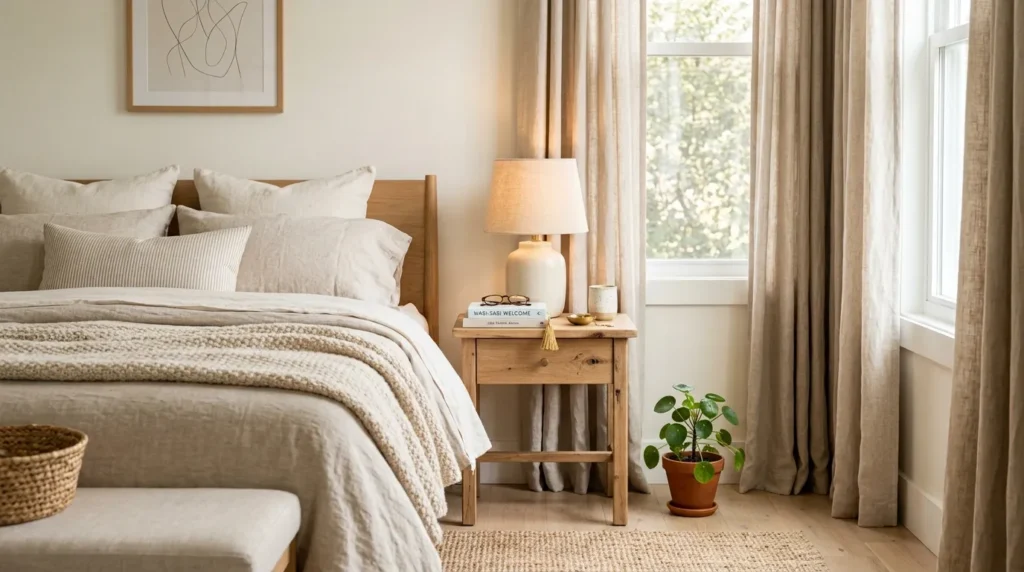
Remove everything from the nightstand.
Return only the things you use regularly.
A lamp, current book, water glass, and one small personal object may be enough.
Move skincare and beauty products into existing bathroom storage if you do not need them beside the bed.
Coil charging cables neatly and keep only the necessary ones.
Use a small dish you already own for jewelry or small items.
Avoid turning the nightstand drawer into a miscellaneous storage zone.
Give each item a specific purpose.
A little empty space is valuable.
10. Reset Every Evening
Quick Benefits
- Prevents clutter buildup
- Takes only a few minutes
- Makes mornings easier
- Protects your organization system
- Requires no purchases
Why It Works
A small bedroom can return to chaos quickly if everyday habits don’t change.
The solution is not spending more money on organization.
It is creating a simple reset routine.
Five minutes at the end of the day can be enough to return clothing, shoes, bags, books, and other belongings to their designated places.
Small maintenance prevents the need for another major organizing project.
How To Style It
Before going to bed, take a quick look around the room.
Put dirty clothing in the hamper.
Hang or fold anything you plan to wear again.
Return shoes to their floor zone.
Clear the nightstand.
Put books back where they belong.
Remove cups and dishes.
Straighten the bedding.
Open the curtains in the morning and make the bed as part of your daily routine.
Once these habits become automatic, maintaining the room becomes much easier.
The best organization system is the one you can realistically repeat.
How To Organize Without Buying Anything
The key is to think of your bedroom as a collection of zones rather than one storage problem.
Sleep Zone
Keep the bed area calm and free from unnecessary belongings.
Clothing Zone
Use the existing closet and drawers for current clothing.
Getting Ready Zone
Keep everyday accessories and beauty items near where you actually use them.
Floor Zone
Give shoes, bags, and laundry designated locations.
Hidden Zone
Use under-bed space, suitcases, and existing boxes for occasional items.
Vertical Zone
Look at doors, walls, and high shelves for opportunities to move belongings upward.
This approach makes organization more intuitive.
You are not simply finding places to put things.
You are creating a room where each category naturally belongs somewhere.
Small Bedroom Organization Mistakes To Avoid
Buying Storage Too Quickly
New containers can make clutter look organized without actually reducing it.
Declutter first.
Using Every Surface
An empty dresser top is not wasted space.
It provides visual breathing room.
Keeping Everything Accessible
Daily essentials should be accessible.
Occasional items can live in less convenient areas.
Ignoring The Floor
A clear floor can dramatically improve how spacious a small bedroom feels.
Overloading The Closet
If clothes are packed too tightly, the closet becomes difficult to use.
Creating Complicated Systems
The more steps an organization system requires, the less likely you are to maintain it.
Keep it simple.
A 30-Minute Small Bedroom Reset
If you need a quick improvement, use this sequence.
First 5 Minutes
Collect trash and remove dishes.
Next 5 Minutes
Put all clothing into the correct category: hamper, closet, drawer, or donate.
Next 5 Minutes
Clear the floor.
Next 5 Minutes
Reset the nightstand and dresser.
Next 5 Minutes
Rearrange the closet or one drawer.
Final 5 Minutes
Make the bed, open the curtains, and remove anything that belongs elsewhere.
You may be surprised by how different the room feels after only half an hour.
FAQ
How can I organize a small bedroom without buying storage?
Start by decluttering, then make better use of areas you already have. Under-bed space, existing drawers, closets, doors, suitcases, baskets, and vertical wall areas can all provide useful storage. The biggest improvement usually comes from reducing unnecessary belongings and assigning the remaining items specific homes.
What should I remove first from a small bedroom?
Start with obvious clutter such as trash, dishes, clothing you no longer wear, duplicate items, and belongings that belong in other rooms. Then work through visible surfaces before tackling drawers and closets. Quick wins make the rest of the organization process easier.
How do I organize clothes without buying organizers?
Group clothing by category and frequency of use. Fold smaller items vertically where practical so you can see what you own. Rotate seasonal clothing and use existing suitcases or under-bed space for pieces you won’t need soon. Avoid overfilling drawers because tightly packed clothing becomes difficult to maintain.
How can I use under my bed for storage?
First remove everything and declutter the area. Then use existing shallow boxes, suitcases, fabric bags, or containers to group similar belongings. Seasonal clothing, extra bedding, and occasional-use items are good candidates. Keep everything dry and accessible enough that you can retrieve it when necessary.
How do I keep a small bedroom organized every day?
Create a short evening reset. Put clothing away, clear the nightstand, return shoes and bags to their designated areas, remove dishes, and straighten the bed. The routine should take only a few minutes. Consistent small resets are much easier than waiting until clutter becomes overwhelming.
Is it better to use vertical or horizontal storage in a small bedroom?
Vertical space is often especially valuable because it preserves limited floor area. Walls, doors, and higher closet sections can hold suitable lightweight belongings. However, don’t cover every wall with storage. A balance of useful vertical space and open areas helps the bedroom feel more spacious.
How do I make a small bedroom look less cluttered?
Reduce the number of visible belongings, keep surfaces relatively clear, organize clothing by category, and maintain open floor paths. Use the same or complementary colors for storage items you already own when possible. Most importantly, don’t try to fill every available space. Empty areas create visual breathing room.
Conclusion
A small bedroom does not need expensive storage furniture to become organized.
Often, the biggest improvement comes from using what you already have more thoughtfully.
Start by removing belongings you no longer need.
Then look at the hidden opportunities around the room: underneath the bed, behind doors, inside existing drawers, at the top of the closet, and along unused wall areas.
Give everyday items specific homes.
Keep current-season clothing accessible and move occasional belongings out of prime storage areas.
Most importantly, make your organization system easy enough to maintain.
A complicated system might look impressive for a few days, but a simple routine you can repeat every evening is far more valuable.
Keep the nightstand clear.
Keep the floor open.
Return clothing after wearing it.
Put shoes and bags in their designated zones.
Take a few minutes each evening to reset the room.
You don’t need to create a perfect bedroom.
You simply want a space where everything you use has a logical place and where you can move around comfortably.
If your bedroom feels cramped today, don’t start by shopping.
Start by opening one drawer.
Remove what you don’t need.
Then look at the empty space you created.
That is often where the best organization ideas begin.
Related Articles
- How to Organize a Small Bedroom Without Renovating
- How to Organize a Small Bedroom with Hidden Storage
- How to Make a Small Bedroom Feel More Functional
- 10 Small Bedroom Ideas with Smart Space-Saving Furniture
- 11 Cozy Bedroom Organization Ideas for a Clutter-Free Space