
Should Ceilings Always Be Painted in Dead Flat White Paint?
Deciding whether you should ceilings always be painted in dead flat white paint is a common dilemma for homeowners and designers alike. While white is the industry standard for a reason, it is not a mandatory rule for every interior space. Choosing the right finish and shade depends heavily on your room’s height, lighting, and the overall mood you want to create.
This article explores the technical and aesthetic implications of ceiling finishes to help you make an informed decision for your own home. By understanding how light interacts with different paint sheens, you can move beyond the default choice and craft a more intentional environment.
The short answer is no; you do not have to stick to dead flat white. While this choice is safe and effective for hiding imperfections, it is merely one option among many.
Professional designers often deviate from this standard to manipulate the perceived height of a room or to create a more cohesive, immersive atmosphere. If you have high ceilings or want to make a room feel cozy, other colors or finishes might actually serve you better.
Why Dead Flat White Is the Industry Standard

The popularity of dead flat white stems from its unique ability to mask surface imperfections. Ceilings are rarely perfectly smooth, and they often feature drywall tape lines or minor dimples from the construction process.
A dead flat finish has almost no sheen, meaning it does not reflect light back toward the viewer. Because it lacks reflectivity, it hides shadows and bumps that would otherwise be highlighted by a satin or semi-gloss paint.
Furthermore, white is an incredibly neutral backdrop that works with almost any wall color. It provides a clean break between the walls and the overhead plane, which helps define the boundaries of a room.
This is particularly useful in spaces with lower ceilings where you want to avoid the “caving in” effect. By keeping the ceiling bright and non-reflective, you effectively push it away from the viewer’s eye, creating the illusion of more vertical space.
The Technical Benefits of Low-Sheen Finishes
When you choose a flat or dead flat finish, you are selecting a product designed to absorb light rather than bounce it around. This absorption is key to achieving a uniform look across a large, flat surface like a ceiling.
If you were to use a paint with a higher sheen, every roller mark or brush stroke would become visible as the light hits the texture at different angles. This is why manufacturers specifically formulate ceiling paints to be as flat as possible.
Beyond just hiding flaws, flat finishes provide a soft, matte appearance that feels sophisticated. In modern interior design, there is a strong preference for muted, organic textures that don’t distract from the furniture or art in the room.
A dead flat white ceiling acts as a canvas, allowing the other elements of your design to take center stage. You can find more technical specifications on light reflectance values through resources like the National Fenestration Rating Council to understand how different surfaces influence ambient light levels.
When to Consider a Different Ceiling Color
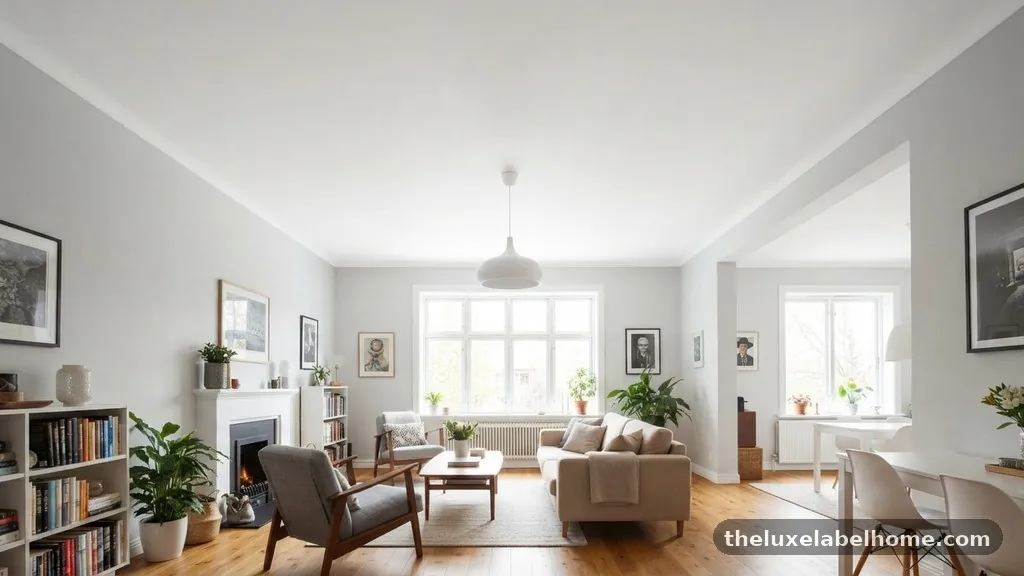
There are many scenarios where a white ceiling might actually work against your design goals. If you have an oversized room with very high ceilings, a stark white plane can make the space feel cold, clinical, or disconnected.
In these instances, painting the ceiling a darker shade or a warm off-white can help bring the ceiling “down” to create a more intimate feeling. This technique is frequently used in large living rooms or dining areas to make them feel more grounded.
Another compelling reason to move away from white is when you want to create a monochromatic or “color-drenched” look. By painting the walls and ceiling the same color, you blur the architectural lines of the room.
This can be especially effective in smaller spaces, as it prevents the eye from stopping at the corner where the wall meets the ceiling. When the boundaries disappear, the room often feels larger and more expansive, contrary to the belief that you must always paint the ceiling white to gain height.
Comparing Common Ceiling Paint Sheens
Choosing the right sheen is just as important as choosing the right color. Each level of gloss offers a different balance between durability and aesthetic appeal. The table below outlines the primary differences you should consider when selecting a finish for your project:
| Finish Type | Reflectivity | Best Use Case | Hiding Power |
|---|---|---|---|
| Dead Flat | None (Absorbs light) | High-ceiling rooms, textured surfaces | Excellent |
| Flat/Matte | Very Low | General living areas | High |
| Eggshell | Low | Kitchens or baths (moisture resistance) | Moderate |
| Semi-Gloss | High | Specific accent ceilings or trim | Low |
The Impact of Natural Light on Your Choice
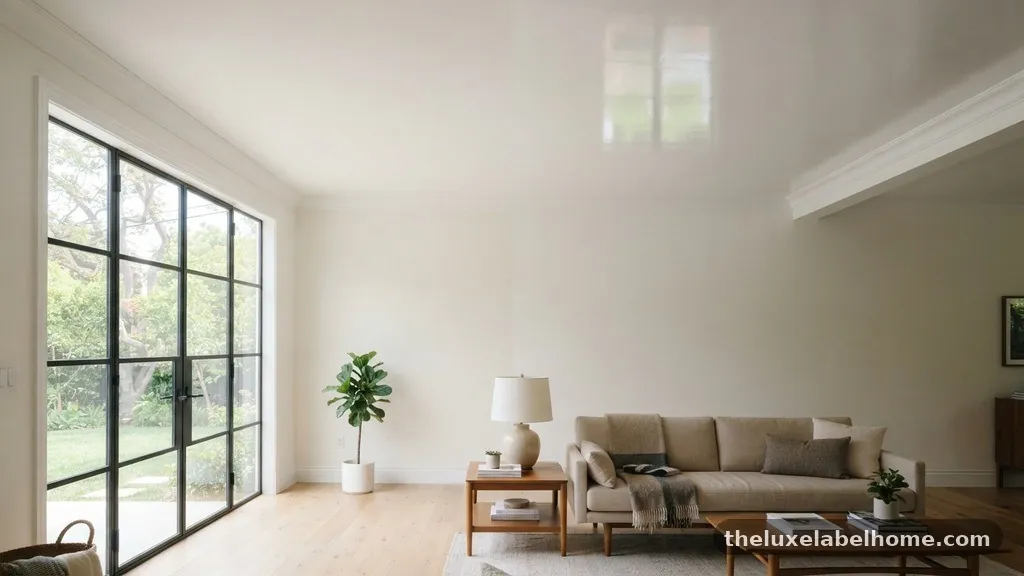
The amount of natural light a room receives should dictate your ceiling paint choice. In rooms with north-facing windows, the light is often cool and bluish, which can make a stark white ceiling look gray or dingy.
In these cases, you might want to opt for a warmer, creamy white to counteract the coolness. Conversely, in south-facing rooms with warm, golden light, a cooler white can help balance the intensity of the sun.
You must also consider how the light changes throughout the day. A ceiling that looks perfect at noon might look entirely different under artificial lighting in the evening.
Always test your paint color by applying a large sample on a piece of foam board and moving it around the room. Observe how the color shifts as the sun moves and as you turn on your lamps or overhead fixtures.
Using Darker Tones for Dramatic Effect
Painting a ceiling in a dark or bold color is a design choice that is gaining significant traction. While it might seem counterintuitive to put a dark color overhead, it can create a cozy, cocoon-like atmosphere that is perfect for bedrooms or media rooms. A deep navy, charcoal, or even a dark forest green can make a room feel incredibly luxurious and sophisticated.
When you go dark, the finish becomes even more important. A dark color in a semi-gloss finish will turn your ceiling into a mirror, which can be distracting and highlight every flaw in the drywall.
If you decide to go with a bold color, stick to a matte or flat finish to ensure the color looks rich and velvety. This keeps the focus on the hue itself rather than the reflections bouncing off the surface.
The Role of Architectural Features
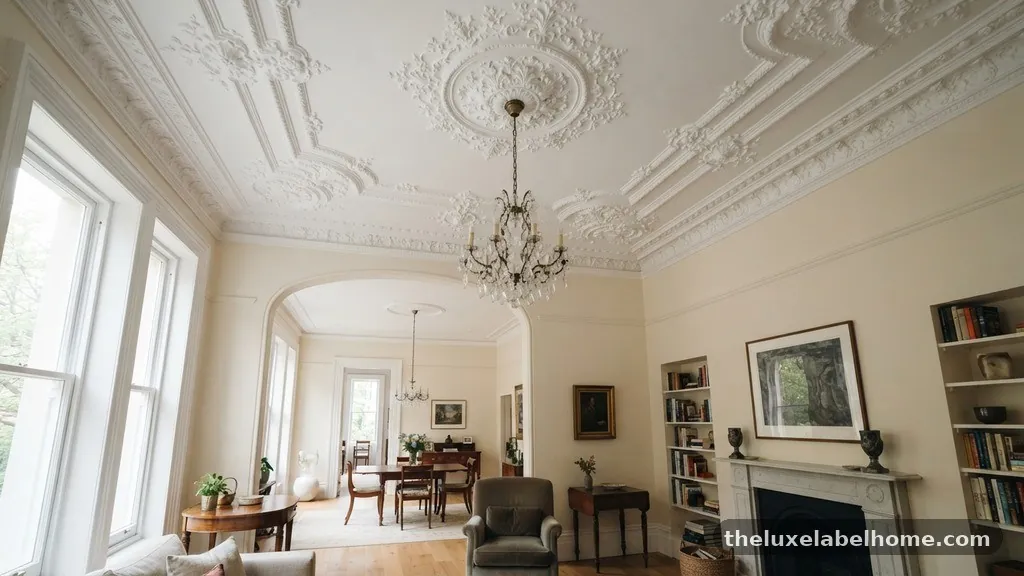
If your home features crown molding, beams, or coffered details, your ceiling paint strategy should change. In these cases, the ceiling is not just a flat plane; it is a structural element that deserves attention. You might choose to paint the beams a contrasting color to the ceiling panels, or you could paint the entire assembly a single, uniform shade to emphasize the texture.
White is often used on moldings to make them pop against darker walls, but it is not the only way to go. Consider painting the molding the same color as the walls to simplify the visual field.
This is a common tactic in minimalist or contemporary homes where the goal is to reduce visual clutter. By treating the ceiling and its architectural components as a unified piece, you create a more intentional and polished final result.
Common Mistakes to Avoid
Many people make the mistake of using leftover wall paint on the ceiling without checking the sheen. If you have eggshell or satin paint on your walls and you use the same product on the ceiling, you will likely be disappointed by the result.
The higher sheen will catch every imperfection, and the glare will become a constant source of frustration. Always buy paint specifically labeled for ceilings to ensure it has the correct formulation for the job.
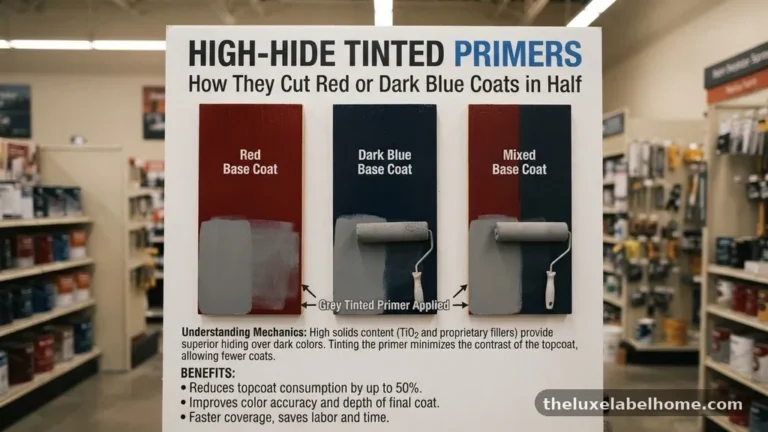
Another mistake is ignoring the importance of primer. Ceilings are often porous, and if you don’t prime properly, the paint will absorb unevenly, leading to a blotchy finish.
A good quality high-hide primer is essential, especially when you are making a drastic color change. Spending the extra time on preparation will save you hours of frustration and extra coats of paint in the long run.
Factors Influencing Your Final Decision

When deciding whether you should ceilings always be painted in dead flat white paint, consider these variables:
- Surface condition: If your ceiling has significant repairs or is an older plaster surface, stick to dead flat.
- Room height: Low ceilings benefit from bright whites; high ceilings can handle darker, moodier shades.
- Lighting scheme: Rooms with large windows and high light levels can handle more color than dark, windowless rooms.
- Design intent: Do you want the room to feel expansive and airy, or cozy and intimate?
- Wall contrast: A high-contrast ceiling can act as a frame, while a monochromatic ceiling expands the space.
Frequently Asked Questions
Is dead flat paint harder to clean than other finishes?
Yes, dead flat paint is notoriously difficult to clean because of its porous nature. Any scrubbing will likely burnish the surface, leaving a shiny spot that stands out against the matte finish. If you live in a high-traffic area or have kids, you might prefer a slightly more durable matte or eggshell finish on the ceiling.
Can I paint my ceiling the same color as my walls?
Absolutely, and this is a popular technique for creating a seamless, modern look. Painting the walls and ceiling the same color removes the visual break at the top of the wall, which can actually help a small room feel much larger. This works best when the paint finish on the ceiling is as flat as possible to avoid unwanted glare.
Does white paint make a room feel bigger?
In most cases, yes, a bright white ceiling helps a room feel more open and airy. By reflecting light back down into the space, it creates a sense of height and brightness. However, if the walls are also very light, a white ceiling might just blend in, which is also a valid design choice for a clean, minimalist aesthetic.
What is the difference between flat and dead flat?
The difference is the level of light reflectance. “Flat” paint typically has a very low sheen, while “dead flat” (often labeled as ultra-flat) is designed to have zero reflection. Dead flat is the best choice for ceilings because it is the most effective at hiding surface imperfections and roller marks.
Should I use a tintable white or a factory-mixed white?
For ceilings, factory-mixed white is often the safest bet. It is specifically formulated to have a high light reflectance value and a clean, neutral tone. If you are tinting your white, be careful with the undertones; a white with too much yellow or blue can look very different once it covers a large overhead surface.
Refining Your Interior Design Strategy
Deciding on the perfect finish for your overhead space is a balance between technical requirements and personal taste. While the tradition of painting ceilings white is rooted in practical benefits like hiding flaws and maximizing light, modern design encourages experimentation.
You should feel empowered to move away from the standard if your specific space calls for it. Whether you opt for a dramatic dark tone or a soft, warm off-white, the key is to consider how the finish and color interact with the natural and artificial light in your home.
Ultimately, the question of whether you should ceilings always be painted in dead flat white paint should be answered by the unique needs of your living environment. By analyzing your room’s height, lighting, and intended mood, you can move beyond simple conventions.
Take the time to test your colors and finishes, and do not be afraid to break the rules to create a space that feels truly yours. If you are ever in doubt, start with a professional-grade dead flat white and adjust your design from there.