
10 Ideas: How to Make a Small Bedroom Look Expensive
A small bedroom can look polished, sophisticated, and beautifully finished without having a huge budget or a large amount of square footage.
In fact, smaller bedrooms often have an advantage: every design decision is more noticeable. When the color palette is controlled, the bedding is layered thoughtfully, lighting is warm, and surfaces are kept uncluttered, even a compact room can develop the calm, elevated feeling of a boutique hotel.
The trick is not buying the most expensive furniture.
It is creating the impression of quality through proportion, consistency, texture, lighting, and thoughtful placement.
I’ve noticed that rooms that look expensive rarely rely on dozens of decorative objects. Instead, they usually have a few strong elements that work together. A beautifully made bed, full-length curtains, coordinated nightstands, warm lamps, and a restrained palette can accomplish more than an entire room filled with accessories.
This is especially useful if you’re decorating a small apartment bedroom, guest room, rental, or primary bedroom where replacing everything simply isn’t practical.
You can also create a luxurious appearance gradually.
Start by decluttering. Then improve the bedding. Adjust the curtains. Replace harsh lighting with warmer sources. Add natural textures and carefully chosen accessories. These small changes can make the room feel considerably more intentional.
The goal is not to make your bedroom look flashy.
A truly expensive-looking bedroom tends to feel quiet, balanced, comfortable, and collected.
These ten ideas focus on the details that make the biggest visual difference while keeping the room functional for everyday life.
Table of Contents
1. Choose A Refined Palette
Use a restrained color scheme to create a polished foundation.
2. Upgrade The Bedding
Make the bed look luxurious through layered textures and thoughtful proportions.
3. Hang Curtains Higher
Use window treatments to make the bedroom feel taller and more finished.
4. Layer Warm Lighting
Create a sophisticated atmosphere with several carefully positioned light sources.
5. Add Oversized Art
Use fewer, larger decorative pieces instead of filling every wall.
6. Introduce Natural Materials
Bring depth into the room with wood, linen, stone, and woven textures.
7. Keep Surfaces Edited
Create luxury through visual breathing room and intentional styling.
8. Balance The Furniture
Use proportion and symmetry to make a small bedroom feel thoughtfully designed.
9. Add Hotel-Like Details
Bring small practical luxuries into everyday bedroom routines.
10. Create A Finished Look
Tie the room together with repetition, consistency, and personal details.
1. Choose A Refined Palette
Quick Benefits
- Creates an instantly cohesive appearance
- Makes the room feel calmer
- Helps inexpensive pieces look more intentional
- Makes small spaces feel visually larger
- Simplifies decorating decisions
Why It Works
Color is one of the quickest ways to influence whether a bedroom feels chaotic or sophisticated.
A small room filled with unrelated colors can feel visually busy because there isn’t much space for the eye to rest.
A restrained palette creates continuity.
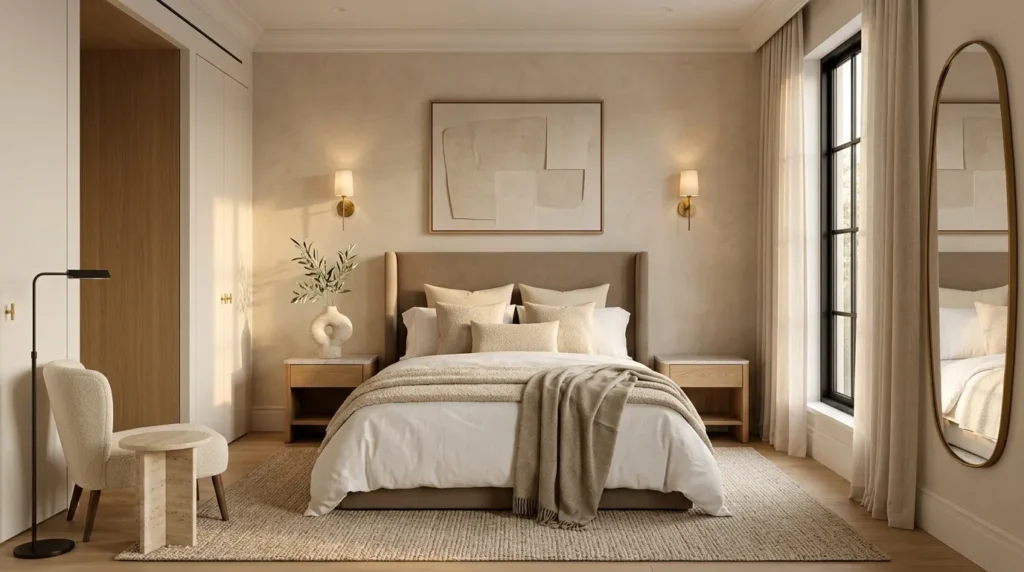
Warm white, ivory, beige, taupe, soft gray, muted brown, and subtle earthy colors are particularly effective for an elevated bedroom because they allow texture and shape to become more noticeable.
This doesn’t mean everything needs to match perfectly.
In fact, slight tonal differences often make a room feel more sophisticated.
The goal is simply to make sure the major pieces belong to the same visual family.
How To Style It
Choose one primary neutral for the walls and larger textiles.
Then select one secondary color for bedding, curtains, or an upholstered piece.
Finally, introduce one or two accent tones through artwork, pillows, ceramics, or greenery.
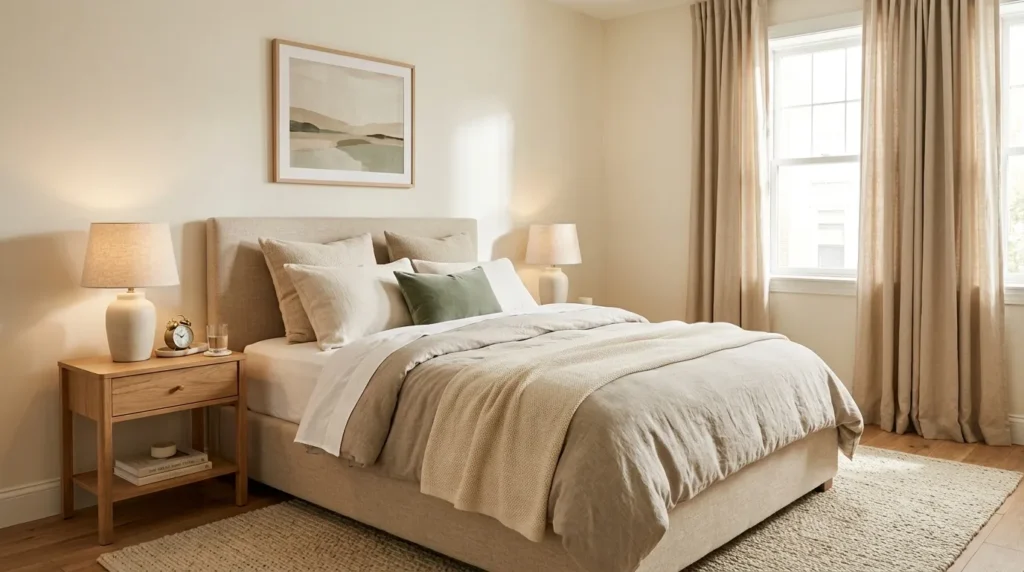
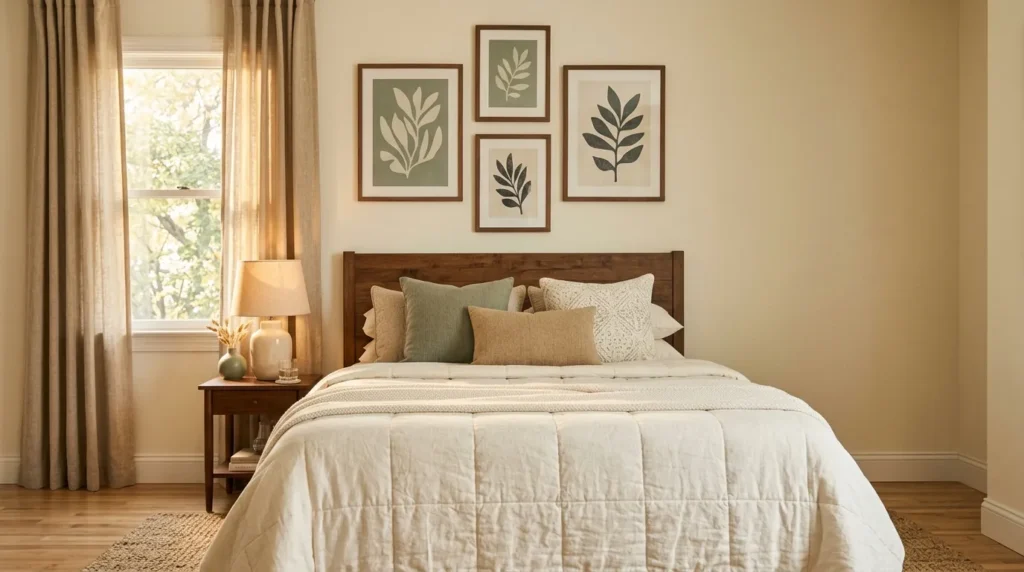
For example, warm ivory walls can work with beige bedding, walnut furniture, and muted sage accents.
Another combination is soft gray, cream, natural oak, and charcoal.
Avoid introducing a new bright color every time you add an accessory.
Repeat your chosen colors throughout the room.
This repetition makes even budget-friendly pieces feel more coordinated.
2. Upgrade The Bedding
Quick Benefits
- Makes the bed a focal point
- Creates a luxurious first impression
- Adds texture
- Improves comfort
- Works without replacing bedroom furniture
Why It Works
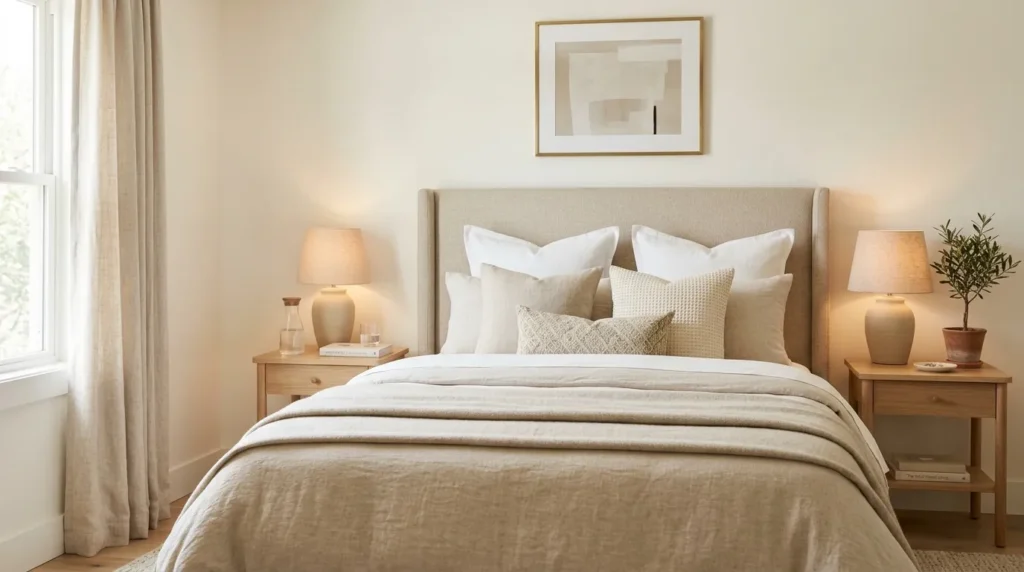
The bed usually occupies the largest visual area in a bedroom.
That makes bedding one of the most powerful design elements in the entire room.
A basic bed can look dramatically more sophisticated when the bedding is layered properly.
The key is not an excessive number of pillows.
It is the combination of materials, proportions, and restrained color.
Crisp sheets, a substantial duvet or quilt, a textured throw, and a few carefully chosen pillows create depth without making the bed look overdone.
A well-made bed also immediately communicates that the room is cared for.
How To Style It
Begin with neutral sheets.
Layer a duvet or quilt in a complementary tone.
Add a folded blanket across the foot of the bed.
Use sleeping pillows behind a smaller decorative layer.
Choose textures such as linen, cotton, waffle fabric, velvet, or a subtle knit.
For a more expensive-looking result, avoid using too many competing patterns.
Instead, let texture create the visual interest.
Make sure the duvet is appropriately sized for your mattress and bed frame.
Allowing generous fabric to fall naturally along the sides can make the bed feel more substantial.
Keep the palette coordinated with the curtains and rug.
3. Hang Curtains Higher
Quick Benefits
- Makes ceilings appear taller
- Creates a custom appearance
- Softens hard window edges
- Adds vertical emphasis
- Makes the bedroom feel finished
Why It Works
Window treatments have a surprisingly strong effect on how a small bedroom is perceived.
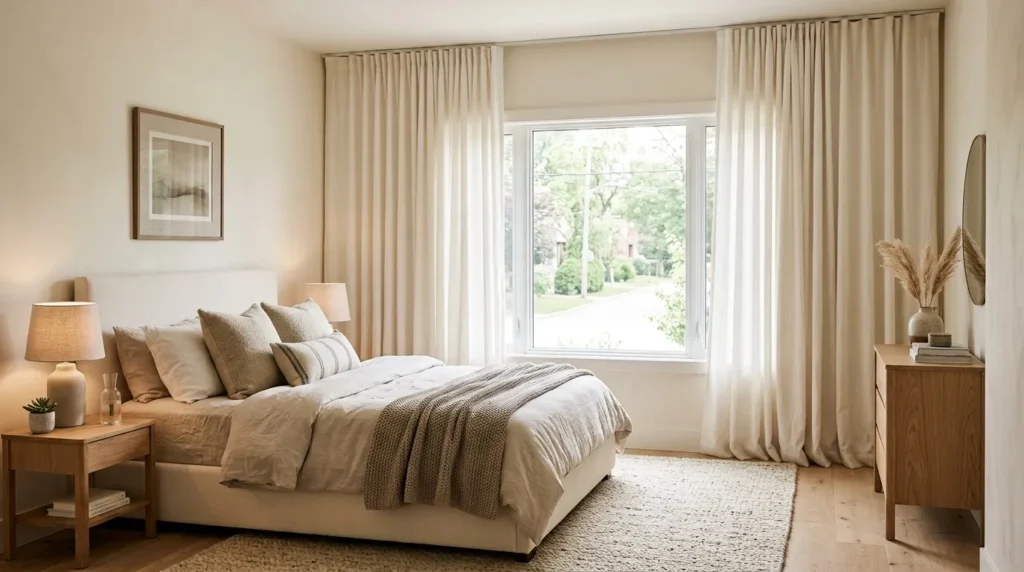
Curtains mounted directly across the top of a window can visually emphasize the window’s limited size.
Mounting the rod higher and extending the curtains toward the floor can instead draw the eye upward.
This creates a stronger vertical line and can make the room feel taller.
Full-length curtains also introduce softness, which balances hard furniture surfaces.
How To Style It
When the layout allows, position the curtain rod higher than the window frame rather than directly above the glass.
Let the panels extend toward the floor.
Choose a fabric that complements the bedroom rather than creating a completely separate visual element.
Ivory, warm white, oatmeal, beige, and soft gray are easy choices.
Linen or linen-look fabrics create a relaxed but refined appearance.
If privacy or light control is important, consider layering sheer panels with room-darkening curtains.
Keep the fabric relatively simple.
The goal is an elegant backdrop rather than a dramatic focal point.
4. Layer Warm Lighting
Quick Benefits
- Creates a luxurious atmosphere
- Makes evening hours more relaxing
- Highlights textures
- Adds depth to small rooms
- Reduces harsh shadows
Why It Works
Lighting can make a relatively inexpensive bedroom feel much more sophisticated.
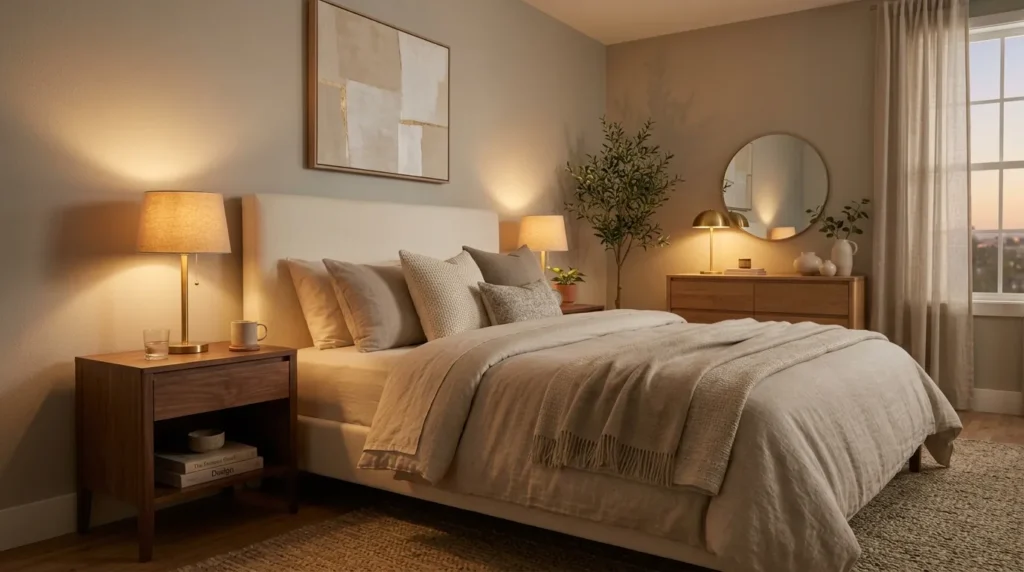
A single bright ceiling fixture tends to flatten the room and create harsh shadows.
Multiple smaller sources create layers.
Bedside lamps, a dresser lamp, a floor lamp, or appropriately used accent lighting can establish different levels of illumination.
Warm-toned light also complements neutral bedding, wood furniture, and textiles.
This is one of the easiest ways to change the atmosphere without changing the room itself.
How To Style It
Start with matching or complementary bedside lamps.
Place them at similar heights for visual symmetry.
If there is space, add a small lamp to the dresser.
A slim floor lamp can work beside a reading chair.
Use warm bulbs appropriate for your fixtures and intended activities.
Keep overhead lighting available for practical tasks, but avoid relying on it for evening ambiance.
Position lamps where they provide useful light rather than simply decorating the room.
The result should feel softly illuminated instead of brightly lit from one central point.
5. Add Oversized Art
Quick Benefits
- Creates a strong focal point
- Reduces visual clutter
- Makes walls feel intentional
- Adds personality
- Can replace multiple small decorations
Why It Works
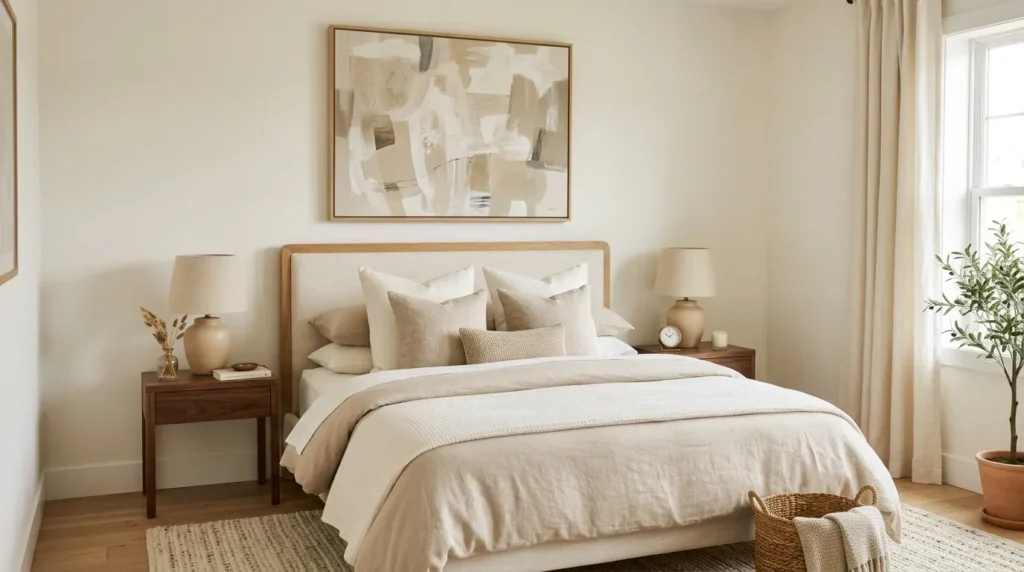
One large artwork can often make a stronger impression than a wall covered with small pieces.
This is especially helpful in a small bedroom.
Too many small frames can create visual noise, while a larger piece establishes one clear focal point.
Artwork can also make a room feel more collected because it introduces personality beyond the furniture.
You don’t need expensive original art.
The presentation and relationship to the rest of the room are often more important.
How To Style It
Choose one oversized piece above the bed, dresser, or reading area.
Look for colors already present in the room.
Abstract artwork, botanical prints, photography, textile art, and restrained landscapes can all work beautifully.
Choose a frame that complements your furniture.
Natural wood creates warmth.
Black provides contrast.
A simple neutral frame creates a softer appearance.
Make sure the artwork is appropriately scaled for the wall.
An undersized piece can look accidental, while an appropriately large piece can make the entire wall feel intentionally designed.
6. Introduce Natural Materials
Quick Benefits
- Adds visual depth
- Makes neutral rooms feel richer
- Creates organic warmth
- Balances modern furniture
- Provides texture without clutter
Why It Works
Expensive-looking rooms rarely depend on one perfectly matched material.
They usually combine several textures.
Wood, linen, cotton, wool, ceramic, stone, metal, and woven materials create subtle variation.
Natural materials are particularly effective because they have small imperfections and variations that make a room feel authentic.
Even if your furniture is simple, adding a few organic textures can give the space more depth.
How To Style It
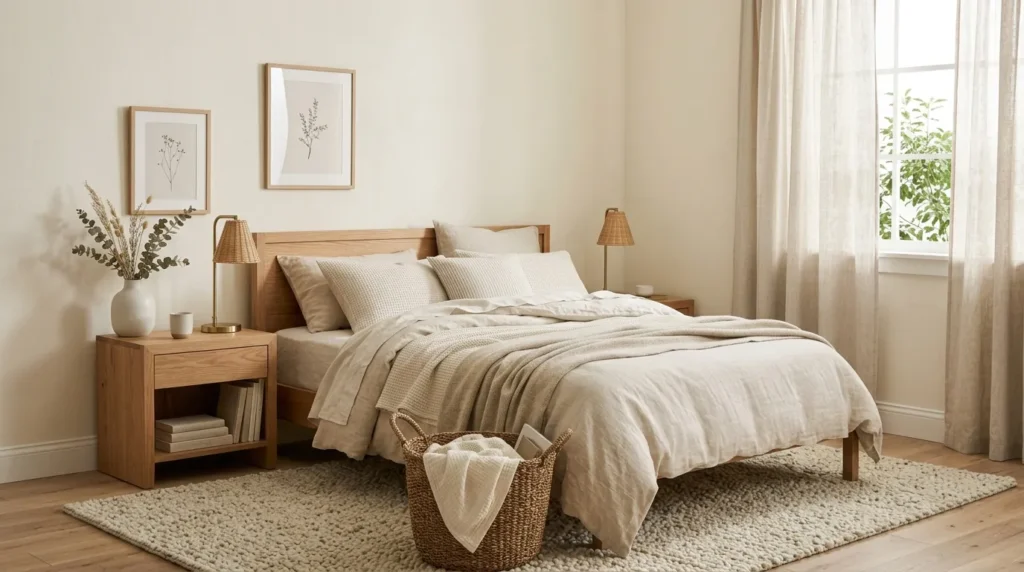
Start with one or two natural materials.
An oak nightstand can introduce warmth.
A linen duvet can soften the bed.
A woven basket can add texture.
A ceramic vase can provide a handmade feel.
A wool or jute-style rug can add another layer beneath the furniture.
Avoid adding every natural material available.
Instead, repeat a few throughout the room.
For example, pair oak furniture with linen bedding and a woven basket.
This creates a consistent material story.
7. Keep Surfaces Edited
Quick Benefits
- Makes the room feel calmer
- Highlights favorite pieces
- Improves cleaning
- Creates visual breathing room
- Makes furniture look more intentional
Why It Works
One of the most noticeable differences between cluttered and sophisticated rooms is how much empty space is intentionally preserved.
A dresser covered with perfume bottles, paperwork, electronics, jewelry, and decorative objects can make even beautiful furniture disappear visually.
An edited surface allows the furniture itself to become part of the design.
The same principle applies to nightstands and shelves.
Luxury often comes from restraint.
How To Style It
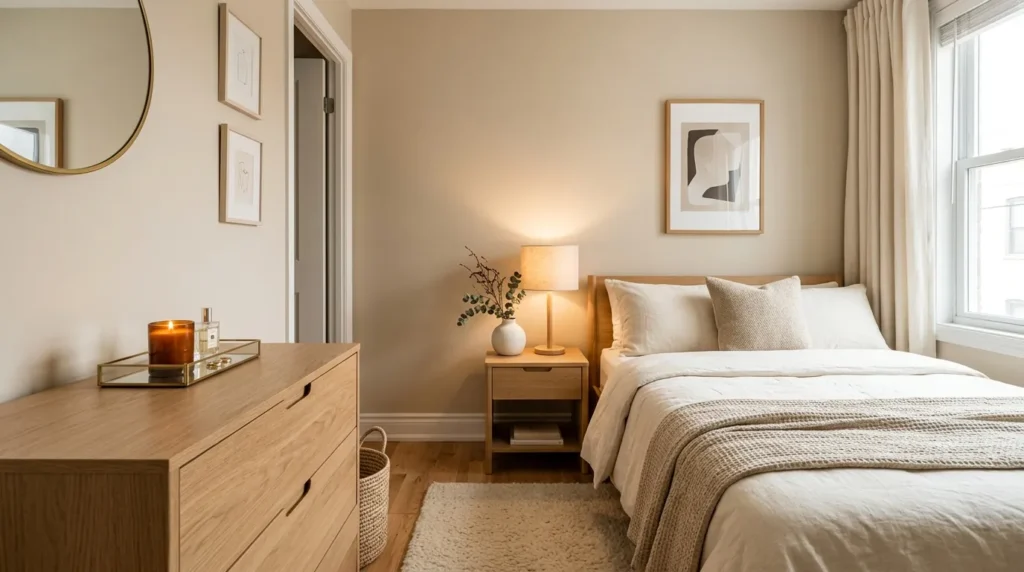
Clear your nightstand and dresser completely.
Return only items that are genuinely useful or meaningful.
A dresser might need one lamp, a small vase, and one framed piece of artwork.
A nightstand might need a lamp, book, and small dish.
Hide practical clutter in drawers whenever possible.
Keep chargers organized.
Remove packaging and unnecessary containers from sight.
Don’t feel obligated to fill empty areas.
An open stretch of dresser top or shelf is not unfinished.
It creates visual breathing room.
8. Balance The Furniture
Quick Benefits
- Improves room flow
- Creates visual symmetry
- Makes furniture feel intentional
- Prevents the bedroom from feeling crowded
- Helps small spaces feel more polished
Why It Works
Furniture proportion is especially important in a small bedroom.
A room can feel expensive when the furniture appears to belong together, even when individual pieces are inexpensive.
The biggest mistake is filling every available corner.
Too much furniture makes circulation difficult and reduces the amount of visible floor space.
A more restrained arrangement allows each piece to have a purpose.
How To Style It
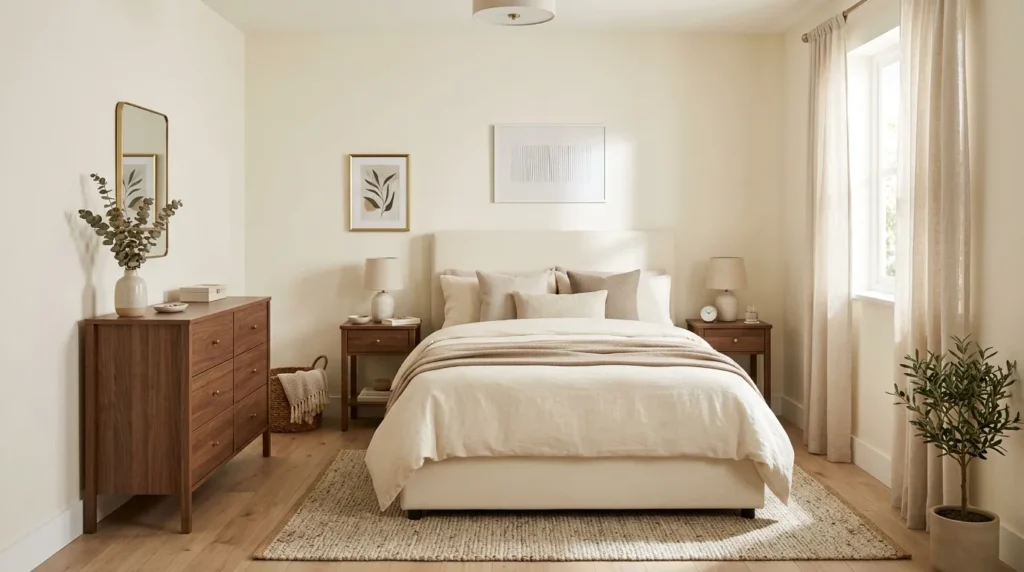
Start with the bed.
Position it so that movement around it remains comfortable.
Use matching nightstands if the room allows, but don’t force symmetry if the architecture doesn’t cooperate.
A small bedroom may work better with one compact nightstand and a wall-mounted lamp on the other side.
Choose furniture that fits the scale of the room.
Avoid oversized dressers that dominate the space.
If you have a chair, leave enough room around it for comfortable movement.
The layout should feel balanced from the doorway as well as from the bed.
9. Add Hotel-Like Details
Quick Benefits
- Adds everyday comfort
- Creates a polished atmosphere
- Improves functionality
- Makes routines feel special
- Requires only small changes
Why It Works
A luxurious bedroom is not only about appearance.
It also feels convenient.
Hotel rooms often feel polished because practical details are considered carefully.
There is a place for lighting, luggage, clothing, personal items, and nighttime routines.
You can borrow this approach at home without trying to recreate a hotel room exactly.
Think about what would make your bedroom easier and more pleasant to use.
How To Style It
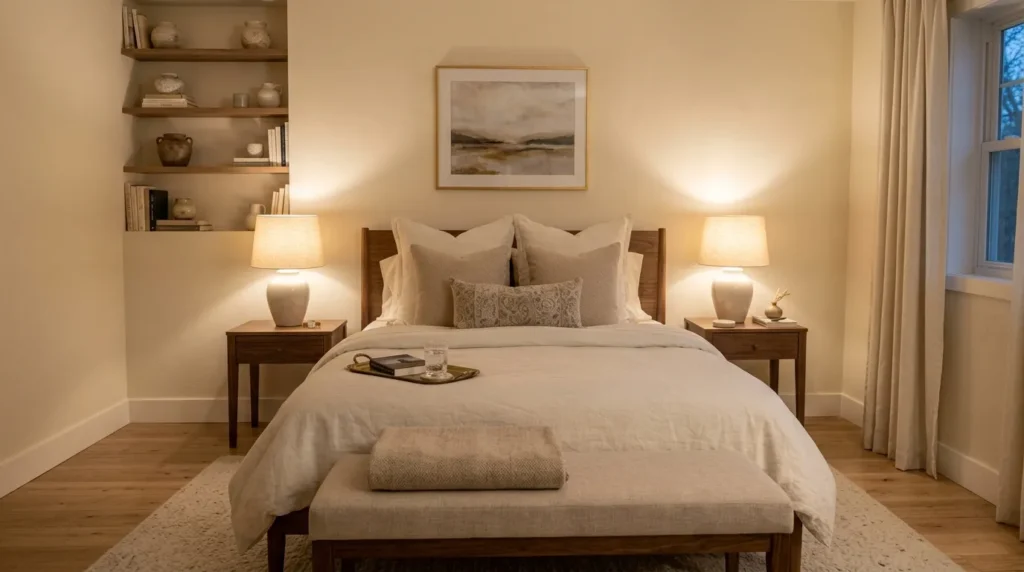
Place a small tray on the dresser for jewelry or daily essentials.
Keep a comfortable throw within reach.
Use matching or coordinated bedside lamps.
Provide a convenient place for reading material.
Keep frequently used charging points accessible but visually controlled.
A small upholstered bench at the foot of the bed can provide a place to sit if space allows.
Fresh, neatly arranged towels aren’t relevant here, but clean, coordinated bedding and a well-made bed are.
The objective is simple: make ordinary routines feel considered.
10. Create A Finished Look
Quick Benefits
- Ties the entire room together
- Makes decor feel intentional
- Creates consistency
- Adds personality
- Helps budget pieces look cohesive
Why It Works
A bedroom can contain beautiful individual items and still feel unfinished if there is no visual connection between them.
The final layer is repetition.
Repeat a color.
Repeat a material.
Repeat a shape.
Repeat a texture.
These small relationships tell the eye that the room was designed as a whole.
This is one reason coordinated spaces often look more expensive than rooms filled with unrelated purchases.
How To Style It
Walk around the bedroom and look for colors that appear only once.
If a shade appears in one pillow, consider repeating it subtly in artwork or a vase.
If you have natural oak furniture, repeat that warmth in a picture frame or small accessory.
Use similar metal finishes on lamps and hardware when practical.
Edit anything that feels completely disconnected from the room.
Finally, step back from the doorway.
The room should have one or two clear focal points rather than competing everywhere.
A polished bedroom is usually the result of editing as much as decorating.
How To Make A Small Bedroom Look Expensive On A Budget
You don’t need to replace everything.
Start with the changes that affect the largest visual areas.
First: Declutter
Remove unnecessary objects from the floor, dresser, nightstands, and shelves.
Second: Improve The Bed
Use your best neutral bedding and layer blankets and pillows thoughtfully.
Third: Fix The Curtains
Hang existing curtains higher if possible and make sure they reach toward the floor.
Fourth: Change The Lighting
Use warm bulbs and smaller lamps where possible.
Fifth: Edit Accessories
Keep only pieces that add beauty, function, or personal meaning.
Sixth: Add Texture
Use existing blankets, rugs, baskets, cushions, and natural materials to create depth.
Seventh: Reconsider Layout
Move furniture until circulation feels comfortable.
These changes can make a room look dramatically more intentional without requiring a major shopping trip.
Small Bedroom Colors That Look Sophisticated
A small bedroom benefits from colors that create continuity rather than strong visual interruptions.
Warm White + Beige
Soft and timeless.
Cream + Taupe
Elegant and understated.
Ivory + Walnut
Warm with stronger contrast.
Soft Gray + Cream
Modern and calm.
Beige + Muted Sage
Natural and relaxed.
Warm White + Charcoal
Clean and contemporary.
Oatmeal + Terracotta
Earthy and inviting.
When using darker colors in a small room, consider limiting them to accents, furniture, artwork, or textiles rather than creating too many competing dark surfaces.
What Makes A Bedroom Look Cheap?
There are a few common details that can unintentionally make a bedroom feel less polished.
Too Many Small Accessories
Several tiny decorative pieces can create visual clutter.
Poorly Fitted Bedding
Sheets or blankets that are too small can make the bed look unfinished.
Harsh Lighting
Very cool or overly bright lighting can flatten warm materials.
Crowded Surfaces
Too many objects hide the beauty of the furniture.
Random Color Choices
Unrelated accent colors can make the room feel disconnected.
Furniture That Is Too Large
Oversized pieces can overwhelm a small bedroom.
Ignoring Window Treatments
Bare or poorly positioned curtains can make the room feel unfinished.
The solution isn’t necessarily spending more.
It is editing and improving proportion.
FAQ
How can I make a small bedroom look expensive?
Focus on visual consistency rather than expensive products. Use a restrained color palette, layered bedding, warm lighting, natural textures, full-length curtains, and carefully edited surfaces. Choose fewer decorative pieces but make sure they have appropriate scale. A polished layout and uncluttered room can make affordable furniture look considerably more sophisticated.
What colors make a small bedroom look luxurious?
Warm neutrals such as ivory, cream, beige, taupe, oatmeal, soft gray, and warm brown are excellent choices. They create continuity and allow texture to stand out. For contrast, introduce small amounts of walnut, charcoal, muted sage, or terracotta through furniture, artwork, pillows, and accessories.
Does a small bedroom need matching furniture?
No. Matching furniture can create symmetry, but coordinated pieces can look more collected and sophisticated. If you don’t have matching nightstands, use pieces with similar heights, materials, or visual weight. The goal is balance rather than perfect matching.
How can I make my bed look more luxurious?
Use properly sized bedding and layer several complementary textures. Start with quality-looking neutral sheets, add a duvet or quilt, fold a blanket across the foot, and use a restrained number of pillows. Keep colors coordinated and avoid excessive patterns. A neatly made, generously layered bed can become the room’s strongest focal point.
What type of curtains make a bedroom look expensive?
Full-length curtains in linen or linen-look fabric can create an elevated appearance. Hang the rod higher than the window frame when the room allows and let the panels extend toward the floor. Neutral shades such as ivory, oatmeal, beige, and warm white are easy to coordinate with most bedroom palettes.
How can I make a bedroom look expensive without buying anything?
Start by decluttering and rearranging the furniture. Use your best existing bedding, layer blankets, reposition artwork, group decorative objects, clear surfaces, and improve lighting with bulbs you already own. Even moving furniture away from crowded corners can create more visible floor space and make the room feel more intentional.
Should a small bedroom use dark colors?
It can. Dark colors can create a dramatic and sophisticated atmosphere, but they are often most effective when used intentionally. Consider a darker accent wall, headboard, bedding, artwork, or furniture against lighter surrounding elements. If using dark walls throughout the room, balance them with appropriate lighting and lighter textiles.
Conclusion
Making a small bedroom look expensive is less about the price of the things inside it and more about how thoughtfully those things work together.
Start with the biggest visual elements.
Choose a calm color palette.
Make the bed look beautifully layered.
Hang curtains at an elegant height.
Use warm lighting instead of relying entirely on a bright overhead fixture.
Then add natural materials, one or two strong pieces of artwork, and a few meaningful accessories.
Most importantly, edit.
A small room has limited visual space, so every object matters.
Removing unnecessary items can sometimes make a bigger difference than buying something new.
Give your furniture enough room to breathe.
Keep nightstands and dressers relatively clear.
Repeat colors and materials so the bedroom feels connected.
And don’t overlook practical details.
A place for your book, a comfortable throw, useful bedside lighting, and an uncluttered floor can make the room feel luxurious because it is genuinely pleasant to use.
You don’t need a designer budget or a complete renovation.
With thoughtful styling, proportion, texture, and restraint, even a compact bedroom can feel polished and inviting.
Start with one area this weekend.Make the bed feel beautiful.Clear the nightstand.Adjust the curtains.Turn on a warmer lamp.Then step back and see what still needs attention.Often, the expensive look comes from knowing when to stop.
Related Articles
- 10 Modern Aesthetic Bedroom Ideas for Adults
- 10 Cozy Aesthetic Bedroom Ideas You’ll Love
- How to Make a Small Bedroom Feel More Functional
- How to Organize a Small Bedroom Without Renovating
- How to Organize a Small Bedroom with Hidden Storage