Does Semi-Gloss Paint Actually Prevent Mildew on Bathroom Ceilings?
When homeowners ask, “Does semi-gloss paint actually prevent mildew on bathroom ceilings?”, they are usually looking for a simple solution to a persistent moisture problem. While the sheen itself offers some protection, it is rarely the silver bullet many assume it to be. Understanding how paint finishes interact with humidity and ventilation is essential for maintaining a clean home.
This article examines the technical realities of moisture-resistant coatings and why your choice of paint is only one piece of the puzzle. By learning the mechanics of mold growth and surface tension, you will gain a clearer perspective on how to keep your bathroom ceiling pristine for years to come.
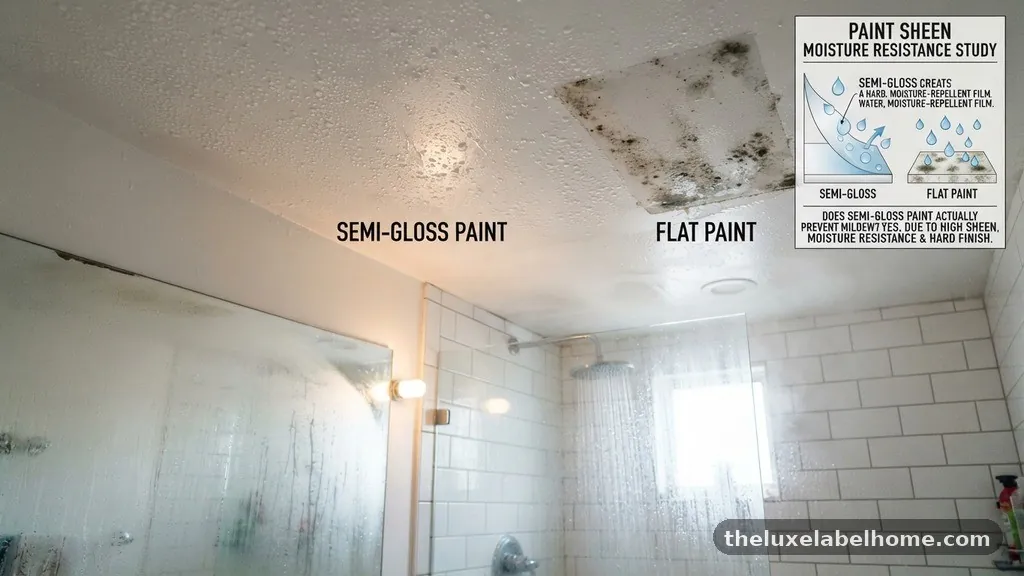
To address the core question immediately: No, semi-gloss paint does not actively kill or prevent mildew on its own. While its tight, non-porous surface makes it harder for mold spores to gain a foothold compared to flat or matte paints, it is not a fungicide. If your bathroom lacks proper ventilation, moisture will condense on any surface regardless of the sheen.
Mildew is a biological organism that thrives on organic matter and water; a shiny paint finish is simply a substrate that is slightly more difficult for it to colonize. You must treat the underlying moisture issue rather than relying on the paint finish to act as a shield.
The Science of Paint Sheen and Moisture
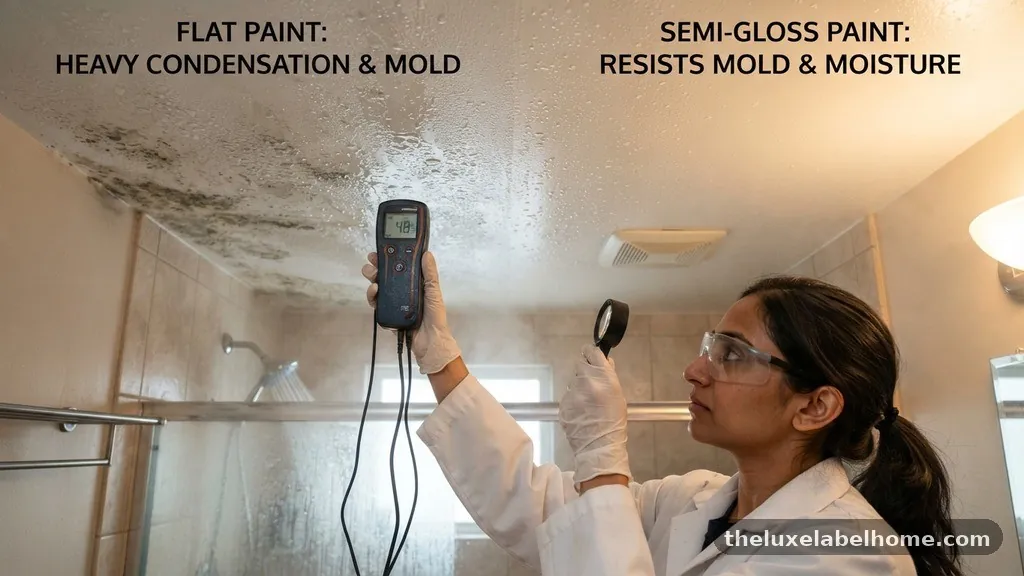
Paint sheen is determined by the ratio of resin to pigment within the formula. Higher gloss levels, such as semi-gloss or high-gloss, contain more resin, which creates a smoother and less porous film once cured.
Because there are fewer microscopic pits and valleys on the surface, water droplets are less likely to adhere and more likely to bead up and roll off. This physical property is why many people associate semi-gloss with mold resistance.
However, a smooth surface does not mean an impermeable one. Over time, steam from hot showers penetrates even the most durable coatings if the environment remains consistently damp.
When condensation lingers on a ceiling for hours, it eventually works its way into the drywall or the microscopic imperfections in the paint. If the moisture is trapped, the paint finish becomes irrelevant because the mold is growing behind or within the paint layer itself.
Why Ventilation Outperforms Paint
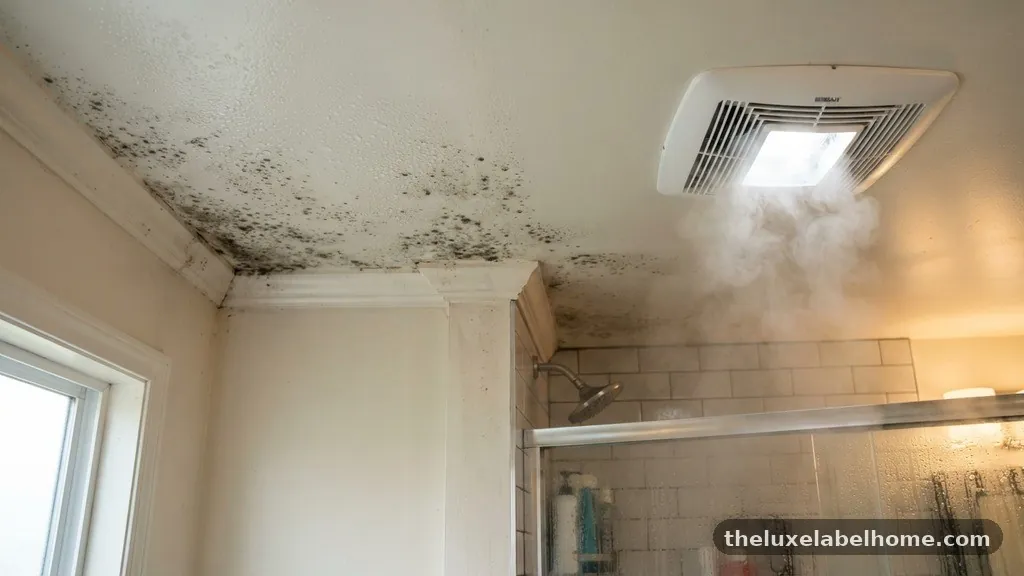
The most significant factor in preventing mildew is the relative humidity of the room. A bathroom that does not have an active way to exhaust steam will inevitably experience mold growth, even if you use the most expensive “mold-killing” paints on the market. If you rely solely on paint to solve your problems, you are essentially treating a symptom rather than the root cause.
An effective exhaust fan is the single most important tool in your bathroom maintenance kit. It should be sized correctly for the square footage of your space and vented directly to the outside of the home.
Simply circulating humid air within the bathroom or into the attic will not prevent the accumulation of moisture. When you run the fan during and for at least twenty minutes after every shower, you drastically reduce the duration of time that your ceiling remains wet.
Comparing Common Paint Finishes
Different paint finishes offer varying levels of durability in high-moisture environments. Choosing the right one involves balancing aesthetics with functional needs. The following table summarizes how common finishes typically perform in a bathroom setting regarding moisture resistance and cleaning ease.
| Finish | Moisture Resistance | Cleaning Ease | Visual Effect |
|---|---|---|---|
| Flat/Matte | Low | Difficult | Hides imperfections |
| Eggshell | Moderate | Fair | Slight sheen |
| Satin | Good | Good | Pearl-like |
| Semi-Gloss | Excellent | Very Easy | Reflective |
As shown in the table, semi-gloss is objectively superior for cleaning and moisture shedding. However, it is important to note that the high reflectivity of semi-gloss makes every bump, crack, and tape joint on your drywall highly visible. Many homeowners opt for satin finishes to achieve a compromise between durability and a more forgiving, less shiny appearance.
The Role of Mildewcides in Modern Paints
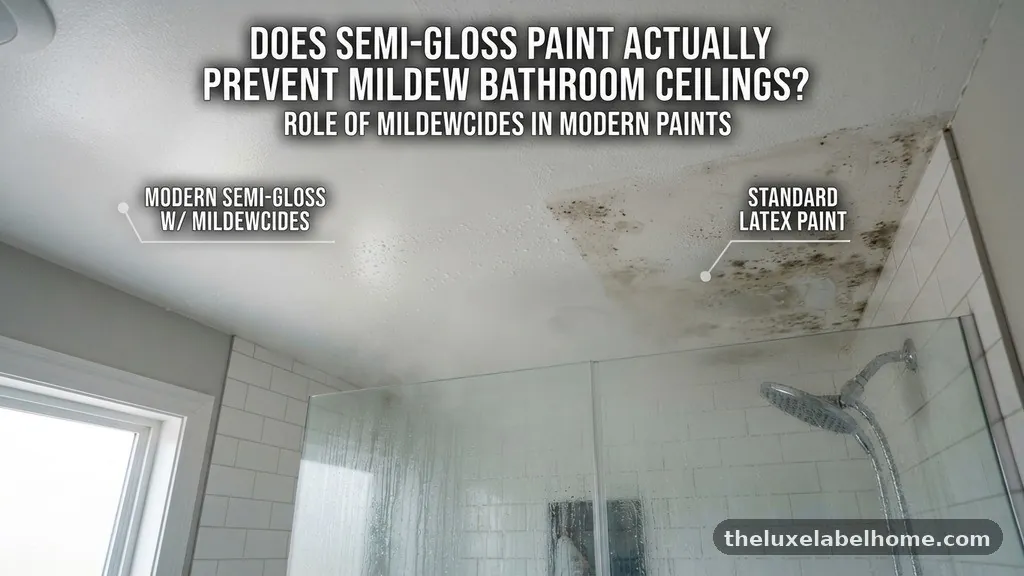
Most major manufacturers, including brands like Benjamin Moore, incorporate proprietary mildewcide additives into their bathroom-specific product lines. These chemicals are designed to inhibit the growth of fungi on the surface of the paint film. While these additives are effective, they have a finite lifespan and can be degraded by harsh cleaning chemicals or excessive environmental stress.
When you purchase a product specifically labeled for bathrooms, you are getting a formula that balances resin hardness with these protective additives. It is important to realize that these products are not “anti-mold” in the sense that they create a permanent barrier.
They are simply formulated to be more resilient than standard interior wall paint. If you paint over an existing mold colony without properly cleaning and priming the surface, the mildewcide in the new paint will be overwhelmed almost immediately.
Surface Preparation and Priming
The most common reason for paint failure in bathrooms is poor surface preparation. If you paint over a damp or dirty ceiling, you are essentially sealing in the conditions that promote mold growth. Before applying any coating, you must thoroughly clean the ceiling with a solution of water and bleach or a dedicated mold-killing cleaner.
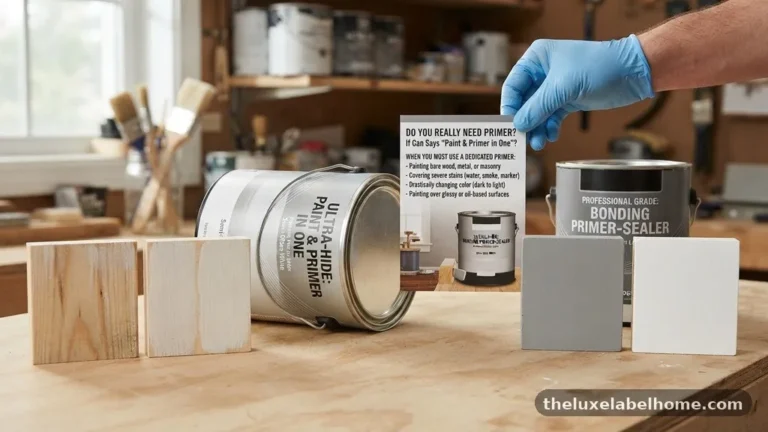
Once the surface is clean and completely dry, you should apply a high-quality, moisture-resistant primer. Oil-based or high-grade synthetic primers are often better at sealing drywall than standard water-based primers, as they provide a more robust moisture barrier. By creating a sealed, inert base layer, you ensure that the topcoat has a stable surface to adhere to, which prevents peeling and staining later on.
Identifying the Signs of Moisture Damage
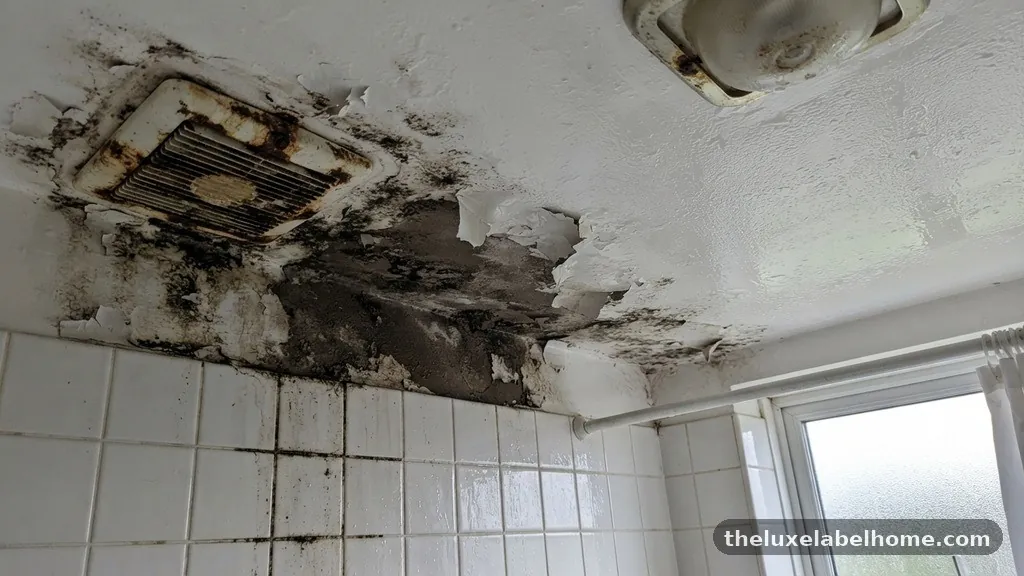
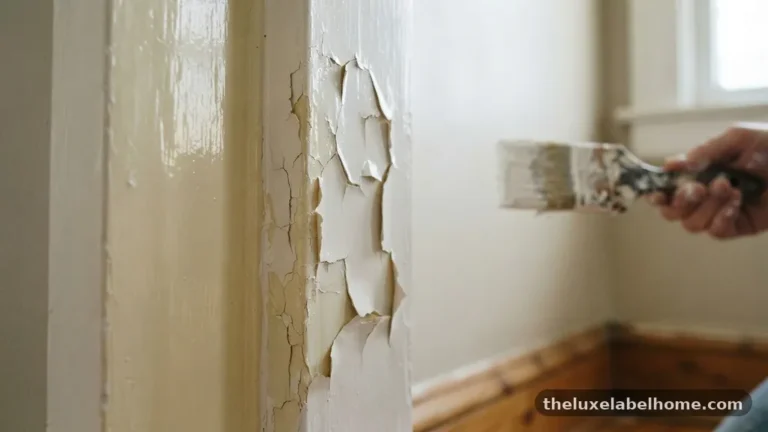
You can often tell if your current paint is failing by looking for specific visual cues. Peeling or bubbling paint is a classic sign that moisture has migrated behind the film and is pushing it away from the drywall. This usually happens when the paint is not breathable enough or when the moisture load in the room is simply too high for the ventilation system to handle.
Staining, on the other hand, often looks like brown or yellow streaks. This is frequently caused by tannins from the drywall paper bleeding through the paint or by dirt and dust that have become trapped in the condensation.
If you see these signs, simply painting over them will not solve the issue. You must address the source of the leak or the lack of ventilation before applying a new coat.
Best Practices for Bathroom Maintenance
Maintaining a mold-free environment requires a routine approach to cleaning and monitoring. Even with the best paint, bathrooms are naturally prone to microbial growth due to the presence of soap scum and skin cells, which act as food for mold. Regular cleaning is just as important as the type of paint you select.
* Run your exhaust fan during every shower and for 20-30 minutes afterward.
* Wipe down walls and ceilings if you notice heavy condensation after a hot bath.
* Keep your bathroom door open when the room is not in use to encourage airflow.
* Inspect caulking around the tub and shower for signs of deterioration.
* Use a mild detergent to clean ceiling surfaces annually to remove dust buildup.
By following these simple habits, you extend the life of your paint job significantly. You prevent the buildup of organic matter that mold uses for nutrients, making the finish much more effective at doing its job.
The Aesthetic Trade-Off
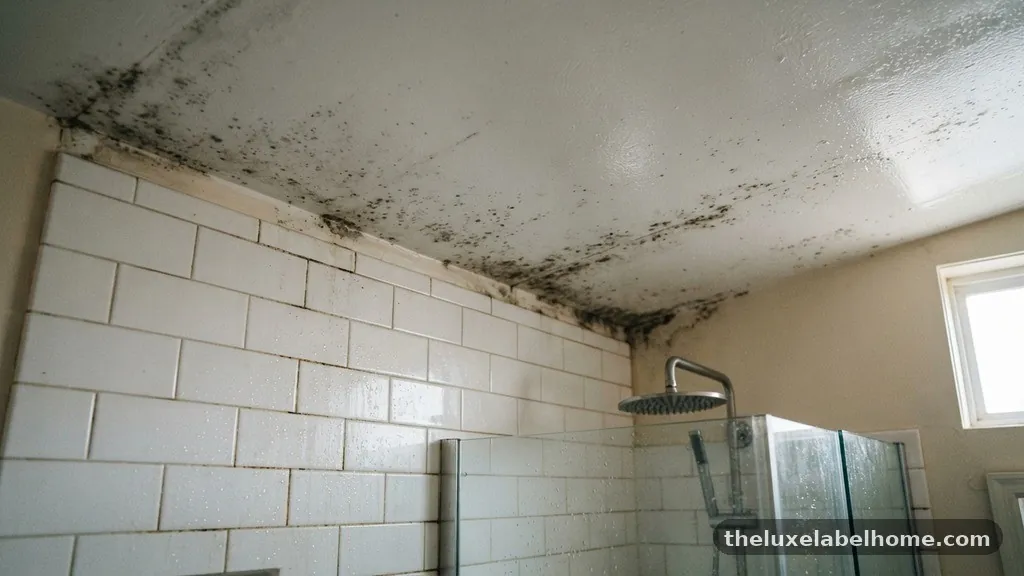
While we have focused heavily on functionality, the aesthetic impact of your choice should not be ignored. Semi-gloss is often criticized for looking too “plastic” or industrial in a residential bathroom. The high sheen highlights every imperfection in the drywall, which can be frustrating if your ceiling is not perfectly smooth.
If you prefer a softer look, consider using a satin finish from a high-end manufacturer. Many modern satin paints are engineered with advanced resin technology that rivals the moisture resistance of older semi-gloss formulas. You get the best of both worlds: a finish that resists water effectively while maintaining a sophisticated, low-sheen appearance that blends well with the rest of your home’s interior design.
Common Myths About Paint and Mold
There is a persistent myth that painting over mold with a “miracle” paint will kill it. This is dangerous misinformation that can lead to significant structural damage over time.
Paint is a coating, not a remediation tool. If you have an active mold problem, you must remove the infestation, treat the area, and ensure the surface is dry before you even think about opening a paint can.
Another common misconception is that all “bathroom” paints are the same. In reality, there is a massive performance gap between budget store-brand paints and premium lines from reputable companies.
Premium paints have a higher volume of solids, meaning they leave behind a thicker, more durable film after the solvents evaporate. This thickness is crucial for creating a genuine barrier against moisture.
FAQ: Addressing Your Concerns
Does using semi-gloss paint guarantee my bathroom will be mold-free?
No, it does not. Semi-gloss paint provides a more resistant surface, but it cannot prevent mold if there is high humidity and a lack of ventilation. You must address the moisture levels in the room to truly eliminate mold growth.
Can I paint over existing mildew if I use a mold-resistant primer?
You should never paint over active mold. You must clean the area thoroughly with a proper fungicide or a bleach-water solution, let it dry completely, and then apply a high-quality primer to ensure the new paint adheres correctly.
Is satin paint better than semi-gloss for a bathroom ceiling?
Satin is often preferred for its aesthetic appeal, as it is less shiny and hides drywall imperfections better than semi-gloss. Modern high-quality satin paints are sufficiently moisture-resistant for most residential bathrooms.
How often should I repaint my bathroom ceiling?
If you have proper ventilation, a high-quality paint job in a bathroom can last five to seven years. If you notice peeling, staining, or visible mold growth, it is time to reassess your ventilation and consider a fresh coat of moisture-resistant paint.
Does the color of the paint matter for mold resistance?
The color itself does not affect mold resistance, but lighter colors will show mold growth much faster than darker colors. While this might seem like a disadvantage, it is actually helpful because it allows you to spot and address small mold issues before they become large, expensive problems.
Final Thoughts on Moisture Control
Choosing the right finish is an important step, but it is only one component of a successful strategy. Does semi-gloss paint actually prevent mildew on bathroom ceilings It helps by creating a surface that is easier to clean and harder for spores to penetrate, but it is not a substitute for proper airflow. Your focus should remain on maintaining a dry environment through the use of an effective exhaust fan and regular cleaning habits.
When you combine a high-quality, moisture-resistant paint with a consistent ventilation routine, you create a robust defense against the damp conditions that bathrooms naturally produce. By taking these steps, you protect your home’s structure and keep your space looking clean and fresh. If you are planning a renovation, prioritize the installation of a quality ventilation system before selecting your paint finish, and you will see the best results for your investment.