
When Is Oil-Based Primer Legally Required Over Raw Wood and Tannins?
Determining when oil-based primer is legally required over raw wood and tannins often centers on local building codes and specific manufacturer specifications for fire-rated or moisture-resistant assemblies. While homeowners rarely face direct legal mandates for DIY painting, professional contractors must adhere to strict finish schedules and safety standards to ensure structural integrity and fire suppression compliance.
Understanding these technical requirements helps you avoid long-term failures like tannin bleed and ensures your project meets the necessary regulatory benchmarks. Whether you are addressing raw wood or high-tannin species, knowing the professional standard for surface preparation ensures you stay protected under warranty and local building mandates.
The Regulatory Reality of Primer Selection
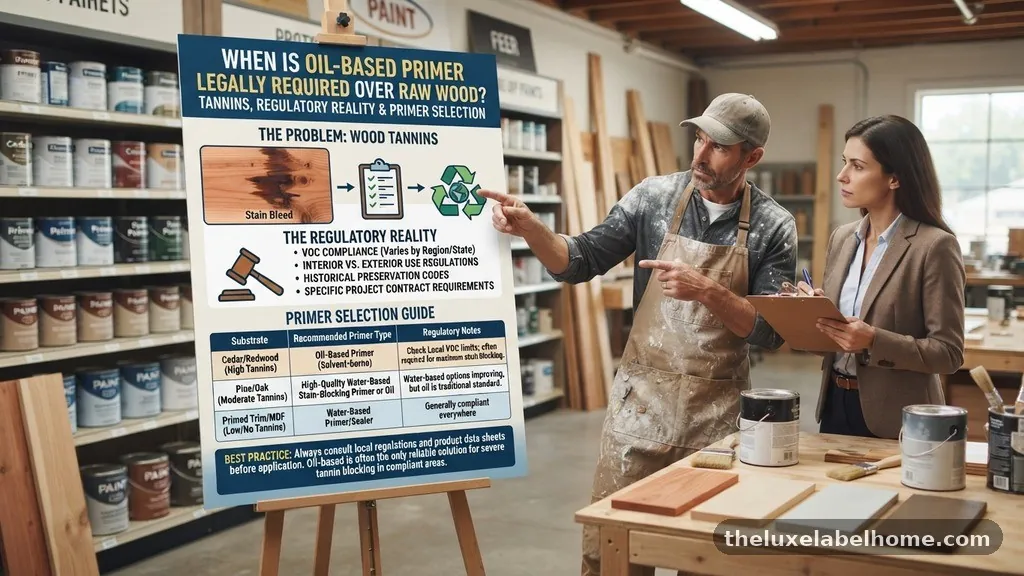
There is no single federal statute that mandates the use of oil-based primers for all raw wood applications, but legal requirements arise through building codes and safety standards. If a project is subject to fire-code inspections or commercial building mandates, the materials used must often be certified to prevent flame spread or smoke development. Many fire-retardant treated woods require specific coatings to maintain their rating, and oil-based primers are frequently the only products tested and approved for these surfaces.
Building codes often reference manufacturer installation instructions as a legal requirement for compliance. If a wood product manufacturer explicitly states that a specific primer type is necessary to maintain a warranty or a fire rating, failing to use it can lead to legal liability. This is common with exterior cladding or high-moisture interior environments where wood substrate failure could lead to rot or structural issues.
Insurance adjusters also look at whether established industry standards were followed during a renovation. If a contractor ignores the technical data sheet for a wood product and uses an inferior primer, they could be held liable for property damage caused by tannin bleed or paint failure. Always consult the National Park Service technical preservation guidelines for best practices on historic wood finishes to understand how professional standards influence project requirements.
Understanding Tannin Bleed and Its Causes
Tannins are organic chemical compounds found in many wood species, most notably redwood, cedar, and oak. When these woods are exposed to moisture, the tannins dissolve and migrate to the surface of the material. If you apply a water-based product directly to raw wood, the moisture in the paint can pull these tannins through the film, causing unsightly brown or yellow stains.
This phenomenon is known as tannin bleed, and it is the primary reason why specialized blocking is required. Oil-based primers are formulated with resins that create a physical barrier preventing these water-soluble compounds from reaching the topcoat. They effectively seal the wood fibers before the moisture-heavy topcoat is applied.
Not all woods contain the same concentration of these compounds. For example, pine is relatively low in tannins compared to western red cedar. However, even low-tannin woods can exhibit staining if they are knotted or if the lumber has been harvested from a younger tree.
Comparing Oil-Based and Water-Based Primers
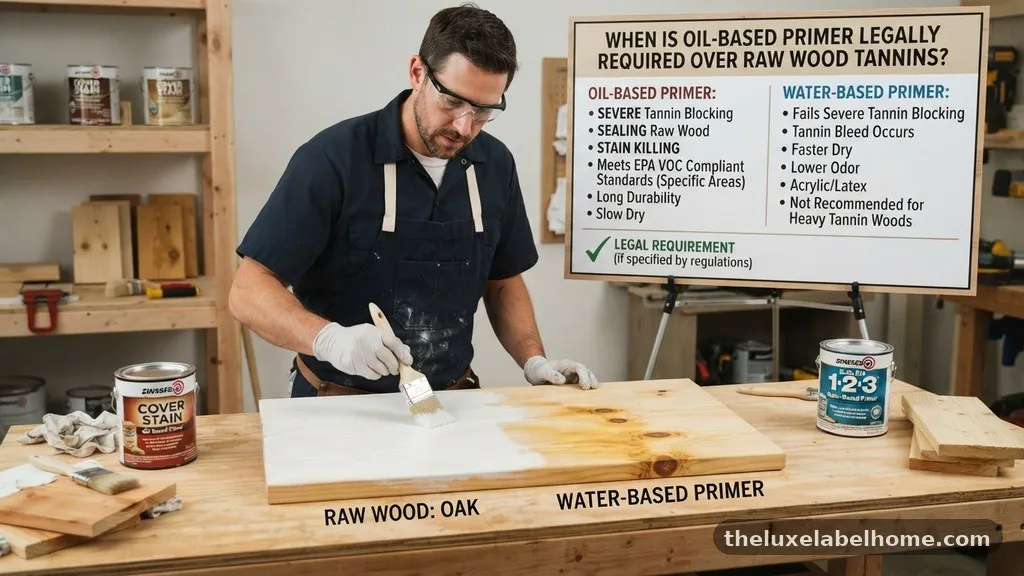
Choosing between different primer types involves balancing performance with environmental regulations and ease of use. Oil-based primers remain the gold standard for sealing porous surfaces and locking in organic stains. Their long-chain polymers create a tight, durable seal that is resistant to the moisture that triggers tannin migration.
Water-based primers, often referred to as latex or acrylic primers, have improved significantly in recent years. Many now include synthetic additives designed to block stains, but they often struggle with the heavy tannin concentrations found in cedar or mahogany. They are generally easier to clean up and have lower volatile organic compound (VOC) levels, which makes them a popular choice for interior projects where air quality is a concern.
The following table highlights the functional differences between these two common types of primers when applied to raw wood surfaces:
| Feature | Oil-Based Primer | Water-Based Primer |
|---|---|---|
| Stain Blocking | Excellent for tannins | Variable/Moderate |
| Adhesion | Superior on raw wood | Good on prepared surfaces |
| Clean-up | Solvents/Mineral spirits | Soap and water |
| Drying Time | Longer | Very fast |
Legal Implications for Professional Contractors
Professional painters face a higher burden of proof regarding the materials they select for a project. If a contract specifies a high-quality finish, using a low-grade primer that fails to block tannins could be considered a breach of contract. Clients often have legal recourse if the final aesthetic is compromised by bleed-through that could have been prevented with the correct primer.
Contractors must also consider the potential for health and safety regulations regarding VOCs. While oil-based primers are effective, some states have strict laws limiting the sale and use of high-VOC products. A contractor must balance the legal requirement for a durable, defect-free job with environmental regulations that may restrict the choice of coating.
Documentation is key for contractors navigating these requirements. Keeping a log of the products used and the manufacturer’s technical data sheets serves as evidence that the professional followed the recommended application process. This documentation provides a legal buffer if a client complains about paint failure down the line.
Identifying High-Risk Wood Species
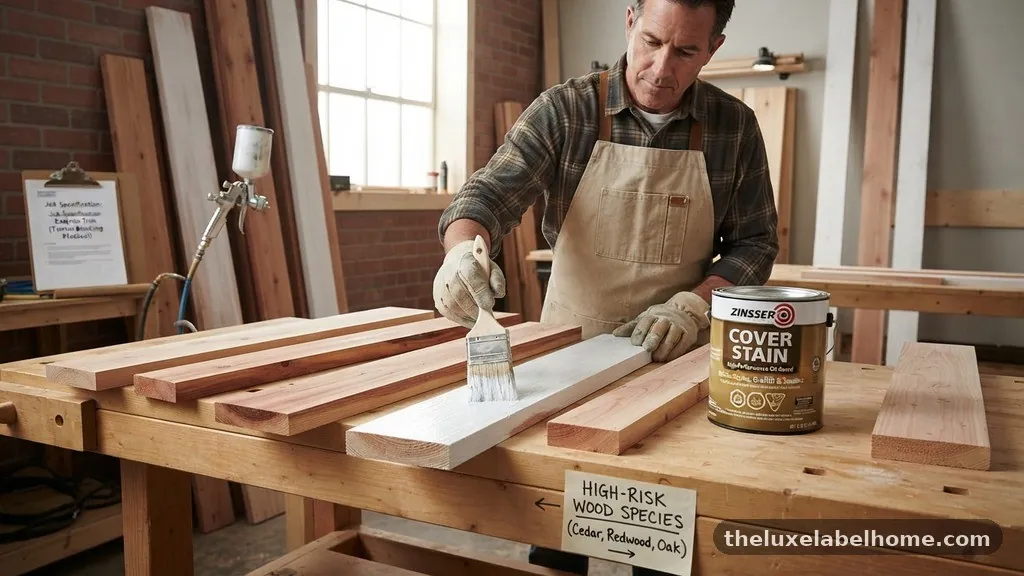
Certain types of lumber are notorious for their tannin content, making the use of an oil-based primer a functional necessity. Redwood and cedar are the most common culprits, frequently used in high-end cabinetry and exterior siding. Without a proper oil-based barrier, these woods will almost certainly cause discoloration of lighter-colored paints.
Oak is another species that requires careful consideration. While it is a hardwood, its open grain and high tannin concentration can lead to significant issues if it is being stained or painted. Applying an oil-based primer ensures that the wood grain is properly sealed and that the subsequent coats of paint will adhere uniformly.
It is helpful to keep a checklist of wood types that require extra attention during the preparation phase. This ensures that you don’t overlook the need for a stain-blocking primer when working with challenging materials. Consider these factors when evaluating a project:
- Wood species and its known tannin concentration level.
- The moisture content of the wood at the time of application.
- The intended environment, such as high-humidity bathrooms or exterior walls.
- Manufacturer recommendations for the specific wood product being installed.
- Whether the wood is new or weathered, as weathering can change its porosity.
The Role of Surface Porosity in Primer Choice
Raw wood is highly porous, meaning it will absorb liquid rapidly. If you apply a topcoat directly to this surface, the paint will be absorbed unevenly, leading to a blotchy finish. An oil-based primer acts as a sealer, filling the pores and creating a smooth, uniform surface for the final coat.
When wood is particularly porous, it may require two coats of primer to achieve a fully sealed surface. Skipping this step often results in the paint looking dull or flat, as the wood continues to soak up the resin from the topcoat. By properly sealing the surface, you ensure that the paint remains on top of the substrate, where it can provide maximum protection.
This sealing effect is also critical for the longevity of the paint job. A well-primed surface prevents the paint from peeling or flaking over time. When the primer bonds effectively with the wood fibers, it creates a foundation that can withstand environmental stressors like temperature fluctuations and humidity.
Safety and Environmental Considerations

When working with oil-based products, safety is a primary concern due to the solvents used in their formulation. Proper ventilation is mandatory to prevent the buildup of fumes, which can be harmful if inhaled in confined spaces. Professional crews are required by law to provide adequate airflow and personal protective equipment for anyone working with these materials.
Waste disposal is another area where legal requirements apply. Solvents and oil-based residues are considered hazardous waste and cannot be poured down the drain or thrown in regular trash. You must follow local disposal regulations, which often involve taking these materials to a designated hazardous waste collection center.
Some regions have adopted “Green” building codes that incentivize or mandate the use of low-VOC paints. In these areas, finding an oil-based primer that meets compliance standards can be difficult. It is essential to check local statutes to ensure that the product you choose is legally permitted for use in your specific area.
Adhesion Benefits of Oil-Based Primers
One of the most significant advantages of oil-based primers is their ability to bond with difficult substrates. Unlike some water-based alternatives, oil-based resins can penetrate deep into the wood grain, creating a mechanical bond that is incredibly strong. This is especially important for exterior projects where the wood will be subjected to the elements.
This superior adhesion is why oil-based primers are often specified for repairs on older, weathered wood. If the surface is slightly chalky or degraded, a water-based primer might not be able to bridge the gap effectively. The oil-based product, however, can stabilize the surface and provide a solid base for new paint.
In cases where the wood has been previously treated with a wax or oil-based finish, oil-based primer is often the only way to ensure the new paint doesn’t peel off. It can adhere to residual traces of oils that would cause a water-based product to fail immediately. This makes it a versatile tool for restoration projects.
Best Practices for Application and Drying
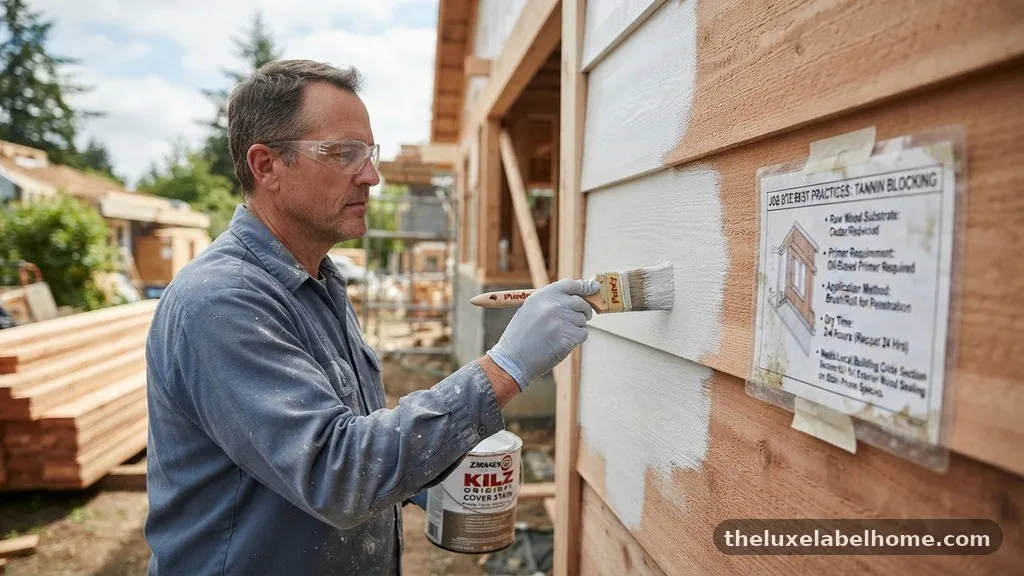
The effectiveness of an oil-based primer depends heavily on proper application techniques. You should aim for an even, thin coat, rather than trying to saturate the wood in one pass. Allowing the primer to dry completely is critical, even if the surface feels dry to the touch within a few hours.
Many professional painters recommend a light sanding after the first coat of primer. This removes any wood fibers that have “raised” due to the moisture in the primer. A quick pass with fine-grit sandpaper ensures a smooth finish, which is essential for a professional look.
Always follow the manufacturer’s drying time recommendations exactly. Applying a topcoat too early can trap solvents inside the primer, which can lead to blistering or cracking of the paint. Patience during the drying process is a legal and technical requirement if you want to avoid future failures.
Frequently Asked Questions
Do I need to prime every piece of raw wood before painting?
While not every piece of wood requires a heavy-duty oil-based primer, you should always use some form of primer to ensure proper adhesion. For softwoods with knots or hardwoods known for tannin bleed, an oil-based primer is highly recommended to prevent future staining.
How long should I let oil-based primer dry before applying topcoat?
Most oil-based primers require at least 24 hours to cure properly, though some fast-drying formulas allow for recoating in as little as 4 to 8 hours. Always check the specific technical data sheet for your product, as environmental conditions like temperature and humidity will affect these times.
Can I use water-based paint over an oil-based primer?
Yes, it is perfectly acceptable to use water-based topcoats over a fully cured oil-based primer. In fact, this is a common “best of both worlds” approach that gives you the stain-blocking power of oil with the durability and low-odor benefits of modern acrylic paints.
Does oil-based primer really prevent all tannin bleed?
While it is the most effective method for blocking tannins, nothing is 100% guaranteed in every single case. Extremely high-tannin woods may require two coats of a high-quality oil-based primer to ensure complete coverage, especially if the wood is damp or aged.
Is it legal to use high-VOC oil-based primers in my area?
Regulations vary significantly by state and municipality, particularly in areas with strict air quality standards like California. You should check your local building department’s website or consult with a local paint supplier to see which products are approved for use in your jurisdiction.
Closing Considerations for Your Project
Securing a durable, professional-grade finish on raw wood requires a clear understanding of the materials you are working with and the regulations governing their application. While you may not always face a strict legal mandate, adhering to industry standards for oil-based primer use is the best way to ensure the longevity of your work and avoid the frustration of future tannin bleed. Always prioritize the manufacturer’s technical data for the specific wood and primer combination you choose, as this is the primary benchmark for quality and compliance.
Taking the time to prepare the surface correctly—including proper sanding and allowing adequate drying time—will serve you better than any shortcut. If you have questions about specific local codes or product compatibility, reach out to a professional paint contractor or your local building inspector to ensure your project remains compliant and successful for years to come.