Eggshell vs Satin: Which Paint Sheen Hides Wall Dents Better?
Choosing the right finish for your interior surfaces can be difficult when you are balancing aesthetic appeal with the need to mask surface flaws. When comparing eggshell vs satin, many homeowners struggle to decide which sheen provides the best compromise between hiding imperfections and offering long-term durability. Understanding how light interacts with these two finishes is essential for achieving a professional look in your home.
This article clarifies the functional differences between these popular options and provides the guidance you need to select the right product for your specific walls. By the end, you will know exactly which finish protects your home’s appearance while keeping those minor dents and dings out of sight.
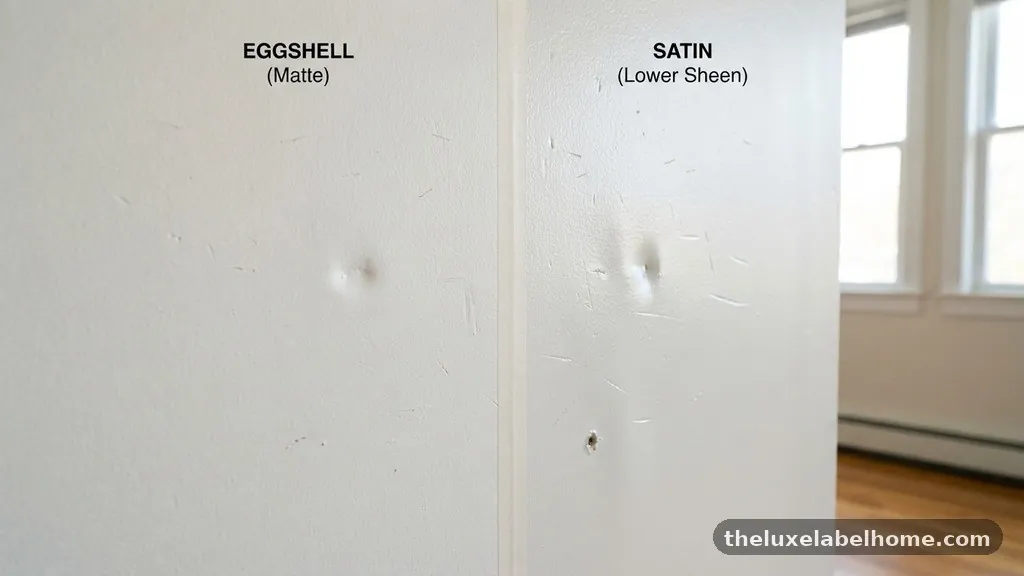
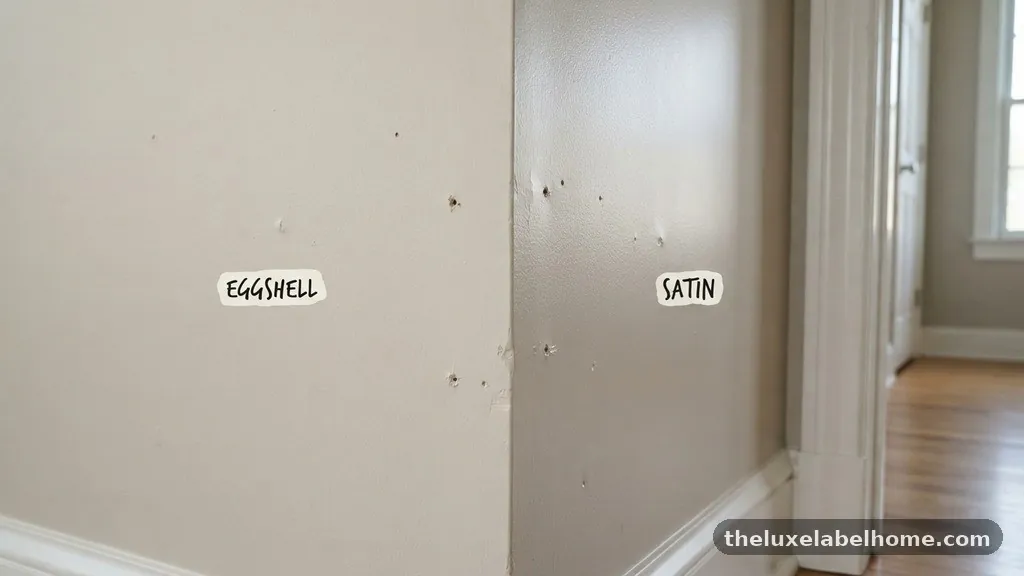
If you are looking for the shortest possible answer, eggshell is the clear winner for hiding wall dents. Because it has a lower light-reflectance value than satin, it does not highlight the shadows created by surface depressions or drywall repairs. Satin paint contains more resin and binders, which results in a smoother, slightly reflective surface that acts like a spotlight on any texture or irregularity.
While satin is significantly easier to clean, that extra durability comes at the cost of visibility for every bump, scratch, or dent on your wall. If your walls are less than perfect, prioritize the flatter finish of eggshell to maintain a smooth, uniform appearance across your living spaces.
The Science of Light Reflectance and Surface Imperfections
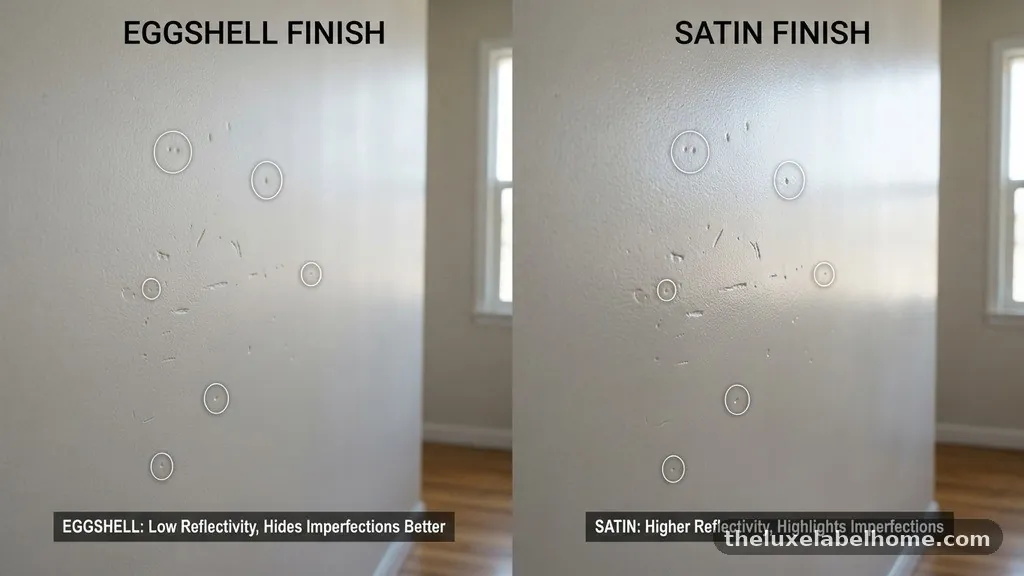
Paint sheens are categorized based on how much light they reflect when dry. This is often referred to as the gloss level or the light-reflectance value. Flat or matte paints absorb light, which helps them disguise bumps, nail holes, and uneven patches in drywall.
Eggshell occupies a middle ground, possessing a very slight, soft sheen that resembles the surface of an actual egg. This subtle reflection is just enough to provide some washability without sacrificing the ability to mask wall imperfections.
Satin, on the other hand, sits higher on the gloss spectrum. It creates a noticeable glow that bounces light around a room, which can make a space feel larger and more vibrant. However, this same characteristic makes it unforgiving when it comes to surface irregularities.
Any dent, patch, or poor sanding job on the wall will catch the light differently than the surrounding area. That visual contrast is what makes the imperfection stand out to the naked eye.
Understanding the Composition of Eggshell Paint
Eggshell paint is widely considered the industry standard for living rooms, bedrooms, and hallways. It strikes a balance that most homeowners find acceptable for daily living.
The formula is designed to be sturdy enough for light cleaning while remaining matte enough to hide common construction flaws. You can wipe away light dust or superficial marks with a damp cloth without necessarily damaging the finish.
Because of its lower sheen, it is easier to touch up than higher-gloss alternatives. If you have a small dent or a scuff, you can often apply a dab of paint to the affected area, and it will blend in reasonably well with the existing wall.
This makes it a practical choice for houses with children or pets where minor wear and tear is inevitable. It offers a sophisticated, low-luster look that works well with almost any interior design style.
Evaluating the Durability of Satin Finishes
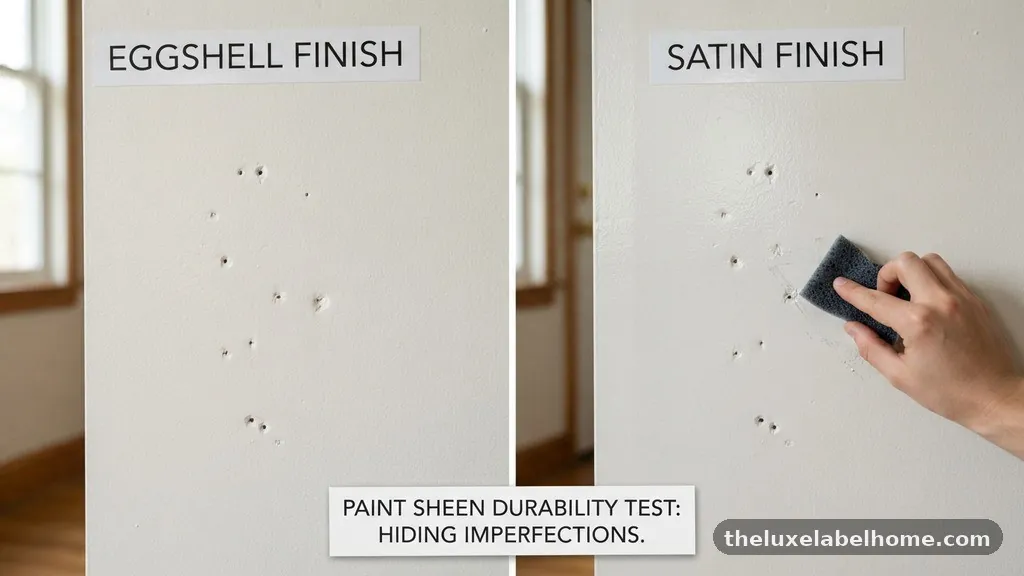
Satin paint is engineered for high-traffic areas where durability and washability are the primary concerns. It contains a higher ratio of resin to pigment compared to eggshell, which creates a tighter, more resilient film on the wall.
This film is resistant to moisture and scrubbing, making it the preferred choice for bathrooms, kitchens, and laundry rooms. You can scrub a satin-painted wall with mild soap and a sponge without worrying about burnishing or removing the paint.
The trade-off for this durability is the increased visibility of surface flaws. If you have a dented or poorly textured wall, a satin finish will exacerbate the problem by creating a distinct highlight and shadow effect.
It is not an error in the paint itself, but rather a property of the light reflection. You should only use satin in rooms where the walls are in excellent condition or where the need for frequent cleaning outweighs the desire for a perfectly smooth wall surface.
Where to Use Eggshell vs Satin in Your Home
Choosing between these finishes often comes down to the specific function of the room. You should not treat every wall in your home with the same approach.
For instance, high-traffic corridors and entryways benefit from the durability of satin, but only if the drywall is smooth. If you are dealing with older homes or walls that have seen better days, eggshell is almost always the safer bet for these transition spaces.
| Room Type | Recommended Sheen | Reasoning |
|---|---|---|
| Living Room | Eggshell | Hides imperfections, looks soft and inviting. |
| Kitchen | Satin | Easy to wipe down grease and food splatters. |
| Bedroom | Eggshell | Creates a cozy, low-glare atmosphere. |
| Bathroom | Satin | Resists moisture and humidity better. |
| Hallway | Satin | Withstands frequent scuffs and contact. |
The Role of Priming in Surface Preparation
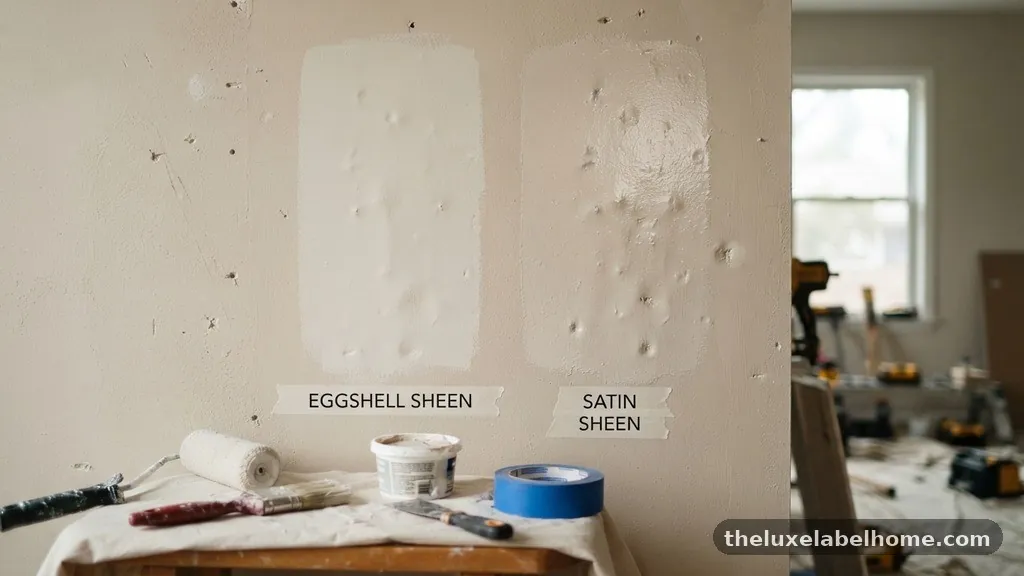
No matter which sheen you choose, the preparation of your walls is the most important factor in how the final result looks. If you have significant dents or deep gouges, simply choosing eggshell paint will not make them disappear entirely.
You must fill these spots with a high-quality spackling compound and sand them flush with the rest of the wall before you begin painting. Skipping this step is a common mistake that leads to visible patches regardless of the sheen.
After sanding, applying a high-quality primer is essential. A good primer seals the surface and ensures that the paint adheres evenly, which prevents “flashing” or uneven patches where the finish looks duller in some spots than others.
Many professional painters use a tinted primer that matches the final color, which can significantly improve the hide of your topcoat. For more detailed information on surface preparation, you can consult the National Park Service guide on painting historic interiors to understand how professional techniques improve longevity.
Common Mistakes When Choosing Paint Finishes
One common mistake is assuming that a higher-priced paint will automatically fix wall irregularities. While premium paints from brands like Benjamin Moore often have better coverage and richer pigments, they cannot overcome the physical properties of light reflection.
A high-end satin paint will still highlight a dent just as much as a budget satin paint would. The sheen level is the dominant factor in how light interacts with your wall’s texture.
Another mistake is choosing a finish based solely on what is trendy or what you saw in a magazine. You must consider the actual condition of your walls and the lifestyle of the people living in the house.
If you have a busy household with high activity, choosing a flat or eggshell finish in a high-traffic area might lead to frustration when you cannot easily wipe away mud or scuffs. Balance your aesthetic desires with the practical reality of your daily life.
Navigating Architectural Details and Trim
When you are deciding on wall finishes, do not forget about your trim, doors, and cabinets. These areas usually require a different type of paint entirely, typically semi-gloss or high-gloss.
These finishes are designed to stand up to constant handling and provide a distinct contrast against the flatter walls. Using the same sheen on your walls and your trim can make a room look one-dimensional and unrefined.
If you choose eggshell for your walls, the semi-gloss trim creates a visual break that adds depth to the architectural details. This contrast is a hallmark of professional interior design.
It directs the eye to the trim and baseboards while allowing the walls to act as a neutral backdrop. Keep your wall sheen lower to minimize imperfections and save the higher gloss for the areas that are meant to stand out and withstand physical contact.
Tools and Techniques for a Flawless Application
Even with the right paint, your technique will determine the quality of the final finish. Using a high-quality roller cover is crucial for achieving a uniform texture.
A roller cover with the wrong nap length can leave stippling, which is a texture that catches light and can make even an eggshell finish look uneven. For most standard wall surfaces, a 3/8-inch nap roller is the ideal choice.
When applying the paint, maintain a “wet edge” to avoid lap marks. This means always rolling into the wet paint from the previous stroke to ensure a seamless blend.
If you let the paint dry too much before overlapping, you will create visible lines that can look like imperfections once the light hits them. Work in manageable sections and ensure that you are applying enough paint to achieve full coverage without creating drips or runs.
Considering the Impact of Lighting Conditions
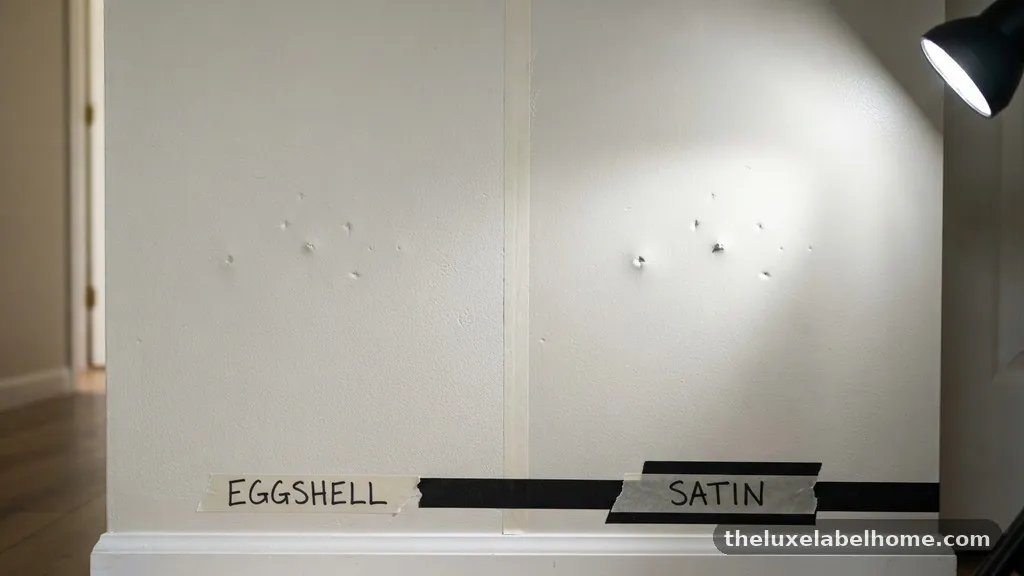
The light in your room, both natural and artificial, will change how your wall finish looks throughout the day. A wall that looks perfectly smooth in the morning light might reveal hidden dents when the sun hits it at a sharp angle in the afternoon.
Artificial lighting, such as recessed spotlights or wall-mounted sconces, can also create “grazing light” that highlights every minor wall texture. If you have this type of lighting, you should be even more inclined to choose a flatter finish like eggshell.
Think about the direction of the light sources in your room. If a wall is positioned directly opposite a large window, it will receive a lot of natural light that will expose any imperfections.
In these specific areas, a low-sheen finish is essential for maintaining a clean look. If you are uncertain, buy a small sample can of both eggshell and satin and paint a test patch on the wall in question to see how it performs under your specific lighting conditions.
Frequently Asked Questions
Is eggshell paint easy to clean?
Eggshell paint is moderately easy to clean. It can handle light wiping with a damp cloth and mild soap, but it is not as scrubbable as satin or semi-gloss. It is generally suitable for low-to-medium traffic areas.
Can I use satin paint to hide dents if I prime first?
No, priming does not change the light-reflecting properties of the paint. While priming helps with color uniformity, the satin sheen will still highlight the physical depression of the dent regardless of how well the wall is primed.
What is the difference between matte and eggshell?
Matte paint has almost zero sheen and is the best at hiding imperfections, but it is notoriously difficult to clean. Eggshell has a very slight luster, providing a better balance between hiding flaws and offering basic washability.
Does a higher price point mean better coverage for imperfections?
Not necessarily. High-end paints offer better color saturation and easier application, but they cannot override the optical laws of light reflection. If you have significant wall texture, the sheen level will always be the deciding factor in visibility.
Can I mix eggshell and satin to get a custom sheen?
It is generally not recommended to mix paint finishes. Doing so can result in an uneven texture, unpredictable sheen levels, and potential issues with the chemical composition of the paint. It is better to choose the finish that best matches your needs from the start.
Choosing Your Final Paint Finish
Selecting the right paint finish requires a clear understanding of your goals and the current state of your living space. If you want to prioritize a smooth, uniform appearance that hides the inevitable wear and tear of a busy home, eggshell is the most reliable choice.
It offers enough durability for most rooms while keeping the focus on your decor rather than the imperfections in your drywall. By taking the time to properly prep your surfaces, you can ensure that your chosen finish looks its best for years to come.
Remember that the best results come from a combination of high-quality materials and careful surface preparation. Whether you ultimately decide on eggshell or satin, the effort you put into filling, sanding, and priming will pay off in the final look of your walls. If you are still unsure about which direction to take, start with a small sample test on your most prominent wall.
This simple step will show you exactly how the finish reacts to your home’s unique light. We invite you to share your results or ask further questions about your upcoming renovation project in the comments below.