
10 Ideas to Declutter Your Home in One Weekend
Decluttering an entire home can sound like a project that should take weeks, especially when closets are overflowing, countertops have become storage zones, and there are boxes you haven’t opened in years.
The good news is that you don’t need to organize every drawer perfectly to make a noticeable difference.
A focused weekend can create a surprisingly fresh feeling throughout your home when you work strategically instead of trying to tackle everything at once.
The biggest mistake is starting with the most sentimental or complicated area. That usually creates decision fatigue before you build any momentum.
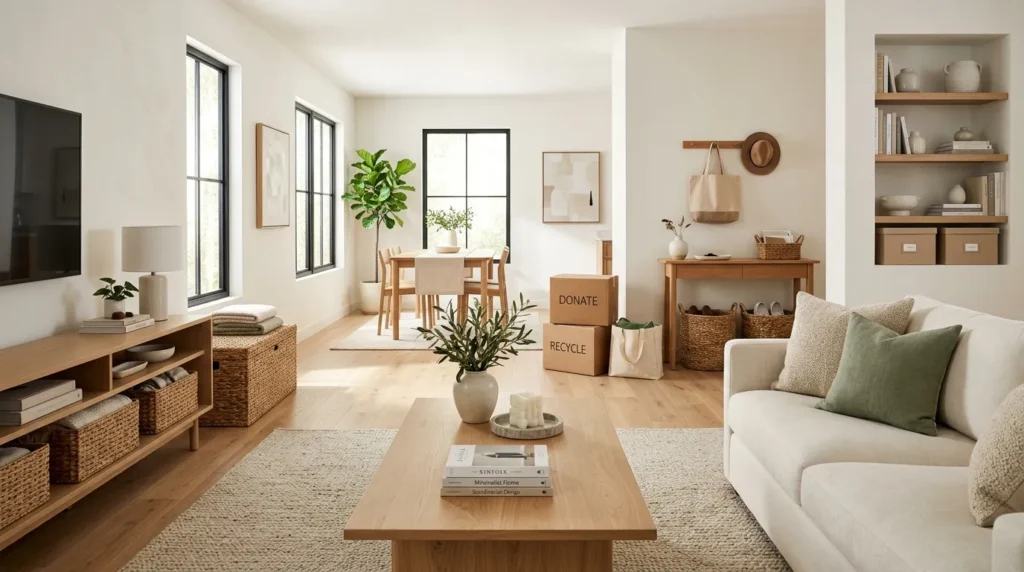
Instead, begin with visible clutter and high-traffic spaces. Clearing the kitchen counter, entryway, bathroom surfaces, and living room can make your home feel dramatically lighter in just a few hours.
I’ve found that successful decluttering is less about being ruthless and more about making decisions quickly and giving every remaining item a logical home.
For a weekend project, you also need a realistic system. Create clear categories, work in short focused sessions, and remove unwanted items from the house before the weekend ends.
You don’t need a perfectly minimalist home.
The goal is a home that feels easier to maintain, easier to clean, and more comfortable to live in.
These ideas will help you create a practical two-day decluttering plan that works for apartments, family homes, townhouses, and larger spaces.
Whether you’re preparing for a new season, getting ready for guests, or simply tired of visual clutter, you can use these strategies to make meaningful progress without turning the entire weekend into an exhausting marathon.
Table of Contents
1. Start With Surfaces
Clear the visible clutter that immediately changes how your home feels.
2. Create Four Categories
Use simple sorting categories to make decisions faster.
3. Tackle The Entryway
Create a calmer first impression by organizing the home’s entrance.
4. Simplify The Kitchen
Remove unused items and reclaim valuable counter and cabinet space.
5. Refresh The Living Room
Reduce visual distractions and create a more relaxing gathering space.
6. Edit The Bedroom
Remove clothing and objects that interfere with rest and relaxation.
7. Clear The Bathroom
Streamline products, linens, and everyday essentials.
8. Sort Hidden Storage
Work through closets, drawers, and cabinets without creating new messes.
9. Handle Sentimental Items
Use a thoughtful system for meaningful belongings without rushing decisions.
10. Finish With A Reset
Create simple habits that help the results last beyond the weekend.
1. Start With Surfaces
Quick Benefits
- Creates immediate visual impact
- Builds decluttering momentum
- Makes cleaning easier
- Reduces visual stress
- Provides quick wins
Why It Works
Visible clutter has an outsized effect on how a home feels.
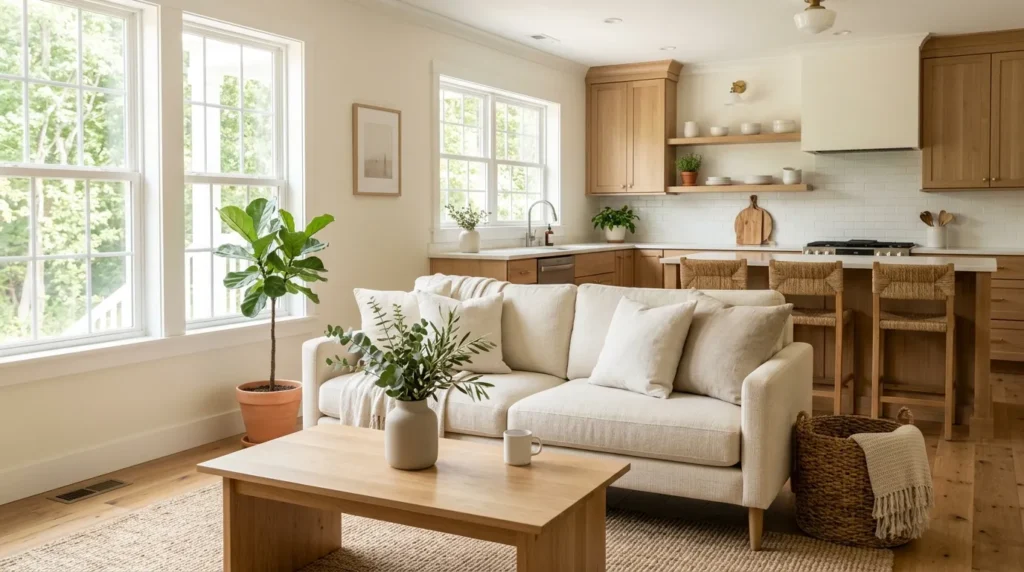
A kitchen counter covered with mail, appliances, packaging, and miscellaneous objects can make the entire room feel disorganized even when cabinets are relatively tidy.
The same is true for coffee tables, bathroom counters, nightstands, and entryway consoles.
Starting with surfaces gives you a fast sense of progress.
It also helps you develop your decision-making rhythm before moving into more complicated storage areas.
Instead of asking whether every object should stay forever, ask whether it needs to live on that particular surface.
Many things simply need to be relocated rather than discarded.
How To Style It
Carry an empty basket through the house and collect anything that belongs somewhere else.
Don’t stop to put each item away.
Keep moving until the surface is clear.
Then sort the basket by room and return everything to its proper home.
For objects you no longer use, create a separate donation box.
Once surfaces are clear, wipe them down and intentionally return only the essentials.
A kitchen counter might need a coffee maker and a small bowl for fruit.
A nightstand may only need a lamp, book, and water glass.
Leaving some empty space is part of the result.
2. Create Four Categories
Quick Benefits
- Simplifies decisions
- Prevents random piles
- Keeps the process moving
- Reduces decision fatigue
- Makes donations easier
Why It Works
Decluttering becomes much easier when every item has somewhere to go.
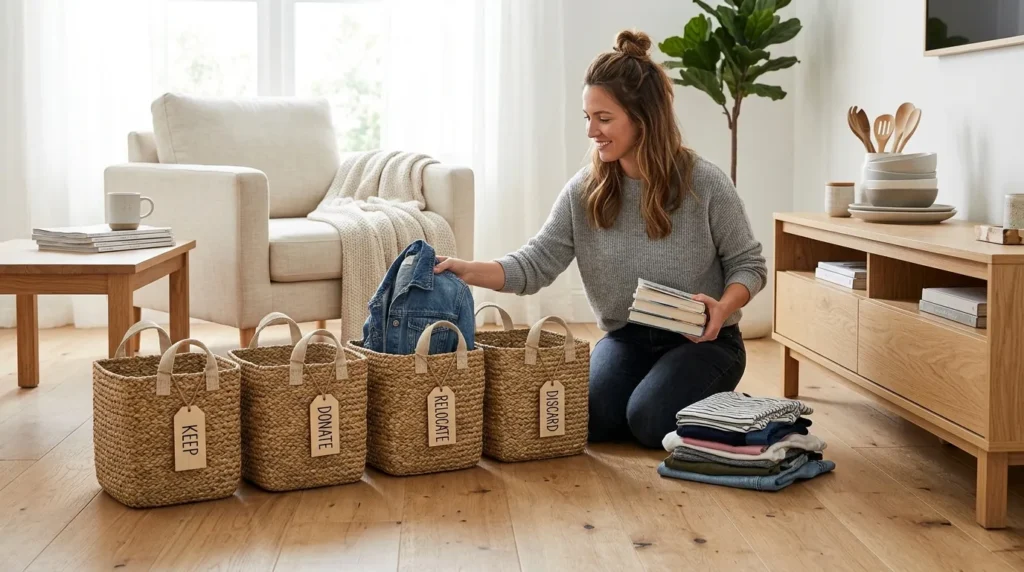
Instead of creating complicated categories, use four simple groups: keep, donate, relocate, and discard.
This system prevents the common problem of making a huge “maybe” pile that you never revisit.
The keep category includes things you actively use or genuinely need.
Donate is for useful items you no longer want.
Relocate is for things that belong somewhere else in the home.
Discard is reserved for broken, expired, unusable, or otherwise appropriate-to-trash items.
How To Style It
Use four boxes, bags, or designated areas.
Label them clearly if you’re working quickly.
For larger homes, work one room at a time so categories do not become mixed together.
Try to make decisions while holding each object.
Ask:
“Do I use this?”
“Would I buy it again?”
“Does it belong in my current home and lifestyle?”
For duplicates, keep the version you actually reach for.
If you’re unsure about an item with significant emotional value, don’t force the decision during a busy weekend.
Place it in a clearly labeled review box and schedule a later decision.
3. Tackle The Entryway
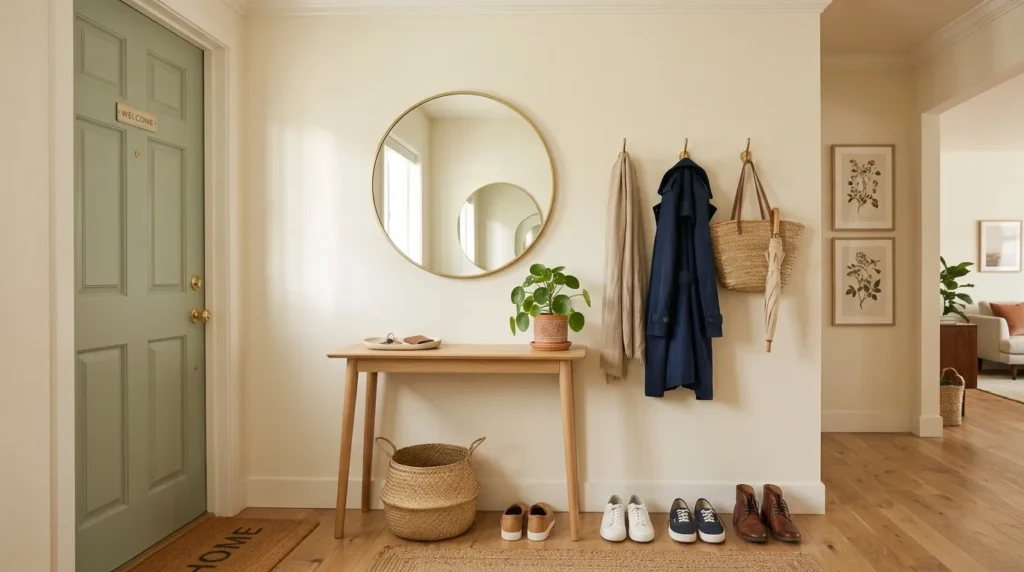
Quick Benefits
- Creates a cleaner first impression
- Reduces daily clutter
- Improves morning routines
- Makes keys easier to find
- Keeps shoes and bags contained
Why It Works
The entryway is one of the hardest-working areas in a home.
It receives shoes, jackets, bags, mail, packages, umbrellas, keys, and countless small objects.
When it becomes overloaded, clutter spreads into adjacent rooms.
A streamlined entryway makes the entire home feel more organized because it controls what enters the house and where everyday items land.
Even a small apartment entry can benefit from a defined drop zone.
How To Style It
Start by removing everything from the entryway.
Return only the items that genuinely belong there.
Use a tray for keys and small essentials.
Install hooks or use an existing coat rack for frequently worn outerwear.
Keep only current-season shoes accessible.
A slim shoe cabinet can help in narrow spaces.
Use a small basket for reusable shopping bags or accessories.
If you have a console, keep its surface mostly clear.
One lamp, small plant, or decorative object is often enough.
The goal is an entryway that supports your routine rather than becoming a storage pile.
4. Simplify The Kitchen
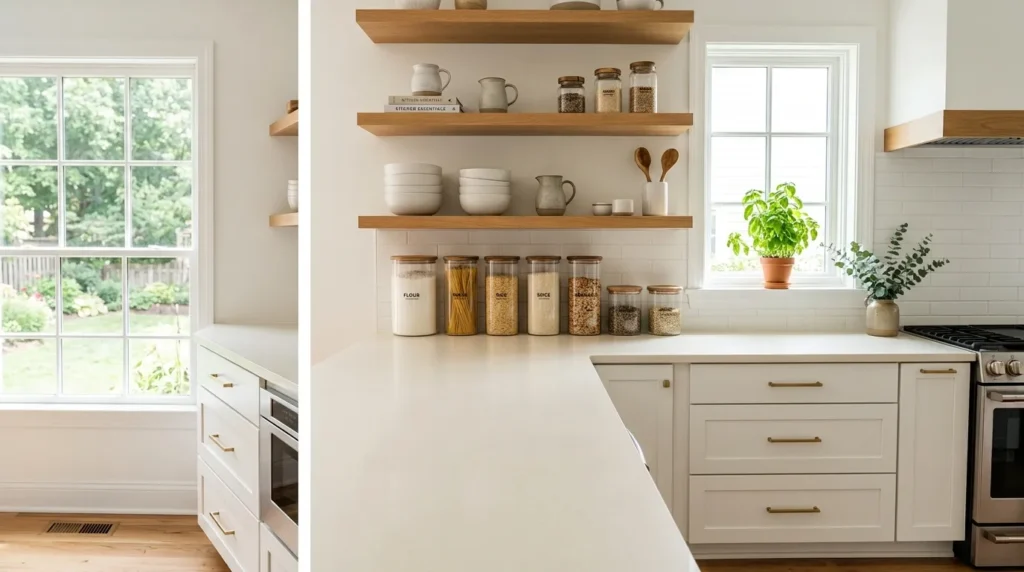
Quick Benefits
- Creates more workspace
- Makes cooking easier
- Reduces duplicate items
- Improves cabinet access
- Makes cleaning faster
Why It Works
Kitchen clutter tends to accumulate because the room contains so many specialized objects.
Extra mugs, duplicate utensils, takeout containers, rarely used gadgets, expired pantry items, and mismatched food-storage pieces can quietly consume enormous amounts of space.
You don’t need to remove everything.
Instead, focus on what you actually use.
A kitchen becomes easier to maintain when frequently used items are accessible and rarely used items aren’t competing for prime storage space.
How To Style It
Start with countertops.
Remove everything that doesn’t need to remain there.
Then open one cabinet or drawer at a time.
Group similar items together.
Check for duplicates.
A simple rule is to keep the versions that are in the best condition and that you actually reach for.
Move seasonal or occasional items to less convenient storage.
Check the pantry and refrigerator for expired food.
Match food-storage containers with their lids.
Discard damaged pieces.
Keep everyday cookware close to the areas where you use it.
A decluttered kitchen should make cooking easier, not simply look empty.
5. Refresh The Living Room
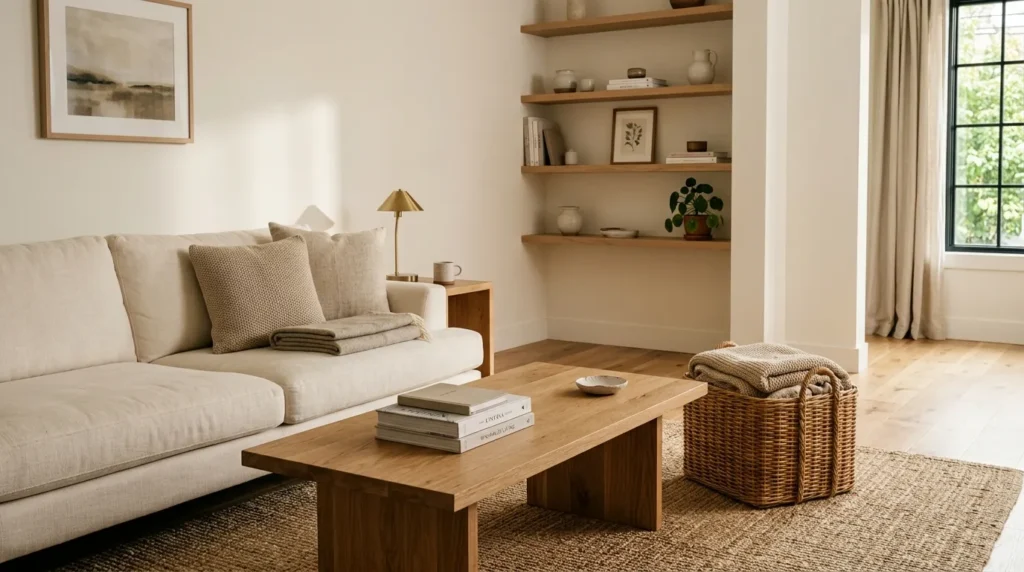
Quick Benefits
- Makes the room feel calmer
- Improves furniture flow
- Reduces visual noise
- Creates more usable space
- Makes cleaning easier
Why It Works
Living rooms often collect objects from every part of the house.
Blankets, toys, books, electronics, mail, charging cables, decorative items, and miscellaneous belongings can gradually take over.
Because this is usually a high-traffic space, reducing clutter here creates an immediate sense of calm.
The goal is not to remove personality.
It is to make the furniture, architecture, and favorite decor easier to appreciate.
How To Style It
Start with the coffee table and side tables.
Remove everything and return only useful or meaningful pieces.
Edit shelves by removing repetitive accessories.
Group books and decorative objects rather than scattering small items everywhere.
Use a basket for blankets.
Create a designated location for remote controls.
Hide charging cables where practical.
Look at the floor next.
Remove anything that does not belong.
Finally, reconsider furniture.
If a rarely used chair or table blocks movement, consider moving it elsewhere.
A living room often feels significantly larger when circulation paths are clear.
6. Edit The Bedroom
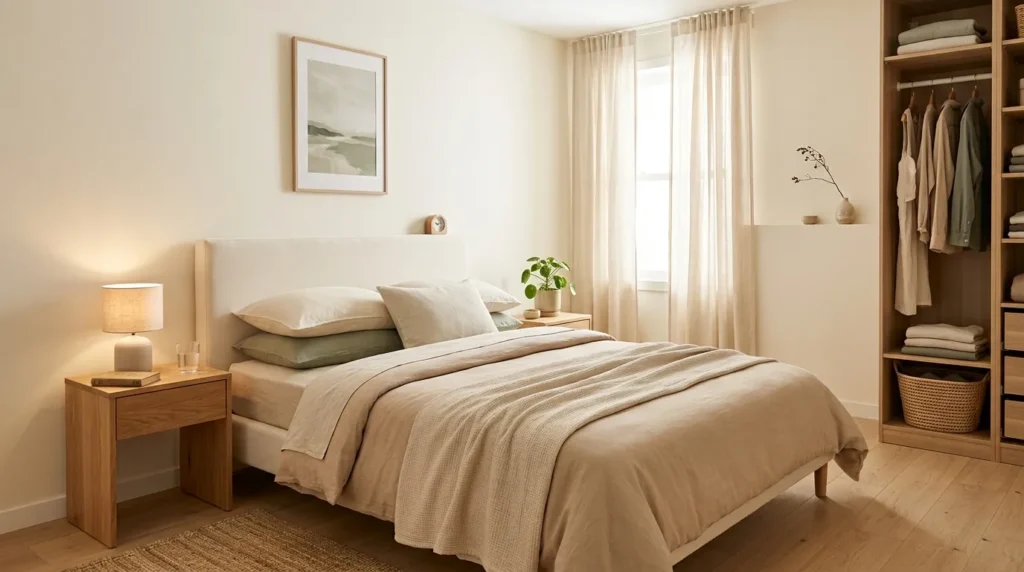
Quick Benefits
- Creates a calmer atmosphere
- Makes mornings easier
- Reduces clothing clutter
- Improves storage
- Supports better organization
Why It Works
Bedrooms should feel restful, but they often become overflow storage for clothing, bags, laundry, paperwork, and miscellaneous belongings.
A cluttered nightstand or chair covered with clothes can make the room feel unfinished even when the rest of the house is tidy.
Decluttering the bedroom is especially effective because it changes the space you see at the beginning and end of every day.
How To Style It
Start with the floor and visible surfaces.
Remove laundry and return clothing to its proper location.
Then look at your closet.
Pull out anything you know you no longer wear.
Look for duplicates, uncomfortable pieces, damaged clothing, and items that no longer suit your lifestyle.
You don’t need to create a perfect capsule wardrobe.
Instead, make the current wardrobe easier to use.
Keep nightstands simple.
A lamp, book, and small personal item may be enough.
Clear the area under the bed if it has become a forgotten storage zone.
Use labeled containers for anything that genuinely needs to stay there.
7. Clear The Bathroom
Quick Benefits
- Removes expired products
- Creates easier routines
- Frees cabinet space
- Makes cleaning simpler
- Improves daily functionality
Why It Works
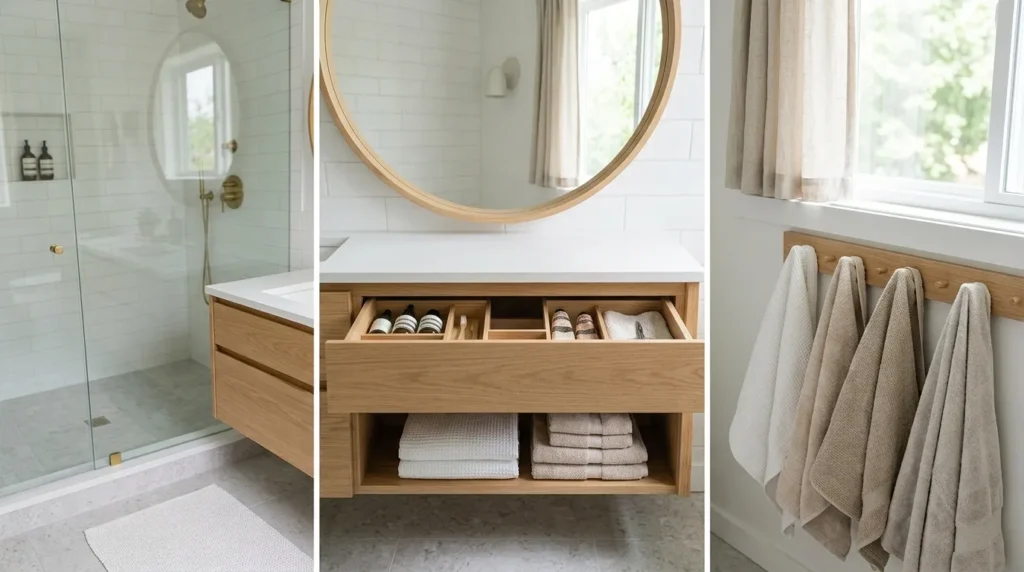
Bathrooms are particularly vulnerable to product buildup.
Skincare, haircare, makeup, cleaning products, medicines, travel-size items, and backup toiletries can accumulate quickly.
Because many products have expiration or recommended-use periods, this is an area where decluttering can also improve practical safety.
A streamlined bathroom makes everyday routines faster.
How To Style It
Begin with the countertop.
Remove everything and clean the surface.
Then sort products into categories such as daily use, occasional use, backup, and discard.
Check expiration information and product condition where applicable.
Get rid of empty containers and products you consistently avoid using.
Keep everyday products accessible.
Store backups together so you know exactly what you have.
Use small bins or drawer dividers to group similar items.
Keep the counter intentionally simple.
A soap dispenser, hand towel, small plant, or tray can provide enough visual warmth without creating clutter.
8. Sort Hidden Storage
Quick Benefits
- Reclaims unused space
- Makes future organizing easier
- Prevents forgotten belongings
- Improves accessibility
- Creates long-term order
Why It Works
Hidden clutter is easy to ignore because you don’t see it every day.
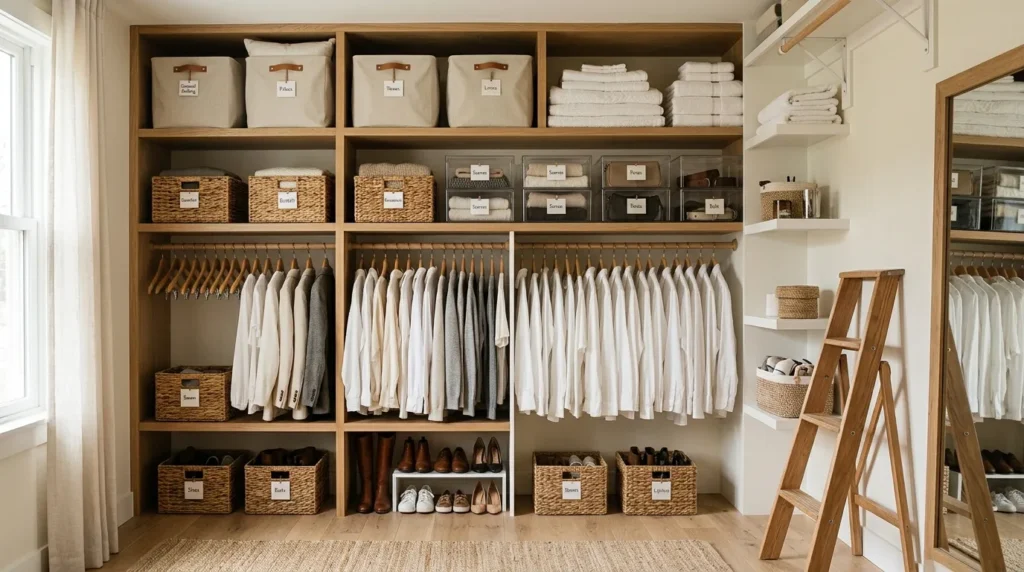
Closets, drawers, cabinets, under-bed storage, and basement or garage boxes can quietly become holding areas for things you no longer need.
But organizing around unwanted belongings simply creates a more attractive version of clutter.
A weekend decluttering project is a good opportunity to identify what is actually worth storing.
How To Style It
Don’t empty every closet in the house at once.
Choose one contained storage zone.
Remove its contents and sort them.
Group similar items.
Ask whether each category deserves the amount of space it currently occupies.
Use containers only after you have finished decluttering.
This is important.
Buying organizing bins before deciding what to keep can encourage you to keep unnecessary items simply because there is now a container for them.
Label storage where useful.
Keep frequently used items at comfortable heights.
Store rarely used items in less accessible locations.
9. Handle Sentimental Items
Quick Benefits
- Reduces emotional pressure
- Protects meaningful memories
- Prevents overflowing storage
- Creates thoughtful collections
- Makes difficult decisions easier
Why It Works
Sentimental belongings are often the hardest part of decluttering.
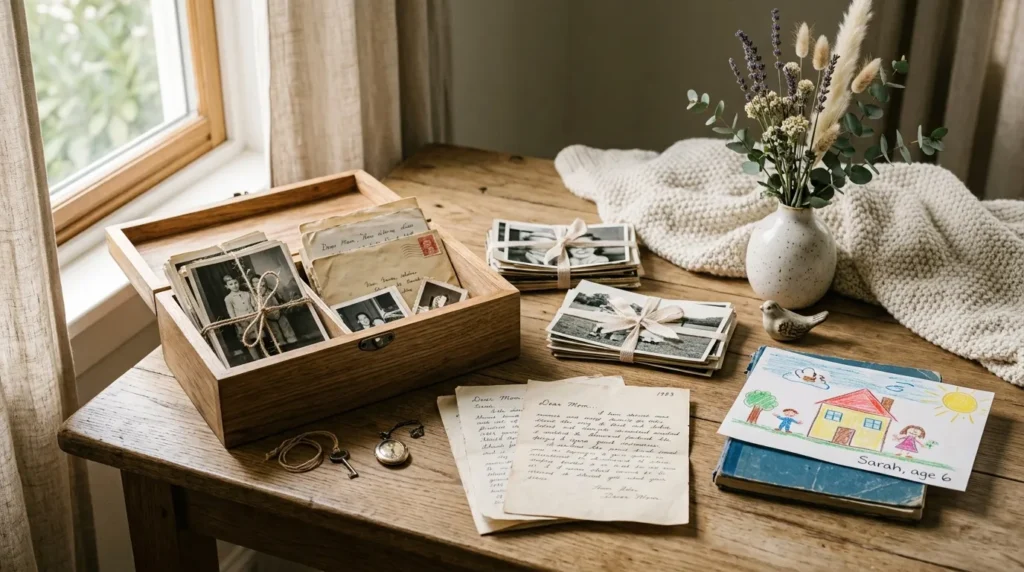
A weekend is not the time to force yourself into extreme decisions about family heirlooms, childhood objects, letters, photographs, or meaningful gifts.
Instead, approach sentimental items differently.
The goal is not to eliminate memories.
It is to make the memories easier to appreciate.
Keeping every object does not necessarily preserve the emotional value.
Sometimes a small, carefully chosen collection is more meaningful than dozens of boxes.
How To Style It
Create a separate sentimental category.
Do not mix these objects with ordinary household clutter.
Choose a limited container or storage area for memories.
If you have several similar items, select the examples that carry the strongest meaning.
Photographs can be organized into albums or carefully stored digital collections.
Children’s artwork can be photographed before deciding what physical pieces deserve to remain.
Family letters and documents should be stored appropriately.
If you’re uncertain, keep the item for now.
Decluttering should reduce stress, not create it.
10. Finish With A Reset
Quick Benefits
- Helps results last
- Prevents immediate rebound clutter
- Creates simple routines
- Makes cleaning easier
- Turns decluttering into a habit
Why It Works
The final step is not throwing away the last box.
It is creating a system that makes the newly cleared home easier to maintain.
Without simple habits, clutter can return surprisingly quickly.
The good news is that maintenance usually takes much less time than the original decluttering project.
Once everything has a home, small daily resets can prevent piles from rebuilding.
How To Style It
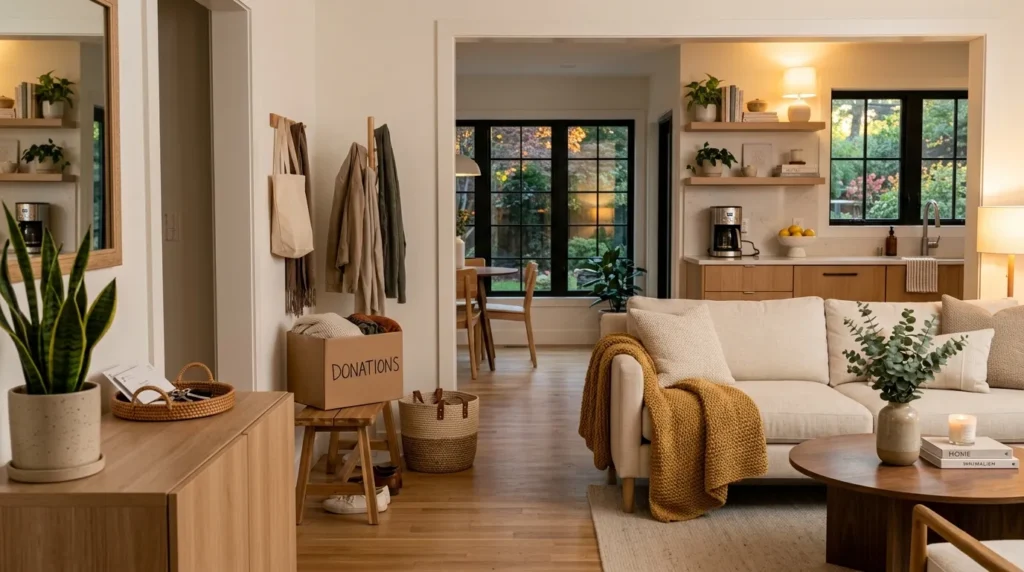
Create a five-minute evening reset.
Return misplaced items.
Clear kitchen counters.
Put away shoes and bags.
Fold blankets.
Reset the living room.
Choose one small weekly task, such as checking the refrigerator, sorting mail, or reviewing a bathroom drawer.
Keep a donation box in an accessible location.
When something leaves the home, place it there immediately.
Use a simple rule for new purchases: before bringing something new into the house, consider whether you already own something that serves the same purpose.
The goal is not constant cleaning.
It is reducing the amount of stuff that requires management.
A Simple Weekend Decluttering Schedule
If you want to complete the project in two days, use a flexible schedule rather than trying to declutter continuously.
Saturday Morning: Visible Clutter
Start with:
- Kitchen counters
- Entryway
- Living room surfaces
- Dining table
- Bathroom counters
Focus on quick decisions.
Saturday Afternoon: Kitchen And Living Room
Move into:
- Kitchen cabinets
- Pantry
- Refrigerator
- Living room storage
- Bookshelves
- Media area
Take donation items out of the main living areas as soon as possible.
Saturday Evening: Bedroom
Focus on:
- Clothing
- Nightstands
- Bedroom surfaces
- Under-bed storage
- Shoes
- Bags
Stop before you’re exhausted.
A tired decision-maker tends to keep everything.
Sunday Morning: Bathrooms And Storage
Work through:
- Bathroom cabinets
- Linen closets
- Hall closets
- Drawers
- Small storage areas
Choose contained projects.
Sunday Afternoon: Difficult Categories
Use this time for:
- Sentimental belongings
- Paperwork
- Hobby supplies
- Seasonal decor
- Miscellaneous storage
Do not force decisions you’re not ready to make.
Sunday Evening: Final Reset
Finish by:
- Taking donations out
- Removing trash
- Returning misplaced items
- Cleaning cleared surfaces
- Vacuuming or sweeping
- Setting up simple maintenance systems
This final reset is what makes the weekend feel complete.
How To Declutter Faster
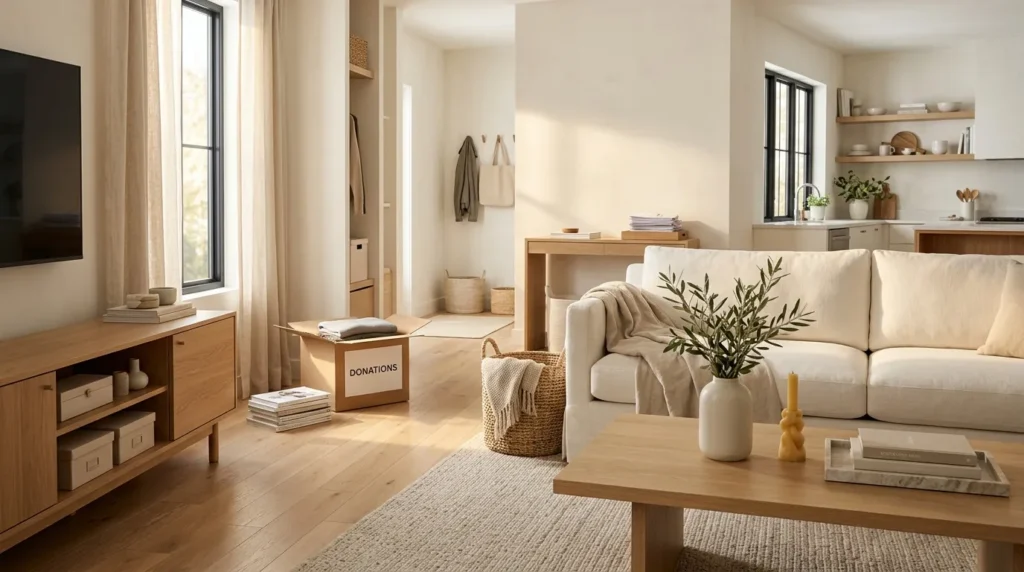
Speed comes from reducing the number of decisions you make repeatedly.
Use the same questions throughout the weekend.
Do I Use It?
If you haven’t used something in a long time, consider whether it deserves valuable space.
Would I Buy It Again?
This is especially useful for decor, kitchen tools, clothing, and miscellaneous purchases.
Does It Fit My Current Life?
Your belongings should reflect the life you live now, not necessarily the life you imagined years ago.
Is It Worth Storing?
Storage has a cost in both physical space and mental energy.
Do I Have A Duplicate?
Keep the version that works best.
You don’t need five items that perform the same basic function unless you genuinely use them.
What Not To Do During A Weekend Declutter
A focused project can quickly become overwhelming if you make it harder than necessary.
Avoid these common mistakes.
Don’t Empty Every Room
Work in contained zones.
Don’t Start With Sentimental Items
Build momentum first.
Don’t Buy Organizers Immediately
Declutter before purchasing storage.
Don’t Create A Huge Maybe Pile
Use a limited review category.
Don’t Stop To Deep Clean
Basic cleaning is useful, but decluttering comes first.
Don’t Aim For Perfection
A meaningful improvement is better than an unfinished attempt at perfection.
Don’t Keep Donations Inside Forever
Move them out of your living space promptly.
FAQ
Can you really declutter a home in one weekend?
Yes, you can make significant progress in a weekend, especially when you focus on high-impact areas and use a simple sorting system. Completely decluttering a large home may take longer, but a focused two-day session can clear visible clutter, reduce duplicates, and establish better storage systems. The key is prioritizing rather than trying to finish every drawer.
What should I declutter first?
Start with visible, high-traffic areas such as kitchen counters, the entryway, living room surfaces, bathroom counters, and bedroom floors. These spaces create immediate visual improvement and help you build momentum. Once those areas are under control, move into cabinets, closets, and other hidden storage.
How do I declutter when I don’t know what to throw away?
Ask whether you use the item, whether you would buy it again, whether you already own something similar, and whether it fits your current lifestyle. If an item is sentimental or you’re genuinely uncertain, place it in a separate review box rather than forcing a decision during the weekend.
What are the four decluttering categories?
A simple system is keep, donate, relocate, and discard. Keep items that are useful or meaningful. Donate things that are still useful but no longer needed. Relocate objects that belong somewhere else. Discard broken, unusable, expired, or otherwise appropriate-to-trash items.
How do I prevent clutter from coming back?
Give frequently used belongings designated homes and create a short daily reset routine. A five-minute evening tidy can prevent small piles from becoming major projects. Keeping a donation box available also makes it easier to remove things you no longer need as soon as you notice them.
Should I organize before decluttering?
Declutter first and organize second. If you buy containers before deciding what you actually need to keep, you may simply create more storage for unnecessary belongings. Once you’ve reduced the volume, choose storage solutions based on the items that remain.
How do I declutter sentimental belongings?
Give sentimental items their own category and avoid making rushed decisions. Select a limited amount of meaningful belongings and store them thoughtfully. For photographs and children’s artwork, consider albums or digital records. If you’re not ready to let something go, keep it temporarily and revisit the decision later.
Conclusion
A clutter-free home does not require an extreme minimalist lifestyle.
It starts with making your belongings work better for the way you live now.
A single weekend can create a noticeable difference when you focus on high-impact spaces, make decisions quickly, and avoid getting distracted by complicated projects.
Start with visible surfaces.
Move through the entryway, kitchen, living room, bedroom, and bathroom.
Then work into closets and hidden storage.
Use simple categories so every item has a clear destination.
Most importantly, don’t confuse organizing with decluttering.
A beautifully labeled box is still clutter if you don’t need what is inside it.
Give yourself permission to stop when the home feels meaningfully better.
You do not need to finish every drawer or make every closet look perfect.
The biggest win is creating more breathing room and making everyday routines easier.
Once the weekend is over, protect your progress with small habits.
A five-minute evening reset, a regular donation box, and more thoughtful purchasing decisions can prevent clutter from rebuilding.
If you’re ready to begin, pick one visible surface right now.
Clear it completely.
Then move to the next.
Small wins add up quickly, and before long, your home can feel lighter, calmer, and much easier to manage.
Related Articles
- How to Declutter Your Home Before Spring
- How to Organize a Small Bedroom Without Renovating
- How to Organize a Small Bedroom with Hidden Storage
- 10 Small Space Organization Ideas That Actually Work
- 11 Simple Home Organization Ideas for Busy Families
Pinterest Image Prompts
1. Start With Surfaces
Image Description: Bright, inviting American living room and kitchen area with completely cleared countertops, clean coffee table, simple neutral decor, cream sofa, natural wood furniture, one ceramic vase, woven basket, and soft greenery. Warm morning sunlight streams through large windows. The room feels airy and organized without looking sterile. Professional lifestyle interior photography, vertical 2:3 Pinterest composition, ultra-realistic textures, crisp sharp focus, warm neutral palette.
2. Create Four Categories
Image Description: Stylish home decluttering scene with four attractive labeled baskets representing keep, donate, relocate, and discard, arranged neatly in a bright neutral living room. Nearby are books, clothing, kitchen accessories, and small household items being sorted. Natural wood floor, cream furniture, soft daylight, organized but realistic atmosphere. Professional editorial lifestyle photography, vertical 2:3 Pinterest framing, sharp details, clean modern home aesthetic.
3. Tackle The Entryway
Image Description: Beautiful organized apartment entryway with slim wood console, small ceramic tray for keys, wall hooks holding only a few coats, neatly arranged shoes, woven storage basket, round mirror, and small green plant. Warm ivory and natural wood palette with soft sunlight. Professional interior photography, vertical 2:3 Pinterest composition, crisp realistic textures, sophisticated minimalist organization, welcoming clutter-free entrance.
4. Simplify The Kitchen
Image Description: Bright modern kitchen with completely clear cream countertops, organized open shelving, natural wood cutting board, minimal ceramic accessories, neatly arranged pantry containers, white cabinetry, warm oak accents, and soft greenery. Morning sunlight highlights clean surfaces without making the kitchen look sterile. Professional architectural lifestyle photography, vertical 2:3 Pinterest format, ultra-sharp focus, realistic materials, warm sophisticated home organization.
5. Refresh The Living Room
Image Description: Calm decluttered living room with cream sofa, natural wood coffee table holding only a few carefully selected books and ceramic decor, woven storage basket with folded blanket, uncluttered shelves, large neutral rug, leafy plant, and clear walking paths. Soft afternoon light creates warm shadows. Professional interior editorial photography, vertical 2:3 composition, realistic textures, cozy organized Pinterest-worthy home styling.
6. Edit The Bedroom
Image Description: Peaceful uncluttered bedroom featuring neatly made cream bed, warm beige bedding, simple wood nightstands, small lamps, clear floor, organized clothing storage, woven basket, and minimal personal decor. Soft natural morning light enters through linen curtains. Warm ivory, beige, oak, and muted sage palette. Professional lifestyle photography, vertical 2:3 Pinterest framing, crisp details, calming sophisticated bedroom organization.
7. Clear The Bathroom
Image Description: Fresh organized bathroom with completely clear white vanity countertop, neatly arranged everyday toiletries inside drawers, folded neutral towels, simple ceramic soap dispenser, small green plant, light oak accents, and bright natural light. Clean modern styling without excessive decor. Professional architectural photography, vertical 2:3 Pinterest composition, realistic tile and wood textures, crisp sharp focus, calm spa-inspired organization.
8. Sort Hidden Storage
Image Description: Neatly organized walk-in closet and storage area with labeled neutral fabric bins, carefully folded linens, categorized baskets, clear containers, wooden hangers, and uncluttered shelves. Warm ivory and natural wood palette with soft daylight. The storage looks practical rather than overly staged. Professional home organization photography, vertical 2:3 Pinterest framing, realistic materials, crisp details, sophisticated functional storage inspiration.
9. Handle Sentimental Items
Image Description: Warm emotional home organization scene with a wooden table holding carefully sorted old photographs, handwritten letters, small keepsakes, childhood artwork, and a beautiful memory box. Soft cream textiles, natural wood, delicate ceramic vase, and gentle afternoon sunlight create a thoughtful atmosphere. Professional lifestyle photography, vertical 2:3 Pinterest composition, realistic paper and wood textures, cozy meaningful decluttering aesthetic.
10. Finish With A Reset
Image Description: Beautifully reset modern home at the end of a decluttering weekend, featuring clear surfaces, organized entryway, neatly styled living room, clean kitchen counters, folded throw blanket, small donation box ready near the door, and warm evening lighting. The home feels peaceful and lived-in rather than sterile. Professional high-end lifestyle photography, vertical 2:3 Pinterest composition, crisp sharp details, inviting organized atmosphere.
SEO Elements
Slug
declutter-home-in-one-weekend
Meta Description
Learn 10 practical ideas to declutter your home in one weekend, from kitchen counters and closets to bedrooms, bathrooms, storage, and daily resets.
Tags
Declutter Your Home, Weekend Decluttering, Home Decluttering Ideas, Decluttering Tips, Home Organization, Organizing Your Home, Declutter Checklist, Weekend Home Projects, Minimalist Home, Simple Home Organization, Kitchen Decluttering, Bedroom Decluttering, Living Room Organization, Bathroom Organization, Closet Decluttering, Small Space Organization, Home Reset, Organized Home, Cleaning And Decluttering, Pinterest Home Organization