Can You Wipe Scuff Marks Off Matte and Flat Finish Interior Paints?
Deciding whether you can wipe scuff marks off matte and flat finish interior paints is a common dilemma for homeowners who value the soft, non-reflective aesthetic these finishes provide. While these paints are prized for hiding imperfections in drywall, their porous nature makes them notoriously difficult to clean without leaving visible damage. You can successfully remove light surface marks if you follow specific techniques and avoid common pitfalls that lead to permanent sheen loss.
Understanding how to approach these delicate surfaces will help you maintain your home’s appearance without needing a full repaint. This article explores the best methods to handle scuff marks while preserving your wall’s integrity.
The Reality of Cleaning Matte and Flat Finishes
The short answer to the question of whether you can wipe scuff marks off matte and flat finish interior paints is a cautious yes, but with significant limitations. Unlike semi-gloss or satin paints, which have a hard, protective resin layer, flat finish paint is highly porous. This porosity is exactly what gives it that beautiful, velvety look that absorbs light rather than reflecting it.
However, that same structure acts like a sponge for dirt, oils, and scuffs. When you rub a flat wall, you aren’t just cleaning the surface; you are often grinding microscopic debris into the paint’s open pores.
The biggest risk you face is burnishing, a condition where the act of scrubbing creates a shiny, polished spot on an otherwise dull surface. Because flat paint lacks a thick binder, friction from a cloth or sponge can physically flatten the microscopic ridges of the paint pigment. Once you cause this change in sheen, there is no way to reverse it without repainting the area.
You must approach every cleaning attempt with extreme gentleness. If the scuff is deep, standard cleaning methods may simply spread the pigment around or make the damage more noticeable.
Why These Paints Are More Delicate
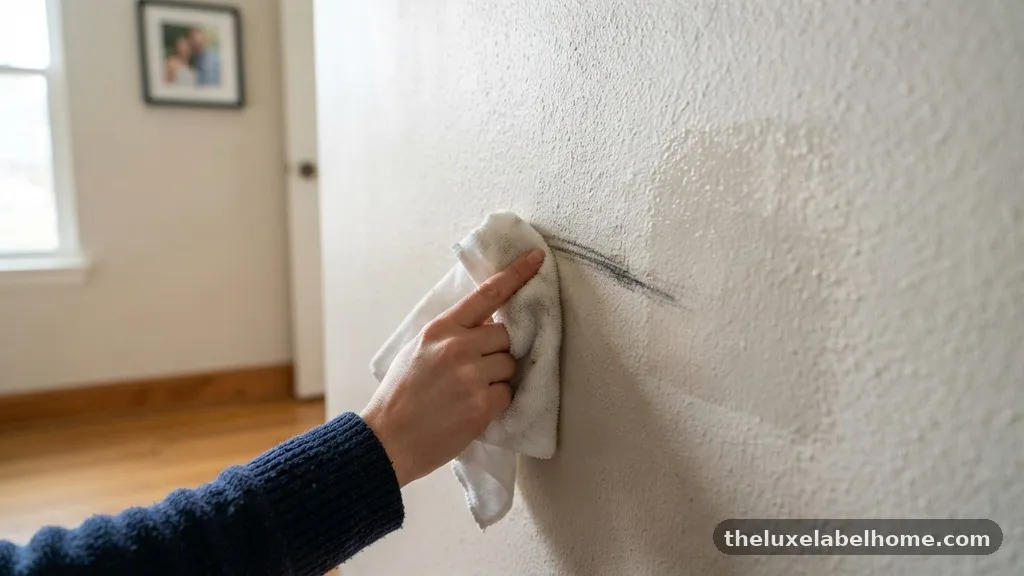
To understand the cleaning difficulty, you need to look at the composition of these finishes. Flat and matte wall paint contains a higher concentration of pigment and filler relative to the acrylic latex binder.
This ratio allows the paint to dry with a rougher surface, which is excellent for masking small bumps or irregularities in your drywall. However, this lack of binder means the paint film is physically weaker and more susceptible to abrasion.
Think of your wall as a field of microscopic mountains and valleys. In a gloss paint, those mountains are coated in a smooth, hard plastic-like shell that resists penetration. In a matte finish, those mountains are exposed and brittle.
When a shoe or piece of furniture grazes the wall, it leaves behind a transfer of material or a physical depression in the paint texture. When you attempt to wipe that mark away, you are essentially trying to smooth out those mountains. This process inevitably changes how light hits that specific spot, resulting in a visible patch that looks different from the surrounding wall.
Tools and Supplies for Safe Cleaning
Success in removing marks depends entirely on the tools you select. Avoid anything that feels rough to the touch, as coarse textures will act like sandpaper on a flat finish.
You should always start with the least aggressive method possible and escalate only if necessary. A high-quality microfiber cloth is your best friend here because it picks up particles without requiring heavy scrubbing pressure.
Gather the following items before you begin your maintenance routine:
- Clean, lint-free microfiber cloths
- A bucket of warm water
- Mild dish soap (pH-neutral is best)
- A soft-bristled brush for textured walls
- A high-quality melamine sponge (use with extreme caution)
- A clean, dry towel for blotting
Avoid using all-purpose household cleaners that contain harsh chemicals or strong solvents. These agents can break down the remaining binder in your paint, causing it to lift or streak.
If you decide to use a soap solution, test it on an inconspicuous area first, such as behind a door or near the baseboard. Wait for the test spot to dry completely to ensure the color hasn’t shifted or faded before proceeding to the visible scuff.
The Proper Technique for Gentle Removal
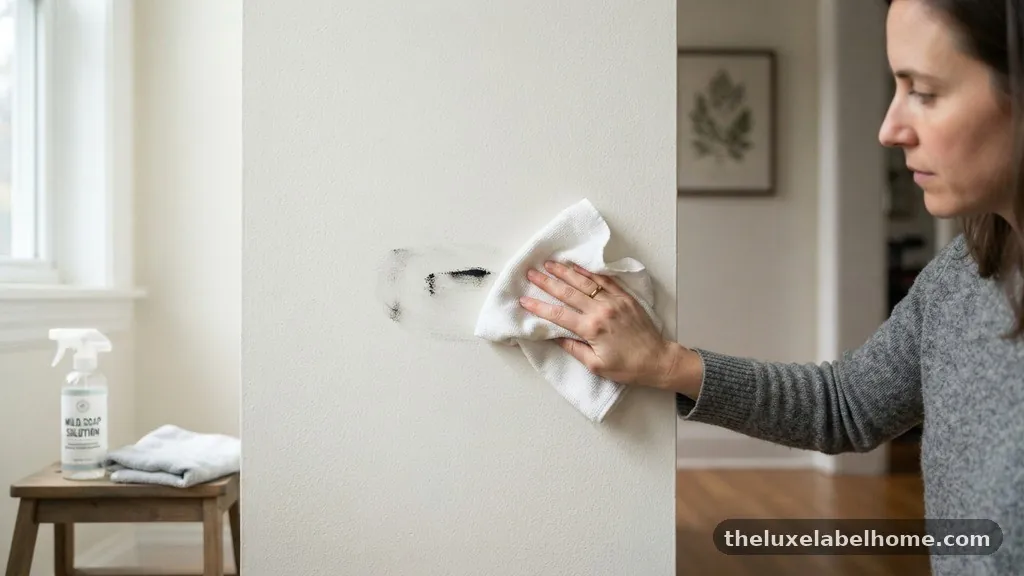
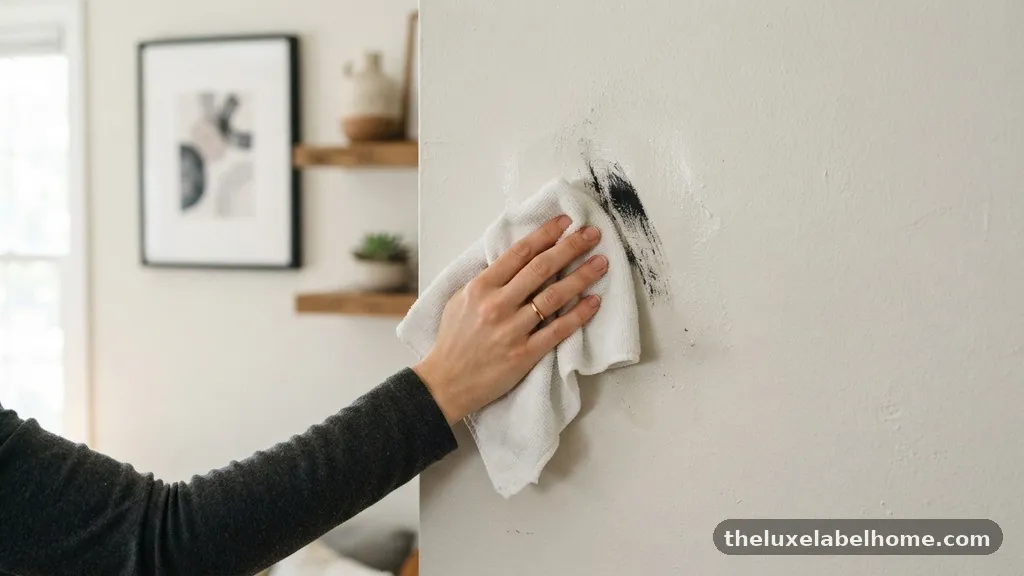
Start by dusting the area to remove any loose debris that could cause further scratching. Use a dry microfiber cloth to gently flick away dust or cobwebs from the scuff site.
Once the surface is clear, dampen your cloth with a mixture of warm water and a tiny drop of dish soap. Wring the cloth out until it is barely damp; you never want water to drip down the wall, as this can leave permanent water spots or streaks.
Apply very light pressure in a circular motion, working from the outside of the scuff toward the center. Do not scrub back and forth aggressively. If the mark doesn’t lift with gentle wiping, stop immediately.
Pushing harder will only increase the risk of burnishing the paint. After wiping, use a second, dry microfiber cloth to blot the area and remove any residual moisture. Letting the paint air dry naturally is safer than using a hair dryer, which can cause uneven drying patterns.
Navigating the Use of Melamine Sponges
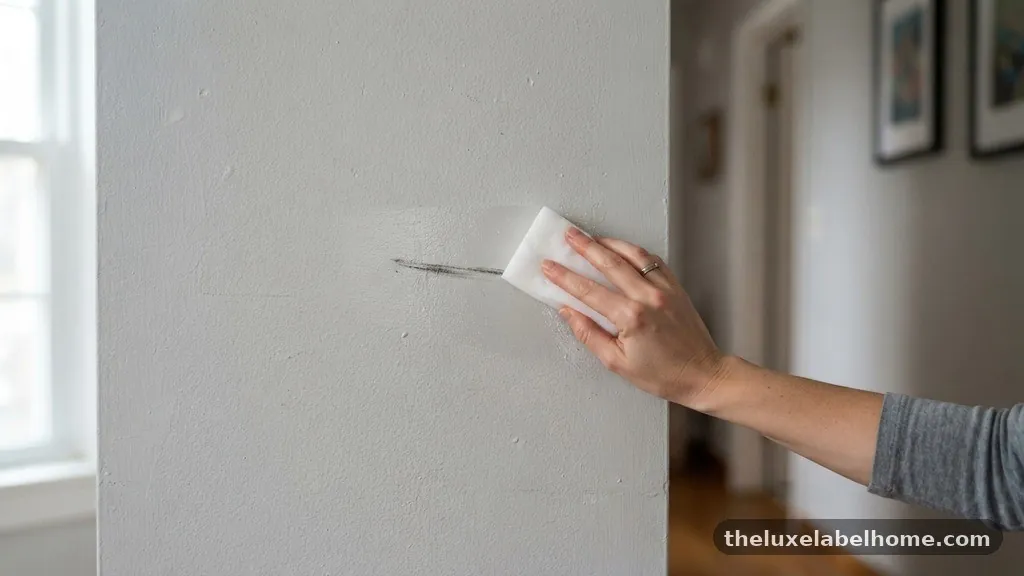
The “magic eraser” or melamine sponge is a common tool for cleaning, but it is a double-edged sword for matte finishes. Melamine foam works like an extremely fine-grit sandpaper.
While it is highly effective at lifting scuffs, it is also highly effective at removing the paint itself. If you use one on a flat wall, you are essentially sanding away the top layer of the finish.
If you must use a melamine sponge, use it only as a last resort and with almost zero pressure. Wet the sponge and squeeze it out until it is just slightly moist. Gently touch the sponge to the scuff and lift it.
If you see paint color transferring onto the sponge, you are removing the finish, not just the dirt. Stop immediately if this occurs. It is often better to have a faint scuff mark than a bright, clean, but shiny spot that stands out like a beacon against the matte wall.
Comparison of Cleaning Methods
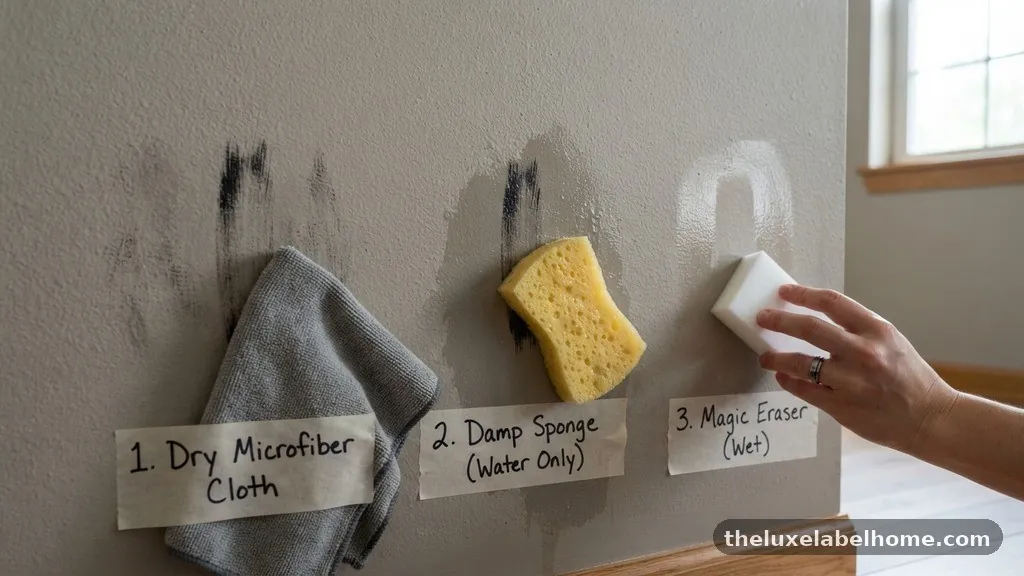
Different types of marks require different levels of intervention. The following table illustrates the appropriate approach for common wall blemishes on flat finishes.
| Type of Mark | Recommended Tool | Risk Level |
|---|---|---|
| Light Dust/Fingerprints | Dry microfiber cloth | Very Low |
| Surface Scuffs (Rubber) | Damp cloth + mild soap | Low |
| Deep Pencil/Crayon | Pencil eraser (white) | Medium |
| Permanent Marker | Professional touch-up | High |
| Deep Gouges | Paint touch-up/Patch | High |
Always prioritize the least invasive method. For simple dust or light smudges, a dry cloth is usually sufficient.
When dealing with rubber scuffs from shoes, the friction of a slightly damp cloth often lifts the rubber residue without harming the paint film. For marks involving wax or oils, a tiny amount of degreaser may be necessary, but this should be diluted significantly.
When to Consider Paint Touch-Up
Sometimes, the scuff is simply too deep or the paint is too old to be cleaned successfully. If the scuff has removed the pigment down to the drywall or primer, cleaning will not fix the issue.
In these cases, you will need to perform a paint touch-up. The challenge with matte paint is that touch-ups often leave a visible patch, especially if the original paint has faded due to UV exposure.
If you have leftover paint from the original project, stir it thoroughly before use. Use a small, high-quality brush or a mini-foam roller to apply a very thin layer over the mark. Feather the edges of the paint outward so that the new application blends into the existing wall.
Avoid globbing paint onto the spot, as the buildup will create a texture difference that is just as noticeable as the original scuff. If the wall is several years old, you may find that the new paint doesn’t match perfectly, and you might need to paint the entire wall corner-to-corner for a uniform look.
Preventative Maintenance Strategies
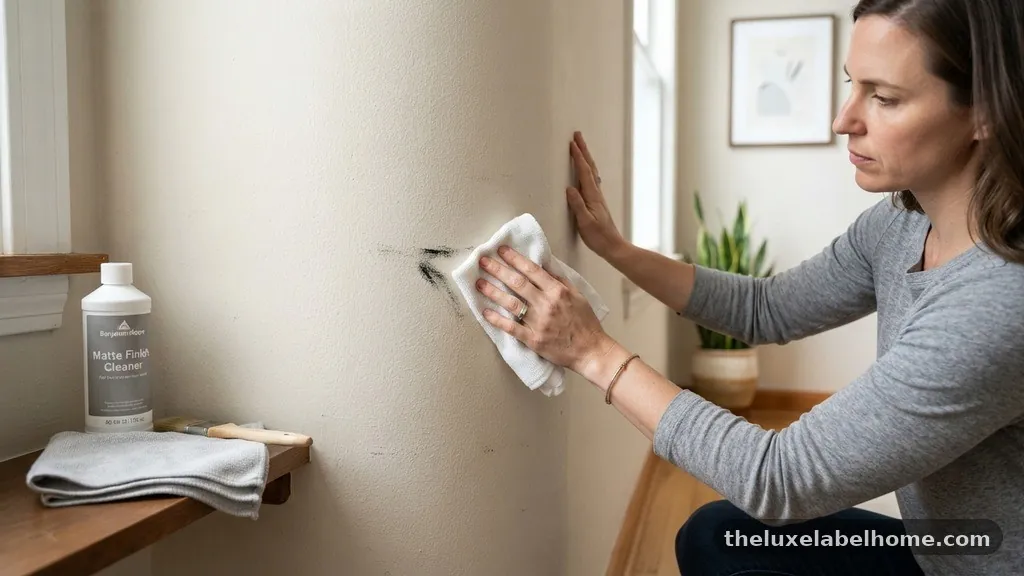
The best way to deal with scuff marks is to prevent them from happening in the first place. High-traffic areas, such as hallways or entryways, are prime locations for wear and tear.
Consider installing decorative elements like chair rails or wainscoting in these areas to protect the wall surface. These additions provide a physical barrier between furniture, bags, and the wall.
You can also opt for higher-sheen paints in areas that are prone to scuffing, such as kitchens or mudrooms. While many people prefer the look of matte, a satin or eggshell finish offers much better paint finish durability and is significantly easier to wipe down. If you are committed to the matte look, keep a small, labeled container of the original paint in a climate-controlled area.
This ensures that when you do need to perform a touch-up, you have the exact color and batch match ready. You can find more detailed advice on maintaining interior surfaces through resources like the National Park Service’s guidelines on historic interior finishes.
Common Mistakes to Avoid
Many homeowners inadvertently ruin their walls by using the wrong cleaning agents. Never use abrasive cleaners, as the grit will permanently scar the matte finish.
Similarly, avoid cleaners with strong ammonia or bleach, as these can alter the chemical composition of the paint and lead to discoloration. Even “natural” cleaners like vinegar can be too acidic for certain paint binders and should be avoided or heavily diluted.
Another frequent error is scrubbing an area while it is still wet with a heavy soap solution. If you leave soap residue on the wall, it will attract dust and dirt, creating a sticky patch that looks worse than the initial scuff. Always rinse the area with a fresh, damp cloth after using any soap.
Finally, do not use paper towels for cleaning. The fibers in paper towels are often too abrasive for matte paint and can leave behind tiny white paper particles that are difficult to remove.
Frequently Asked Questions
Can I use a magic eraser on all matte walls?
No, you should use a melamine sponge only as a last resort. Because it acts as an abrasive, it will likely remove the matte finish and leave a shiny, burnished spot on your wall.
Why does my wall look shiny after I clean a scuff?
This is called burnishing. The friction of your cleaning tool has physically smoothed down the porous surface of the paint, reflecting more light and making that spot appear shinier than the surrounding area.
How do I fix a spot that I have accidentally burnished?
Unfortunately, you cannot “un-burnish” paint. The only way to restore the original matte look is to lightly sand the area if necessary and apply a thin, feathered coat of the original matching paint.
Is it better to just paint over the scuff mark?
If the scuff is deep or if you have tried cleaning it without success, painting is the best option. However, make sure the surface is clean and dry before applying new paint to ensure proper adhesion.
What is the best way to remove black shoe scuffs?
Try a dry, white pencil eraser first. Often, the friction of the rubber will lift the shoe rubber off the wall without damaging the paint finish. If that fails, move to a very lightly dampened microfiber cloth.
Conclusion
Successfully managing your home’s interior requires a delicate touch, especially when dealing with the porous nature of flat and matte finishes. While you can wipe scuff marks off matte and flat finish interior paints, success depends on using minimal pressure and the right tools.
Prioritize dry cleaning methods first, and only introduce moisture or mild soaps when absolutely necessary to avoid damaging the paint’s texture. Remember that these finishes are designed for aesthetics rather than high-traffic durability, so they require a more gentle approach than glossier alternatives.
If you find that a mark is persistent, do not force it, as you risk creating a shiny, burnished spot that is impossible to hide without repainting. By keeping a small supply of touch-up paint and being mindful of how you interact with your walls, you can keep your home looking fresh for years to come.
If you have specific, stubborn marks that won’t budge, feel free to share your experience or ask for further guidance on specific paint types. Keeping your walls in good condition is a long-term project, and patience is always your most effective tool.